Get all your news in one place.
100's of premium titles.
One app.
Start reading
Louder
Louder
Entertainment
Daryl Easlea

Bloody Well Right! Breakfast In America might have had the bangers, but it was Crime Of The Century that truly saved Supertramp's bacon.

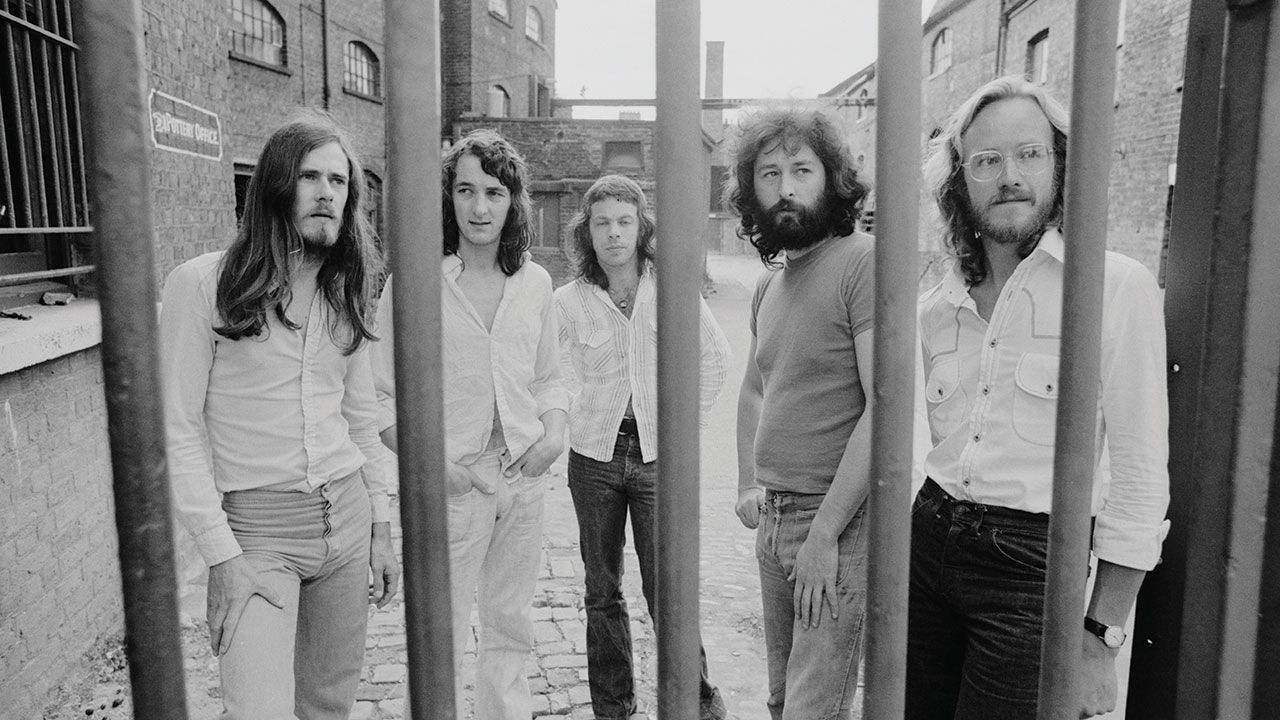
The band Supertramp in 1976.

In a state of flux and floundering after the commercial flop of their first two albums, Supertramp were close to throwing in the towel in early 1973. Enter producer du jour Ken Scott, hired in a desperate attempt to harness the creative yin and yang of songwriters Rick Davies and Roger Hodgson. The result was Crime Of The Century, an album that changed everything, and set the group on the pathway to artistic longevity and blockbuster future success.



Released at the end of October 1974, Supertramp’s third album, Crime Of The Century is their absolute masterpiece. Like Rush’s 2112, born out
of adversity, it is one of the great make-or-break albums; the thrill of
the last roll of the dice, married with the unerring belief of a soon-to-be-manager who recognised the immense potential of a band who had all but been written off.

Crime Of The Century was the culmination of six years of work and perseverance by Supertramp co-founder, keyboard player and songwriter Rick Davies, who had been spotted in his previous band, The Joint, by Dutch entrepreneur Stanley August Miesegaes. The millionaire former charter pilot and one-time pianist wanted to invest in a pop group, and saw something in Davies’ quiet, committed drive. Known as ‘Sam’, Miesegaes fronted the money; when the band foundered, he encouraged Davies to continue, placing an ad in Melody Maker for members, offering a “genuine opportunity”.

Guitarist and songwriter Charles Roger Pomfret Hodgson had come to the attention of Lionel Conway at Island Publishing, and had been playing in a project called Argosy with pianist Reg Dwight (later Elton John), guitarist Caleb Quaye and drummer Nigel Olsson. An introspective soul, Portsmouth-born Hodgson sought solace in guitar playing after his parents’ divorce. Although six years his junior and with a fundamentally different outlook on life and taste in music, Davies recognised that Hodgson’s pure singing voice would be an asset.

This was to provide the intrinsic magic that would continue for the next decade: The push and pull between the working-class Davies (“an ambivalent fellow of serious countenance that belies his propensity for unexpected comedic outbursts” – Supertramp biographer Martin Melhuish) and the well-to-do Stowe pupil Hodgson, that would ultimately create their greatest material. The Joint became Daddy, and finally, at the suggestion of then-guitarist (and later King Crimson lyricist) Richard Palmer-James, Supertramp.

However, no matter how much money was put behind them, and a deal with A&M, the band couldn’t get arrested. Their self-titled debut album was released in August 1970; personnel changes followed around the core of Davies and Hodgson, and a second album, Indelibly Stamped, known for its picture of Marion Hollier’s tattooed bare bosom, was issued in June 1971.

In early 1973, Supertramp were seriously considering their future; then members Kevin Currie, Frank Farrell and Dave Winthrop had all gone, leaving Davies and Hodgson and recent addition bassist Dougie Thomson (ex-Alan Bown Set) wondering what to do. Miesegaes’s patronage had come to an end (fortunately without any need for repayment), and Hodgson was seriously considering embarking on the well-trodden hippie trail to India.

(Image credit: UMC)

However, the new, deeply personal songs that Davies and Hodgson were writing were enough to keep the band as a potential going concern. The trio recruited drummer Bob Siebenberg from pub rockers Bees Make Honey, who went to sit in with them, rehearsing at London’s King’s Road’s Furniture Cave. Siebenberg, an erudite Californian, was impressed. Although there had been some discussion about his brother-in-law, guitarist Scott Gorham, joining, Thomson recalled an old friend from his Alan Bown days, sax player and bon vivant John Anthony Helliwell, who would offer focus on stage. Then there were five.

When the group informed A&M that they wanted to make another record, the people at the label had no idea who they were, which came as little surprise as they hadn’t released anything for nearly 24 months. A&M UK’s charismatic leader, Derek Green, had a newly recruited Head of A&R – his childhood pal, Dave Margereson. A colourful cove who’d trained as an actor and had recently worked at CBS, Margereson went through his new roster, and, recalling the group’s name, listened to their embryonic new material. He liked what he heard and realised it needed time to develop.

“I’d made a bit of a bond with Roger, Dougie Thomson, and Russel Pope
[the group’s lighting, ideas man and invaluable ‘sixth member’] and I had
a huge respect for Rick, although he was – and still is – hard to read… There was a tribal, creative vibe… I was hooked!” Margereson told Prog in 2016.

It was Margereson’s idea to put them in Southcombe, a £20-a-week farmhouse in Somerset, with living expenses, to write and hone this new material. Decamping with sundry wives, girlfriends and Pope, the place had few distractions apart from a local pub and a van that delivered meat. It was here, as Dougie Thomson recalled, they “got to know each other musically speaking, because everyone brought down their record collections and we’d play each other stuff”.

Margereson realised the group needed to release a single, to showcase the new line-up and prove they meant business, so Land Ho/Summer Romance, which had been recorded at Maximum Sound and Kitchen Studios in London in summer 1973, was prepared. It was used as a carrot to entice Ken Scott to mix the single and then perhaps produce the group. Scott was one the hottest producer engineers of the time, who had just worked with David Bowie on Hunky Dory and The Rise And Fall Of Ziggy Stardust…. He worked out of Trident Studios, one of the most technically advanced in the UK at that time. After some convincing, Scott went ahead, meeting the group at Southcombe in early 1974. His mix
of Land Ho was released in March that year, and like all of their previous releases, sank without trace.

(Image credit: Getty Images)

With Scott on board and a green light from the A&M hierarchy, the group began to record. Although they had indeed initially ‘got their heads together in the country’, Crime Of The Century was made entirely in London. The recording took place between February and June 1974 at Trident, The Who’s Ramport Studios in Battersea and Scorpio Sound in Euston Tower, above Capital Radio.

“It was certainly not a glamour era, with little, or no, cash flow,” Siebenberg was to say. “We were all living around different places. Rick lived in a room in London with about eight other guys, John lived in Slough, and Dougie, Roger and myself were living at Roger’s mom’s house… Lots of couches and lots of floors were slept on while we made this record.”

Jerry Moss, joint head of A&M, visited the studio, as the budget of £18,000 – a huge amount for the day – was being exceeded. Moss understood and gave the green light for the group to continue. And it is with little wonder – the eight songs were packed with melody, hooks and, lyrically, an exploration of the human condition from both a cynical (Davies) and open (Hodgson) viewpoint, which appealed to the widest audience.

The opening salvo of School and Bloody Well Right is simply one of the best in pop, and there for all to see is the magic, the sweet’n’salt of the writers. After Hodgson spills his soul about his sour brush with academia, wondering where life is taking him, in storms Davies with his opening lines, ‘So you think your schooling’s phony, I guess it’s hard not to agree/You say it’s all comes down to money, and who is in your family tree.’ Swindon 1, Portsmouth 0. The drama of School with Davies’ harmonica opening and piano break, and then the trickle of electric piano of Bloody Well Right ensured the album could hardly fail. Hodgson’s Hide In Your Shell was full of soul-bearing honesty, and Davies’ Asylum chimed with the au courant theme of insanity in the mid-70s: Pink Floyd had made a lot of people happy underlining someone else’s madness on The Dark Side Of The Moon; Monty Python joked about ‘loonies’; and One Flew Over The Cuckoo’s Nest would be a huge hit the following year.

The Wurlitzer-driven Dreamer was Hodgson’s teenage tour-de-force and Rudy was a climactic number that would become a central part of the group’s stage show. After Hodgson’s stirring If Everyone Was Listening, the album concludes with the stunning, moody title track – a reflection of the ‘rape of the universe’ by shadowy masked figures – the big reveal is that the people committing this crime are ‘you and me’. As the strings swell, Davies’ cascading grand piano and Helliwell’s sax leave the listener hungry for more. Ken Scott’s studious mixing at Trident created the album’s expansive sound, and Richard Hewson’s orchestrations added depth and mystery.

(Image credit: Getty Images)

There was a buzz when Crime Of The Century was eventually released, promoted by some Margereson-authorised hype-rich advertising. The album built slowly and surely, in the classic old-school word-of-mouth fashion. With Fabio Nicoli’s art direction, the sleeve was to become iconic. The fact the group’s name was spelled out in the stars showed that they were ready to head off into the constellations. On the rear of the sleeve, the first words were “To Sam” as a thank you for Miesegaes’ belief in them at such an early stage.

It was widely regarded. Fred Dellar wrote in NME, “Own up – you’d written Supertramp off, hadn’t you?… But now they’ve come up with Crime Of The Century which, whisper it not, has the makings of a monster.” Derek Jewell wrote in The Sunday Times that the album was “striking musically and in the philosophy it states, takes a very unexpected final turn”. Sounds added “everything on their album is excellent – the production, the musicianship and the material.” It peaked at No.4 on the UK chart in 1975 and was on the listings for nearly six months. The sole single from the album, Dreamer, wasn’t an enormous hit, trickling out in February 1975 two months after the album, reaching No.13 in March, nestling between Dana’s Please Tell Him That I Said Hello and Love Unlimited’s It May Be Winter Outside (But In My Heart It’s Spring) but, importantly, it took the group out beyond their rock niche.

Crime Of The Century became the third of ’73/’74’s ‘greatcoat trilogy’ with Mike Oldfield’s Tubular Bells and Pink Floyd’s The Dark Side Of The Moon: LPs to carry around under one’s arm, implying intelligence, mysticism and audio perfection, but even in that hallowed company, Crime Of The Century is a unique beast. The balance of Davies and Hodgson’s material is faultless. The disparity between them offers perfect equilibrium; it’s like taking four vowels and four consonants on Countdown and creating the perfect word.

“The thing that’s amazing when I listen back to that album, is the fact we put so much of ourselves on that record,” Hodgson said. “It’s an honest, autobiographical album because we were our inner selves on it. And in
the end, I think that’s why people identify with it.”

By the following April, Margereson had become Supertramp’s manager, and Crime Of The Century was worked by the group within an inch of its life, initially papering US concert halls with ‘competition winners’, via a huge radio-backed giveaway, to increase the band’s profile. It paid off, with the album reaching the US Top 40, and Bloody Well Right reaching No.35. Davies was surprised by the group finding favour.

“You’re in a different sort of... er, league,” he told Chris Charlesworth
at Melody Maker in 1975. “But as soon as the initial thing is over, and it only lasts for about 10 minutes, you just carry on as before.”

But it could never be the same. The band were now a transatlantic concern.

“Managing Supertramp was the most exhilarating time of my life, akin to riding a tidal wave,” Margereson said. “We worked hard and played hard and laughed a lot. Touring was like a pirate adventure, and I was the proud captain.”

Crime Of The Century became the classic sleeper hit – it is, if you will, Supertramp’s Sgt Pepper to Breakfast In America’s Abbey Road. This writer was fortunate enough to see both Rick Davies’ Supertramp and Roger Hodgson solo in the 2010s, and although there is tremendous love for the Breakfast In America hits, the Crime Of The Century material took audiences to a higher plane. Sadly, with Davies’ (and Margereson’s) passing, the classic line-up will now never unite; but this record remains astonishing – everyone is firing on all cylinders; a textbook example of writing, production, musicianship, management, art and design all unifying. Although Breakfast In America was the one with all the bangers, it was Crime Of The Century that truly saved their bacon.

Sign up to read this article
Read news from 100's of titles, curated specifically for you.
Already a member? Sign in here
Related Stories
Top stories on inkl right now
One subscription that gives you access to news from hundreds of sites
Already a member? Sign in here
Our Picks
Fourteen days free
Download the app
One app. One membership.
100+ trusted global sources.