
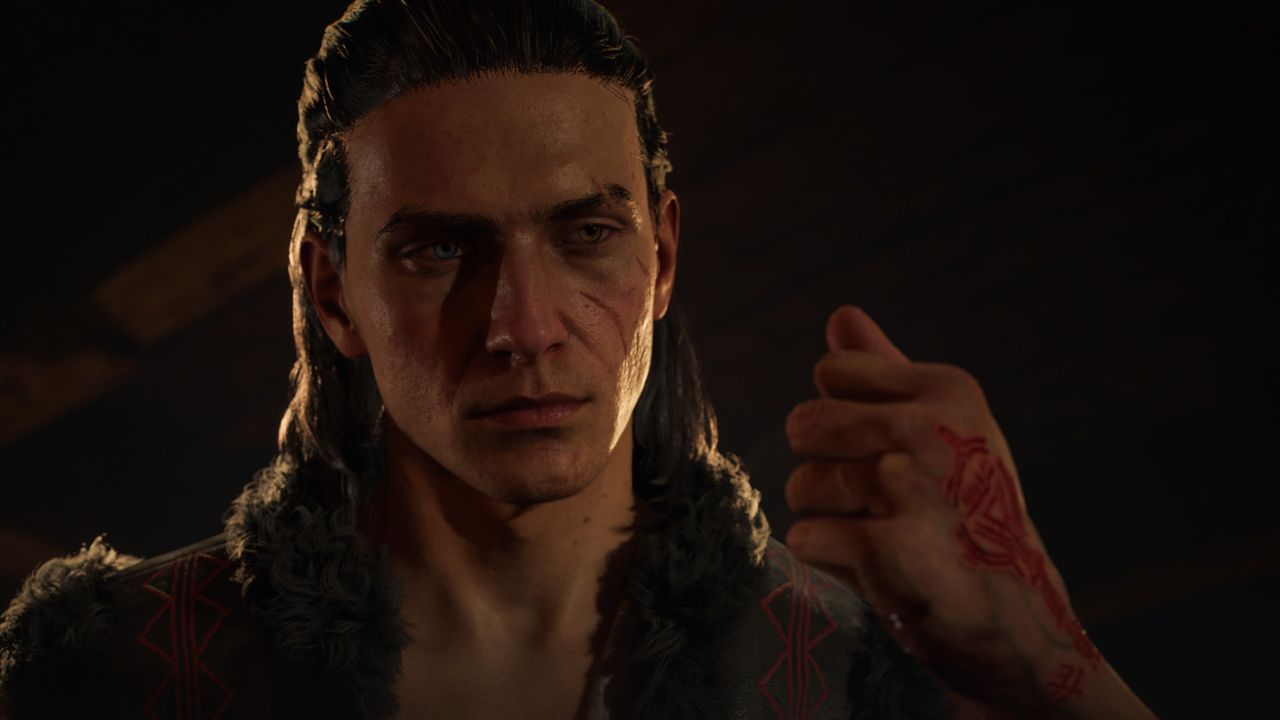
The Blood of Dawnwalker is built by devs with a clear, abiding love for the RPG genre, and creative director Mateusz Tomaszkiewicz is no exception. He's taken with Baldur's Gate 3's approach to player freedom, and that spirit – making sure that players can feel their impact on the game world – has helped to inform Blood of Dawnwalker.
The efforts in modern games toward "maximizing player agency" is "very exciting" to Tomaszkiewicz, as he tells GamesRadar+. "I love the games that did this in the past, and I loved what they did with Baldur's Gate 3, for example, with this – kind of mixing this narrative experience and maximizing your freedom of choice: what do you want to do, which plot lines do you want to do or not do, and how does the game world react to this? I think this is very exciting."

As he puts it, "you can have a super well-crafted, very emotional, cinematic experience, but if you're basically like an observer with extra steps, to me, it's not as exciting as really participating and leaving my mark on the game world."
The idea with Blood of Dawnwalker is to provide a similar sort of "narrative sandbox." The devs want "to have these emotional and engaging stories, these characters that you like, or you hate, or get interested in, and also maximizing the player choice within that environment."
The notion of making choices that matter have driven RPG devs for decades, but the results have always been mixed, to say the least. I was enthralled the first time I played through Knights of the Old Republic, feeling like every choice I made would have ripple effects throughout the game. The reality that I was actually just getting a handful of different cutscenes for those choices hit pretty hard on the second playthrough.
Baldur's Gate 3 offers more consequential repercussions for your actions in large part by constraining the story to relatively small areas that actually can reflect your choices, and that idea of constraint is also something that Blood of Dawnwalker is pursuing. As an added bonus, a limited scope – notwithstanding the fact that Larian's game can run a hundred hours – can result in a more digestible RPG.
"I feel tired with games that are way too big," Tomaszkiewicz says. "I don't have that much time, and I prefer more condensed experiences, but I still enjoy open worlds. One of my favorites from the past were the Gothic games, for example, and they were much smaller worlds, but they were so dense with detail, quests, and characters, and it felt like you really inhabited that space. This is something I really enjoy also."
It's not purely a design decision to keep Blood of Dawnwalker's scope limited, of course. "Obviously we are kind of also doing it because we wanted to keep the scope contained to the specific size of the team, and we wanted to produce this in a reasonable way and so on," Tomaszkiewicz explains. "But I think it has this effect of having this smaller world that is dense with content, and you get a lot of the good stuff – you don't feel like you're just traversing empty spaces that much."