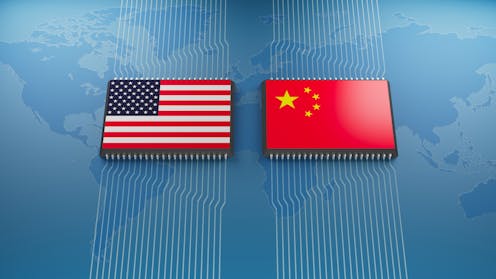
The United States is trying to decouple its economy from rivals like China. Efforts toward this include policymakers raising tariffs on Chinese goods, blocking exports of advanced technology and offering subsidies to boost American manufacturing. The goal is to reduce reliance on China for critical products in hopes that this will also protect U.S. intellectual property from theft.
The idea that decoupling will help stem state-sponsored cyber-economic espionage has become a key justification for these measures. For instance, then-U.S. Trade Representative Katherine Tai framed the continuation of China-specific tariffs as serving the “statutory goal to stop [China’s] harmful … cyber intrusions and cyber theft.” Early tariff rounds during the first Trump administration were likewise framed as forcing Beijing to confront “deeply entrenched” theft of U.S. intellectual property.