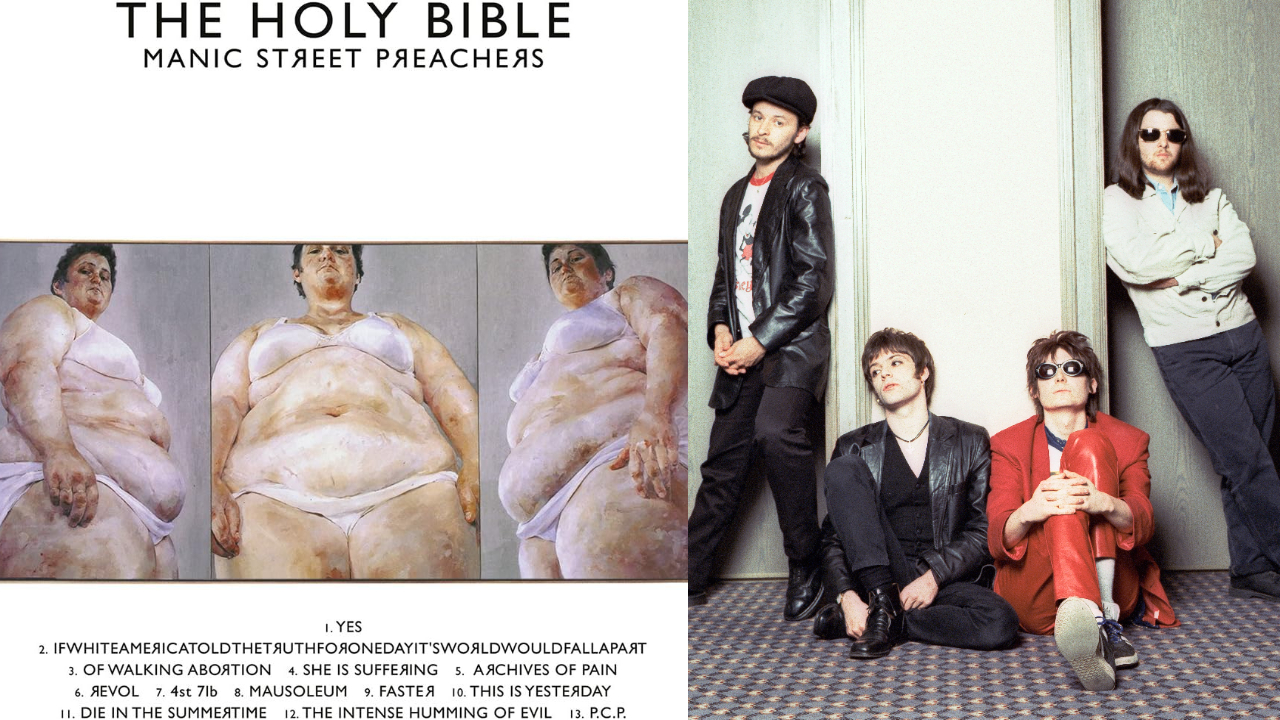
In the early 1990’s, Manic Street Preachers exploded onto the music scene in a mess of eyeliner, leopard-print and loud-mouthed punk rock attitude. The Blackwood quartet were a giddy fusion of glam rock excess, erudite bookishness and uncompromising, anarchic, political polemic. If Andy Warhol had picked four blokes from a miners' strike picket line and tried to turn them into The Clash, they’d be Manic Street Preachers.
The group's first two albums, 1991’s Generation Terrorists, and 1993’s Gold Against the Soul, had made them infamous rather than famous. Their attention-grabbing quotes and media-baiting behaviour, most notably guitarist/band architect Richey Edwards carving '4 Real' into his arm during a heated conversation with NME journalist [and future Radio 1/6Music DJ] Steve Lamacq, gained them plenty of column inches in Britain's weekly music press, and a rabid cult fanbase, but the fact that their biggest UK chart hit prior to 1994 was a cover of Suicide Is Painless (Theme From MASH) was an indication that they hadn't yet captured the imagination of mainstream music fans.