
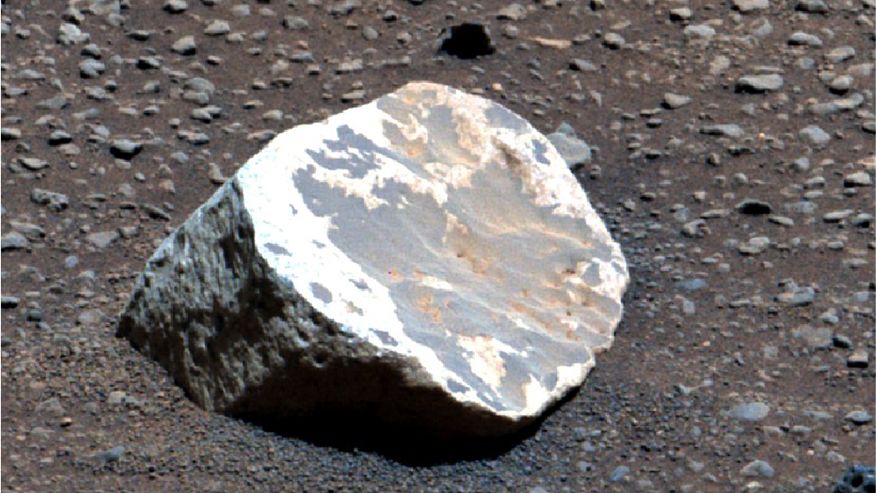
NASA's Perseverance rover has discovered thousands of strangely bleached rocks on Mars that are rich in a mineral difficult to form without long-term exposure to water, adding fresh evidence that the Red Planet was warmer, wetter and possibly rain-soaked billions of years ago.
The newfound Mars rocks are rich in kaolinite, a soft, white, clay mineral that, on Earth, typically forms when water slowly leaches other elements from rock over thousands to millions of years, a new study reports. On Earth, it is most commonly found in warm, humid environments such as rainforests, where frequent rainfall drives intense chemical weathering.