Get all your news in one place.
100’s of premium titles.
One app.
Start reading
AAP
AAP
Jacob Shteyman

Forecasters dial up rate bets as banks prepare to hike

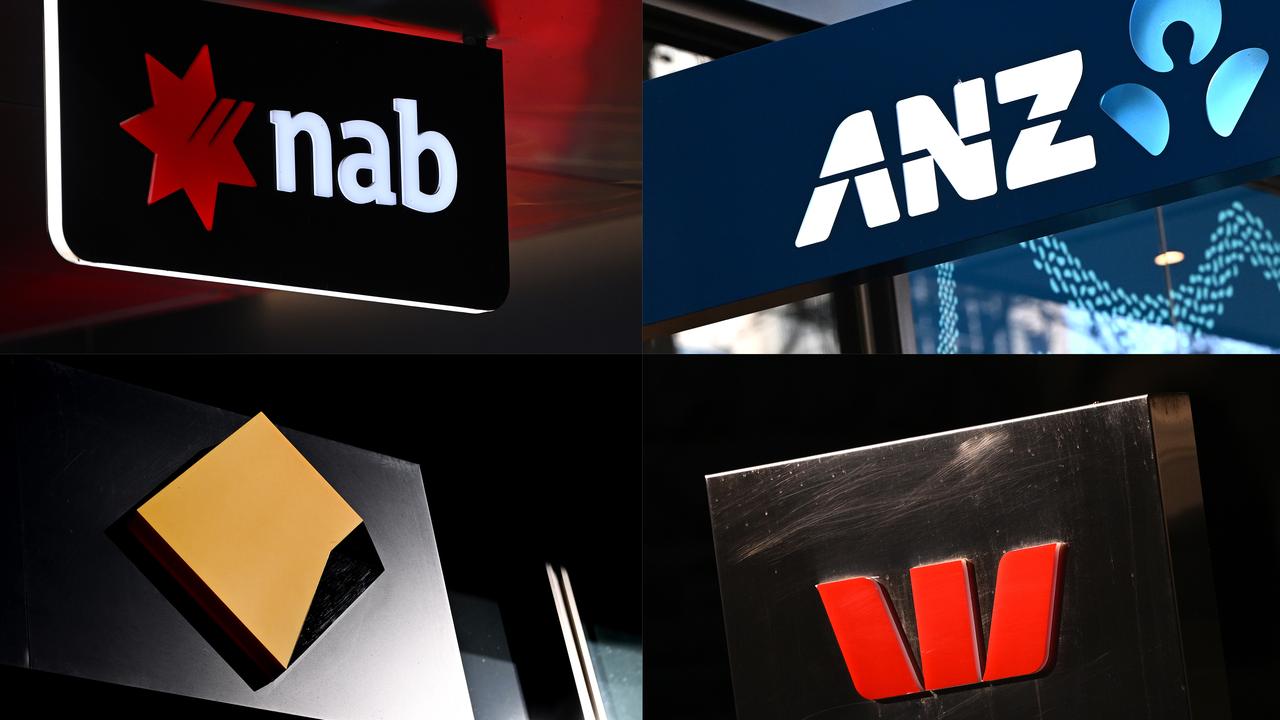
All of Australia's 'big four' banks plan to pass on the rate rise to customers in coming weeks. (Joel Carrett/AAP PHOTOS)

Borrowers about to see their mortgage repayments rise can expect more rate hikes in 2026, with Commonwealth Bank joining NAB in doubling down on its cash rate forecast.

Following the Reserve Bank's widely-anticipated rate hike on Tuesday, plus the release of pessimistic economic forecasts by the central bank's staff, CBA added another rate rise in May to its outlook.

Australia's largest lender already said it would pass the hike on in full to variable home loan customers on February 13, adding about $90 in monthly repayments on a $600,000 loan.

A graph shows how much more mortgage holders will pay after rates rise
Mortgage holders will have to pay more after banks raise their rates. (Susie Dodds/AAP PHOTOS)

ANZ and NAB will also increase variable rates on the 13th, while Westpac will apply the increase four days later.

Macquarie Bank, which has been steadily eating away at the big four's home loan market share in recent years, announced it would pass on the full value of the hike to savers and borrowers on Tuesday afternoon.

With the jobs market in a better position than a few months ago, and the RBA showing stronger resolve to get inflation under control, banks would more likely than not be lifting home loan rates again after May, CBA head of Australian economics Belinda Allen said.

In the RBA's updated forecasts, core inflation was forecast to remain above three per cent for all of 2026, even assuming another rate hike this year.

"This is too high and will not be tolerated by the RBA," Ms Allen said.

"But it remains a line-ball decision and is dependent on the data flow from here."

the cash rate over the past 15 years
The first interest rate hike in more than two years comes six months after the last cut. (Susie Dodds/AAP PHOTOS)

Treasurer Jim Chalmers said the government was doing its part to ease living costs by cutting taxes and making medicines cheaper, but rejected suggestions higher public spending was contributing to inflation.

Dr Chalmers' mid-year budget update, delivered in December, showed government expenditure was expected to rise to 26.9 per cent of GDP this financial year - the highest level in decades, excluding the pandemic.

But he was quick to point out the RBA board, in its post-meeting statement, singled out surprisingly strong private demand as a driver of inflation and made no mention of higher government spending.

"What's happened over the last six months or so is that private demand has turned out to be much stronger than we had been forecasting," governor Michele Bullock said in her post-meeting press conference.

Ms Bullock attributed much of the blame to Australia's dire productivity growth, which meant the economy could not sustain a higher level of growth without price pressures kicking off.

Michele Bullock
RBA governor Michele Bullock said the board was not prepared for the strength of private demand. (Bianca De Marchi/AAP PHOTOS)

Deloitte Access Economics partner Stephen Smith said the blame for that extended beyond the current government.

"The fact that an economy growing at 2.3 per cent breaks out in inflation sweats points to a more fundamental problem in our economy - our poor capacity to produce goods and services and our low run rate," Mr Smith said. 

"That we are here is an indictment on the piecemeal and lacklustre nature of reform over the last three decades."

The result is lower forecast growth in household disposable income - essentially, living standards.

"This is not ambition for Australia," Mr Smith said.

"If this is really as good as it gets for economic growth, then Australia has bigger problems than an interest rate rise."

Jim Chalmers
Jim Chalmers copped blame from the opposition but noted the strong growth of private demand. (Lukas Coch/AAP PHOTOS)

The hike would increase pressure on the government to deliver reforms allowing the economy to expand without adding to inflationary pressures, he said.

Dr Chalmers said the government needed to better address intergenerational inequity, but his focus was on increasing housing supply and previously announced changes like reducing superannuation tax concessions.

"Any further changes to taxes, beyond those which we've already flagged, would be a matter for cabinet in the usual way, and would be consistent with the reform directions that we set out after the reform roundtable a few months ago," he told reporters.

Sign up to read this article
Read news from 100’s of titles, curated specifically for you.
Already a member? Sign in here
Related Stories
Top stories on inkl right now
One subscription that gives you access to news from hundreds of sites
Already a member? Sign in here
Our Picks
Fourteen days free
Download the app
One app. One membership.
100+ trusted global sources.