Christina Brown was 18 years old the first time she had to correct a doctor when advocating for health.
Breast cancer runs in her family, so she had been taught early by relatives how to examine her own body – what was normal, what wasn’t and when something warranted attention. When she found a lump in her breast in September 2014, she didn’t hesitate. She went to a doctor.
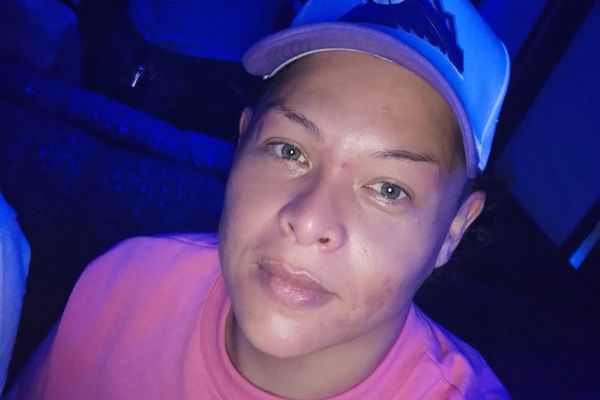
At each appointment, Brown, a 30-year-old content creator in New York City, said she explained the same concern, pointed to the same spot, and was met with the same response. They told her they couldn’t feel anything. That there was no lump. That she was wrong.
“I literally had to grab their hands and show them where the lump was, and they would be surprised and then just pass me to the next doctor to do the exact same thing,” Brown said. It took four rounds of this before anyone agreed to schedule a biopsy. By then, months had passed.
That experience reshaped how Brown approached medical care: it taught her that knowing her body better than the experts is vital. Additionally, it prompted her to seek out Black doctors whenever possible because she figured a Black physician would be more likely to believe her the first time around. A 2023 survey found that Black patients who have more visits with Black healthcare providers report having more positive medical experiences.
Brown’s story is not unique. Across gynecology, primary care, and reproductive health, many Black women describe navigating medical care as a nightmare. “To be a Black woman in America is to have an adverse experience at the doctor’s office, and with her health,” Brown said. “It’s one where you are constantly feeling dismissed, misunderstood, gaslit, downplayed and straight up lied to.” Whether through relentless self-advocacy, intimate knowledge of their own bodies, or the deliberate choice to seek out Black physicians, many Black women move through medical settings strategically, as a means of survival.
In 2018, Serena Williams revealed that after giving birth via emergency C-section, she nearly died when doctors at St Mary’s Medical Center in West Palm Beach, Florida, initially ignored her insistence that something was wrong. Williams, who had a known history of blood clots, explained that she had to push repeatedly for proper imaging and treatment. The realities that Black women face during pregnancy and childbirth have been thrust back into public discourse after the recent death of Dr Janell Green Smith. Smith, a Black certified nurse-midwife, died on 1 January from complications after a ruptured incision. It was less than a week after she gave birth at Prisma Health Greenville memorial hospital in Greenville, South Carolina.
In other cases, understanding standard medical protocols and knowing when care deviates from them has become a critical tool for self-advocacy. When Christine Thomas, a 33-year-old strategy consultant living in Washington DC, went in for her annual pap smear in 2018, she said her gynecologist made derogatory comments about her sexual history, then proceeded to use the largest speculum without lubricant. During the exam, she says the provider scraped her cervix with enough force that it caused extreme pain and bleeding. Aware that lubricant is routinely used during cervical screenings, Thomas asked for it to be applied. But the damage had already been done. The experience left her traumatized, and the following year, she skipped her annual pap smear entirely.
‘I feel like a lawyer making a case for my health’
Dr Kristamarie Collman, a primary care physician in Houston, points to dismissal of concerns, negligence, and mistreatment as a key factor in patients falling behind on their health. “In my experience, when patients don’t have to defend their own lived experiences, and when they feel listened to, the visits are just more efficient for them. They’re more likely to be involved, and to follow through with their care, which all lead to improved outcomes,” she said. Dr Chiamaka Ilonzo-Ukwu, an obstetrician-gynecologist in Tampa, said several of her Black patients have expressed struggling to fully connect with or trust prior healthcare providers, which has led to their hesitancy in voicing concerns or symptoms during appointments. “When communication and trust are lacking, it can result in a breakdown of the patient-provider relationship,” she added. “Unfortunately, this breakdown can contribute to poorer outcomes, including missed diagnoses, inadequate care, or the dismissal of patient concerns.”
Implicit bias and the chronic dismissal of pain have been widely documented issues in healthcare for Black patients. But research suggests that patient and provider racial concordance may contribute to improved health outcomes, including lower emergency department use, reductions in racial disparities in mortality for Black infants, and increased visits for preventative care and treatment. When seeing non-Black doctors, Brown said, medical appointments can often feel like a performance. “I automatically feel like I have to be proactive about my health,” she said. “I feel like I have to be my own doctor. I come in like a lawyer trying to make a case for my health.”
Brown is careful not to frame racial concordance as a cure-all. She acknowledged that internalized bias and misinformed training can exist anywhere – even among providers who share her racial identity. Still, she said, the difference is palpable. “I don’t have my guard down fully,” she added. “But I do feel more relaxed and like I can just be a patient in the room. I feel like they’re going to understand me culturally and the discrepancies we deal with.”
This month, Brown found herself facing the same familiar dismissal in the emergency room.
For six months, she had been dealing with worsening shortness of breath, chest tightness, and abnormal lung test results, culminating in a severe asthma flare-up that sent her to the ER. Over the course of a 12-hour visit, Brown said she asked for a different type of scan – one she had researched on her own, that could rule out conditions that prior imaging had failed to detect, and was forced to make her case repeatedly, explaining the same information to multiple providers while her symptoms persisted. Doctors dismissed the possibility of chronic obstructive pulmonary disease, telling her she was too young for it.
It wasn’t until she was finally seen by a Black doctor that the tone of the visit shifted. This time, she wasn’t met with skepticism, but with specific questions about autoimmune diseases that disproportionately affect Black women and can present with respiratory symptoms.
“It was the first time during the entire ER visit that a medical professional explicitly acknowledged how race could be relevant to my condition,” she said.
Medical education has long centered white patients as the default, leaving gaps in how conditions present in Black patients – particularly when it comes to autoimmune diseases and other chronic illnesses that disproportionately affect Black women. Ilonzo-Ukwu says Black physicians may be more attuned to these patterns through their own lived experience, which can heighten awareness and responsiveness, allowing providers to recognize concerns earlier and address issues more proactively. “We are acutely aware of the implicit biases and health disparities that exist within the healthcare system, and many of us have experienced these inequities first-hand as recipients of care,” she said.
Still, not everyone has access to a Black doctor, and Collman emphasizes that the burden of navigating bias should not fall on Black women themselves, but on healthcare systems, medical training, and individual providers. “Black patients shouldn’t have to become hyper-vigilant and medical experts when being seen by a doctor,” she said. “For us as healthcare providers, we must take our patients’ concerns seriously and begin to treat listening as a clinical skill.”
Ilonzo-Ukwu notes that emphasizing the benefits of race-concordant care is not a suggestion that only one type of physician can provide high-quality care to Black patients. Rather, it highlights existing gaps in trust, communication and outcomes – gaps that the healthcare system has yet to adequately address. To this, Ilonzo-Ukwu added: “The relationship between Black physicians and Black patients should be viewed as additive, not exclusive. It’s one important piece of a broader effort to improve maternal health outcomes for everyone.”