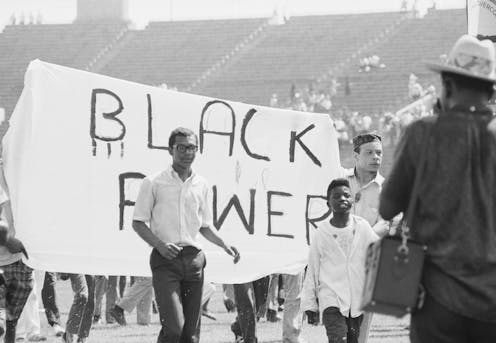
Fifty-eight years ago in the summer of 1966, a group of Black church leaders took out a full-page advertisement in The New York Times titled “Black Power.” Their densely worded statement called on national leaders, “white churchmen,” Black citizens and the mass media to correct the country’s racial power imbalance. In essence, they asked their fellow citizens to support Black power.
Prominent church leaders such as Rev. Paul Washington of the Church of the Advocate in Philadelphia, Rev. Gayraud Wilmore of the Presbyterian Commission on Religion and Race, and Rev. Benjamin Payton of the National Council of Churches were among the signatories. With years of civil rights experience, 48 Black church leaders boldly asserted their unequivocal support for the Black Power movement.