
Get all your news in one place.
100’s of premium titles.
One app.
Start reading
Tom’s Hardware
Tom’s Hardware
Technology
Jowi Morales

Bill Gates-backed silicon photonics startup develops optical transistors 10,000x smaller than current tech — optical chip can process 1,000 x 1,000 multiplication matrices

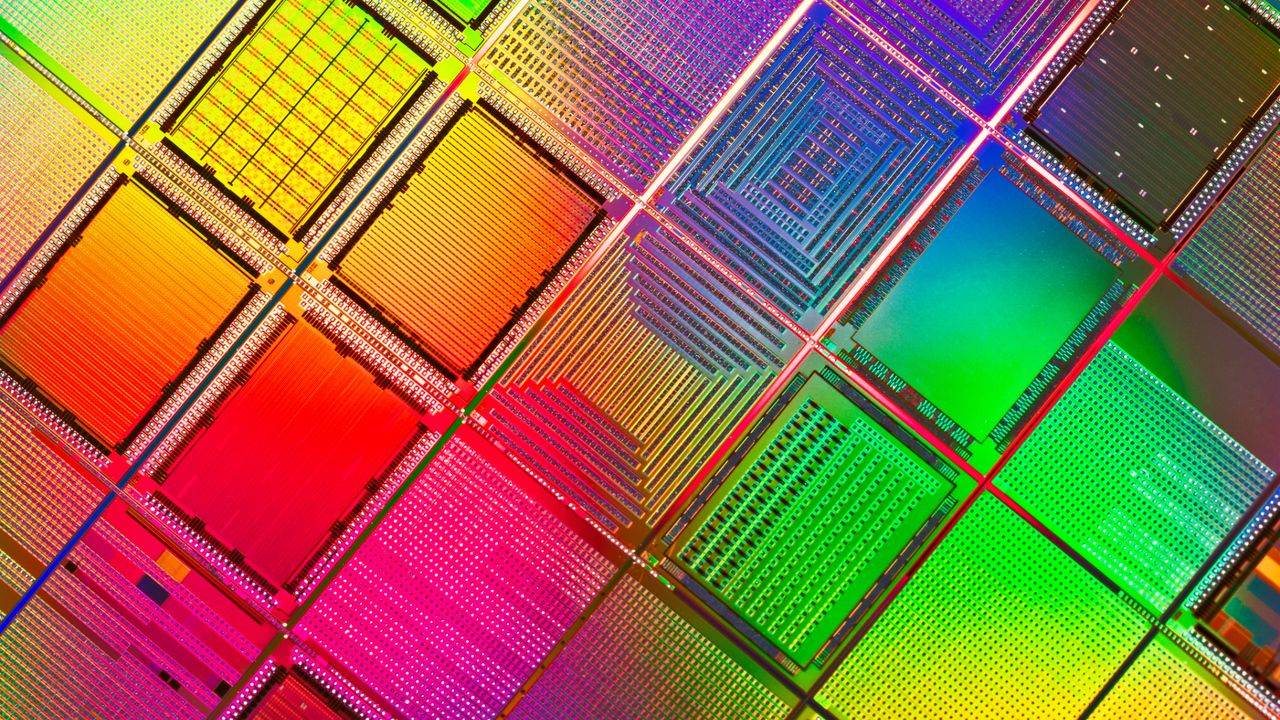
Silicon wafer closeup.

Neurophos, an AI chip started based in Austin, Texas and backed by Bill Gates’ Gates Frontier Fund, says that it has developed an optical processing unit (OPU) that the company claims is ten times more powerful than Nvidia’s latest Vera Rubin NVL72 AI supercomputer in FP4 / INT4 compute workloads, while still consuming a similar amount of power. According to The Register, the company achieves this by using a larger matrix and a much higher clock speed.

“On chip, there is a single photonic sensor that is 1,000 by 1,000 in size,” Neurophos CEO Patrick Bowen told the publication. This is about 15 times larger than the usual 256 x 256 matrix used in most AI GPUs. Despite that, the company was able to make its optical transistor around 10,000 times smaller than what’s currently available. “The equivalent of the optical transistor that you get from Silicon Photonics factories today is massive. It’s like 2 mm long,” Bowen added. “You just can’t fit enough of them on a chip in order to get a compute density that remotely competes with digital CMOS today.”

The company’s first-generation accelerator will have "the optical equivalent" of one tensor core, at around 25 square mm in size. This pales in comparison with Nvidia’s Vera Rubin chip, which is reported to have 576 tensor cores, but the difference is how Neurophos is using the photonic die. But aside from its larger 1,000 x 1,000 Matrix tile size, the startup’s first OPU, which it calls the Tulkas T100, will operate at a cool 56 GHz — much higher than the 9.1 GHz world record achieved on an Intel Core i9-14900KF and the 2.6 GHz boost clock on the Nvidia RTX Pro 6000. This allows it to beat Nvidia’s AI GPUs despite appearing to be underpowered on paper.

More importantly, Bowen says that it built its optical transistors using current semiconductor fabrication technologies, so it could potentially tap fabs like Intel or TSMC to mass produce them. Nevertheless, the chips are still in the testing phase and are not expected to enter volume production until 2028. It also needs to address challenges, like the need for massive amounts of vector processing units and static memory (SRAM).

Photonics is a new frontier that many companies are paying attention to. Nvidia already uses Spectrum-X Ethernet photonics switch systems in its Rubin platform, while AMD is set to develop a $280 million hub, specifically geared toward researching silicon photonics. Either way, it appears that this latest development is just a new wrinkle on the photonics frontier, and we should expect many more developments to come as the technology matures.

Follow Tom's Hardware on Google News, or add us as a preferred source, to get our latest news, analysis, & reviews in your feeds.

Sign up to read this article
Read news from 100’s of titles, curated specifically for you.
Already a member? Sign in here
Related Stories
Top stories on inkl right now
Our Picks
Fourteen days free
Download the app
One app. One membership.
100+ trusted global sources.