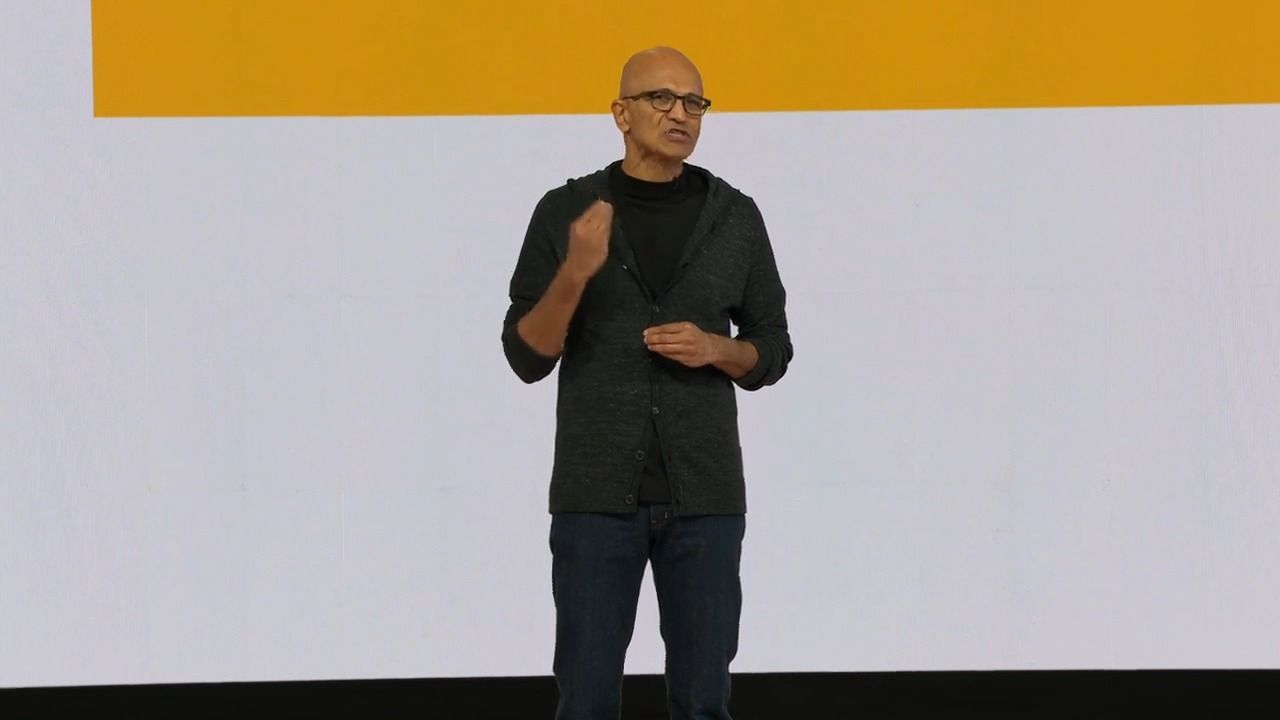
Microsoft Build 2026 is over, and as expected, Satya Nadella’s keynote was all about agentic systems, or AI that acts on your behalf without direct supervision. To that end, several features and applications were introduced.
This includes Microsoft IQ, which is now generally available across GitHub Copilot, Foundry, and Copilot Studios. It’s the new context layer that feeds AI agents real workplace knowledge (Work IQ from M365 Signals), structured business data (Fabric IQ), and fast web grounding via the new Web IQ. Frontier Tuning, available in private preview, allows agents to learn how your business operates within your compliance boundaries.

Developers got some practical upgrades to the tooling. For instance, the GitHub Copilot app (now available in preview) brings agentic workflows to a native desktop experience. Project Rayfin (also in preview) tackles the prototype-to-production gap by providing developers with a managed backend-as-a-service on Microsoft Fabric, built on GitHub-defined workflows.
We also got to see some hardware in the form of the Surface RTX Spark Dev Box, which targets sustained workloads, with up to 1 petaflop of AI compute and 128GB of unified memory, capable of running 120B-parameter models locally without driving up costs.
Seven new MAI models were introduced, including the MAI-Thinking-1 reasoning model and MAI-Code-1, which is tuned specifically for GitHub and VS Code. Speaking of multi-model support, Azure AI Foundry can also pick the right model for a task, so you won’t be locked in.
Now that the presentation is over, feel free to watch the embedded video and read my posts. For more details, you can also read Microsoft’s Build 2026 recap post.
Microsoft Build 2026 highlights
- Microsoft IQ is now available
- Seven new MAI models announced
- Surface RTX Spark Dev Box brings serious AI horsepower
- GitHub Copilot app enters preview
- Agent 365 delivers quick fixes
Watch Microsoft Build 2026 with us
Live: Latest updates
Microsoft Build 2026 is almost here
Hello, everyone, and welcome to our live coverage of Microsoft Build 2026. This year promises to deliver a ton of AI-focused panels and announcements, and we'll be covering it all as it happens. There's going to be a bunch of tech talk, but we'll be here breaking it all down and detailing what is (or isn't) important for you.
Agentic AI
AI will be the main focus this year at Build, but Microsoft will specifically nail down on "agentic AI." That's a term you'll hear all throughout the show, so here's a breakdown of what that is.
Right now, people use LLMs like ChatGPT to ask questions. AI agents, however, can take proactive actions on your behalf. For instance, they can resolve scheduling conflicts in your calendar, collaborate with other AI agents, and handle other complex tasks.
Reports suggest that Microsoft will be bringing agents to Windows 11, which should be beneficial for developers and enthusiasts. It'll be interesting to see how Microsoft's agentic AI differs from others.
GitHub Copilot
GitHub is an important platform for developers, and it could become even more useful with AI agents. We could see deeper integrations with Visual Studio, VS Code, and the full dev lifecycle.
For the regular person, this could lead to higher-quality apps and faster updates. I expect to see a sizeable portion of today's show focus on GitHub Copilot.
Nadella's sneak peak
A sneak peek at tomorrow's keynote...Tune in here at 9:30am PT: https://t.co/U30neby5yv pic.twitter.com/IQUBdL0AxcJune 2, 2026
On X, Microsoft CEO Satya Nadella posted a few behind-the-scenes photos of Microsoft Build. One is an offstage shot of Nadella rehearsing, and another is a shot of a filming camera. Alongside what appears to be a child cooking (likely code).
There's also an intriguing shot of something with a Microsoft logo. It's interesting because that appears to be the top of an Xbox Series X/S. I'm sure the internet will run wild speculating what that could be.
Nvidia RTX Spark
While Build is generally focused on development tools, I have to believe we'll get some talk about the recently announced Nvidia Spark CPU.
Given that the processor is meant to facilitate on-device AI, it just makes sense for Windows developers to discuss their plans for Nvidia's CPU. And let's not forget that the recently announced Microsoft Surface Laptop Ultra has an RTX Spark chip, so it's almost guaranteed we'll hear more about it.
Windows Foundry
Speaking of running on-device AI models, Windows Foundry is the platform that allows developers to do so on laptops and PCs using the machine's NPU, GPU, or CPU. On-device AI is important if you're working on something you'd rather not share in the cloud. I expect to see some live demos featuring on-device inference and other developer-optimized experiences.
Copilot super app?
As @testingcatalog posted on X, Microsoft could debut a Copilot "super app" at Build. According to the account, this app would combine Copilot, Cowork, GitHub Copilot, and introduce a new Autopilot Scout Agent.
Take that with a grain of salt, but a Copilot super app seems like a no-brainer for developers, letting them keep all their work in one place.
What about Windows 12?
While we’ve heard rumblings about Windows 12 for years, there has not been official confirmation from Microsoft. Build isn’t usually an event where major software is announced, so it’s unlikely that the company will unveil Windows 12 there. However, we’ll no doubt see elements of what could end up in the operating system at the various sessions. What actually makes it into Windows 12 is anyone’s guess, however.
Surface Laptop Ultra
Microsoft Build is generally about development tools, but we might get more information about the Surface Laptop Ultra. After all, it is being billed as a mobile workstation thanks to the power of Nvidia RTX Spark. I don't expect an entire segment on Microsoft's upcoming laptop, but I'd also be surprised if it wasn't brought up in some capacity.
Azure AI platform
While on-device AI will be a major talking point during Build, Microsoft won't neglect its cloud-based Azure platform.
To that end, expect discussions on the latest developments, including sessions detailing things like training and fine-tuning models efficiently, multi-model orchestration, and moving prototypes to production in a more cost-effective manner.
Nvidia @ Microsoft Build
It shouldn't come as a surprise that Nvidia will be at Microsoft Build this year. As I posted earlier, Team Green's new RTX Spark chip is all about on-device AI, and should be a boon for both developers and enthusiasts who want to get work done without going to the cloud.
"Join us online or in person to watch the keynote and discover how we're partnering with Microsoft to accelerate development and deployment of AI," posted the Nvidia Infrastructure account on X.
It'll be interesting to see live demos, but even if we don't, learning more about the partnership should be interesting.
30 minutes left!
We're just half an hour from the big show! Satya Nadella will start things off with the keynote speech, and we'll then be in for a heap of AI news and updates for developers. Get. Ready!
Setting expectations
I know it's fun to get hyped over events, but I wanted to set expectations for Microsoft Build, so you won't be disappointed.
While new hardware or consumer features might be announced, the core of Build is centered on developers. This year specifically, we'll see a lot of talk about AI tools and agentic AI. Sure, this won't be an event like WWDC or Google I/O, but it's fascinating to learn about the tools that devs will use to make the apps we use work better.
5 minutes!
I hope you've got yourself a nice snack, a tasty drink, and a comfortable seat, because the show is about to start!
Microsoft Build 2026 is officially underway!
Microsoft Build 2026 has started! Keep it locked here for all the latest updates as they happen.
Satya hits the stage!
Only a few minutes late, Satya Nadella finally hits the stage for Microsoft Build 2026.
He says the key takeaway is how developers manage in this new AI frontier. The conference will discuss the tech stack, including infrastructure, models, agent runtime, and developer tools.
Unmetered intelligence
Nadella is now discussing the company's vision for on-device AI, which will take AI use and development away from the cloud and to one's PC. To that end, Microsoft is expanding Windows AI APIs to more PCs.
A new program called Aion 1.0 Plan will have local reasoning and tools calling for agentic apps. Processors from AMD, Intel, and Qualcomm will make this happen. And of course, Nvidia RTX Spark. One of the first devices built for on-device AI will be the Surface Laptop Ultra.
Pushing the architecture to the limit
Surface RTX Spark dev box has been unveiled. This was that Xbox-like image we saw from Nadella's post on X earlier today. So, no, it's not Project Helix.
This device will have 1 petaflop of AI compute, 20 CPU cores, and 128GB of unified RAM. Those are some of the expected specs for RTX Spark. Expect 1 trillion parameters of local compute, which is pretty wild. It's basically a data center on your desktop.
A live demo
Kayla Cinnamon takes the stage to show some live demonstrations for developers to use on the Surface RTX Spark dev box. Python and other dev tools will be available on the RTX Spark dev box and on other Windows machines.
Using AI agents for development
We see Kayla using an agent to help her on a development project. You can use simple commands to make otherwise complex tasks easier. Many tools will come preconfigured. Not only can devs issue typed commands, but they can also issue voice commands.
Using the cloud and minimizing the impact of AI use
Satya Nadella returns, and now we're talking about the cloud. There's a lot that goes into using AI, and some of it can get downright expensive. To that end, Microsoft has a community-first plan to minimize the impact on the environment and on people's electricity bills.
An AI super center
Nadella is now discussing how to build data centers that have minimal environmental impact. This means minimizing water usage to what a single restaurant would use, for example. Again, this will be done in partnership with AMD, Intel, and Nvidia.
Cobalt 200
New Azure Cobalt 200 VMs deliver a 50% performance improvement and are fully optimized for modern agentic AI workloads.
"Cobalt 200 is purpose-built from silicon to servers to services—integrating Microsoft’s latest innovations in security, networking, storage, and offload to outperform traditional Arm-based compute," says a blog post on Microsoft Azure website.
Jensen Huang makes a guest appearance
Nvidia CEO Jensen Huang makes a guest appearance to discuss Nvidia RTX Spark.
Jensen details how Nvidia has created a chip that's purpose-built for AI. Using Windows apps, RTX Spark-powered machines could be the next major step in computing. Users can have agents perform tasks on their behalf without being there. Jensen says the personal PC has become a personal AI.
Discussing the evolution of AI development
Nvidia and Microsoft have worked to make AI more efficient and also use less energy, all while making AI more useful. This is how we have arrived at AI agents that can run on a user's PC rather than in the cloud, which is facilitated by giant AI data centers.
Agentic AI is the next step
Until now, AI has involved asking questions. With agents, users can effectively have an assistant working on their behalf. Jensen says the aim is to make agents faster and ultimately make using them profitable.
New form factors for the agent era
Project Solara is a new chip-to-cloud platform designed to make using agents more seamless. The devices in question resemble a smart clock and a work ID badge rather than traditional PCs or laptops. This is designed for places where traditional devices aren't available or aren't optimal. Azure will tie all this together.
Project Solara devices
The smart clock-like device is meant to remain stationary, while the ID badge is meant to go with you. You can use your fingerprint to unlock the latter, which is pretty cool. You can even record video with the badge and give it voice instructions. It will clean up whatever you said and send it to your team.
A chat with Qualcomm's CEO
Qualcomm CEO Cristiano Amon sits down with Satya Nadella to discuss AI agents across different devices, including the ID badge prototype. Amon says this will change the definition of wearables and AI form factors in general. The smartphone might have a great design, but it may not be ideal for every use case.
Discussing Models
We're now on to the next layer in the stack: models. Right now, Windows Foundry has 11,000 models. When building an agentic system, it's important that it supports various models depending on specific needs or preferences.
A new service called Azure HorizonDB has been announced. It can scale with the projects it works on, which should help developers.
Web IQ announced
WebIQ has been updated to support AI agents that use the web to deliver the latest updates, helping devs build agentic systems.
Elijah Straight takes the stage to detail how WebIQ works. The long-running agent will produce a brief for the user to respond accordingly. The agent was built in Foundry and was then published to 365 for the entire team to use. When asked a question, WebIQ sources the web to deliver the latest information.
Bespoke answers
WebIQ won't just give you generic answers, but will use your knowledge (such as your company's guidelines) to give you applicable answers.
OpenClaw on Windows
OpenClaw is coming to Windows. Scott Hanselman and Samantha Song are on stage discussing how they each use their OpenClaw agents and are doing a live demo. We see everything the OpenClaw is tackling, along with other options you can configure to make the agent do exactly what you need.
Using OpenClaw to clean your desktop
During the demo, we see how you can have an OpenClaw agent clean up your desktop. It's a small thing, but it goes to show how agents are ready to help you with any task... no matter how trivial they might seem.
OpenClaw founder takes the stage
OpenClaw founder Peter Steinberger briefly takes the stage to discuss OpenClaw coming to Windows. To bring the point home, Scott said this was the first time we have seen OpenClaw running on the Surface Laptop Ultra... which is true, since that device was just announced.
Developer tools
We're now talking about Developer Tools. This is where GitHub comes into play, as it has been a great resource for developers.
GitHub Copilot app announced
As rumors suggested, GitHub Copilot is getting an app. Development tools are now being rolled out.
Cassidy Williams takes the stage to show the app. This app will be the home base for developers. In the demo, Cassidy has the app work on multiple projects at once without agents stepping on each other. You can then use agent merge to bring it all together.
Canvas demo
We see a demo of the agent using a live video feed of Cassidy, which showcases the multimodal capabilities of the GitHub Copilot app.
Security
Now, let's discuss security and safety when using AI agents. Agent 365 SDK will be one of the tools to help with this.
Amanda Foster takes the stage to show how this works. With a simple prompt, all the agents are protected and will also keep one's data secure.
Agents get better the more they're used
One interesting thing is that agents will learn from experience and improve themselves through updates, depending on the tasks they are asked to do. All of this has to be approved by admins, so agents can't just do whatever they want.
Security with AI
Sarah Young, Director of Security, takes the stage to show how AI can be used for security. Agents work together to analyze potential scams and determine which vulnerability was exploited to gain access to a system. You can then use these agents to clean up the code and see what it has done. This can be done locally and uploaded to GitHub Security.
Chainsmokers take the stage
Alex Pall and Drew Taggart from the Chainsmokers take the stage. In case you don't know (which I certainly don't), they're musicians who are also developers. This seems like the obligatory celebrity cameo, but it seems the folks watching live appreciate it.
Autopilots
Autopilots are enterprise-grade, long-running agents. The first one being introduced is called Scout. The sizzle reel shows a user asking Scout to handle several tasks simultaneously. Scout works where you work, no matter what app it might be. It's available today to developers.
Microsoft AI
Mustafa Suleyman, chief of Microsoft AI, takes the stage to discuss Microsoft AI. He discusses how AI has grown over the years and how it will continue to grow. Mustafa says it has to be AI that prioritizes humans.
A family of new models will help with this, all under the MAI umbrella. This includes MAI Image 2.5 for visual work, MAI Transcribe 1.5 for transcribing (in multiple languages), and more. All of this is rolling out right now.
MAI models coming to RTX Spark
Despite calling it "N1X," Mustafa said these MAI models will be available for RTX Spark machines. Given the different use cases for MAI, such as voice, text, and video generation, it'll be interesting to see what RTX Spark can do.
Microsoft + Mayo Clinic
President and CEO of the Mayo Clinic, Gianrico Farrugia, takes the stage to discuss the company's partnership with Microsoft. The aim is to build a frontier model to help patients.
MAI Thinking demo
Tanaya Yadav, senior product manager, takes the stage to show how MAI Thinking works. The demo focuses on training agents to do what you need them to do. This can take hours, but it should result in agents that are more useful.
Microsoft Discovery for science
David Carmona takes the stage to discuss how Microsoft Discovery is being used to help scientists improve plastic recycling. The agents use scientific principles to figure this out, and David said it could take hours or days, just like real scientists would. This shows how agents can be tailored to perform specific tasks and not just dish out generic (and wrong) answers.
A science class on stage
I don't know about you, but chemistry goes way over my head. Still, it's impressive to see scientists using these tools to help mankind.
Quantum computing
Now we're talking about quantum computing, which is likely the next frontier in computing. Majorana 2 is a processor that will be used for creating scalable quantum computing. It's capable of 1-microsecond operations, which is something that's quite mind-boggling.
And that's a wrap
Microsoft Build is officially over! That was certainly a firehose of information, but hopefully it will help developers actually make folks' lives easier and do so affordably.