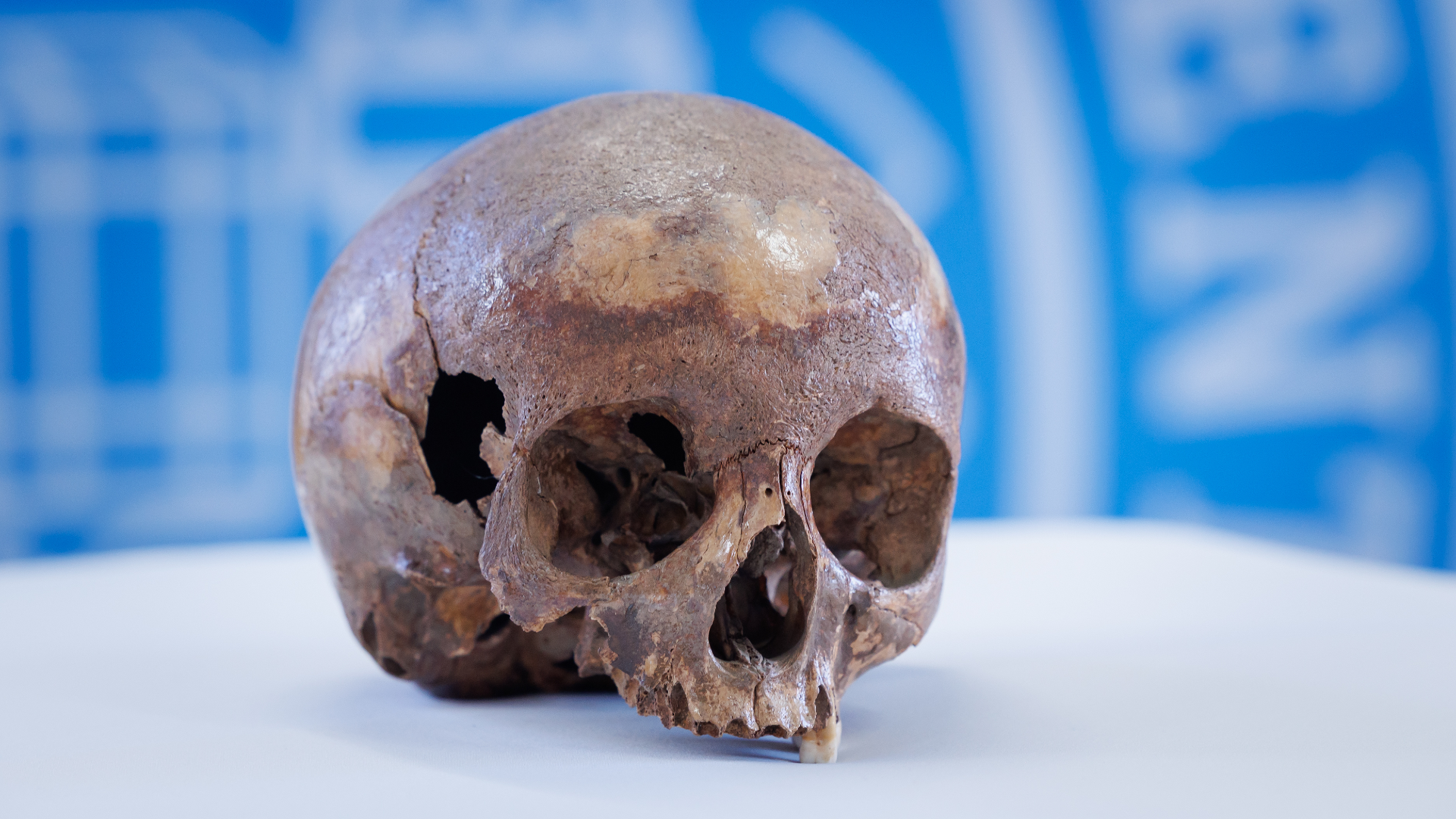
A skull long assumed to be from Arsinoë IV, Cleopatra's half sister, is actually from an adolescent boy who had a genetic disorder, according to researchers. In a new study, the combination of CT scans and DNA analysis has proved once and for all that the skeleton, which was discovered in Turkey a century ago, was not Arsinoë.
In 1929, a skeleton was found in a marble sarcophagus in a building called the Octagon at Ephesus, an archaeological site in Turkey that boasted a massive temple to Artemis, the ancient Greek goddess of the hunt. There were no grave goods or inscriptions, but archaeologists at the time concluded that the burial was made for an important young woman. They guessed that the occupant of the tomb might have been Arsinoë IV, who took up arms against her half sister and Julius Caesar and led the Siege of Alexandria in 48 to 47 B.C. Arsinoë and her troops lost that battle, and she sought asylum at the Temple of Artemis in Ephesus. In 41 B.C., when she was 22 years old, Marc Antony ordered Arsinoë's execution.