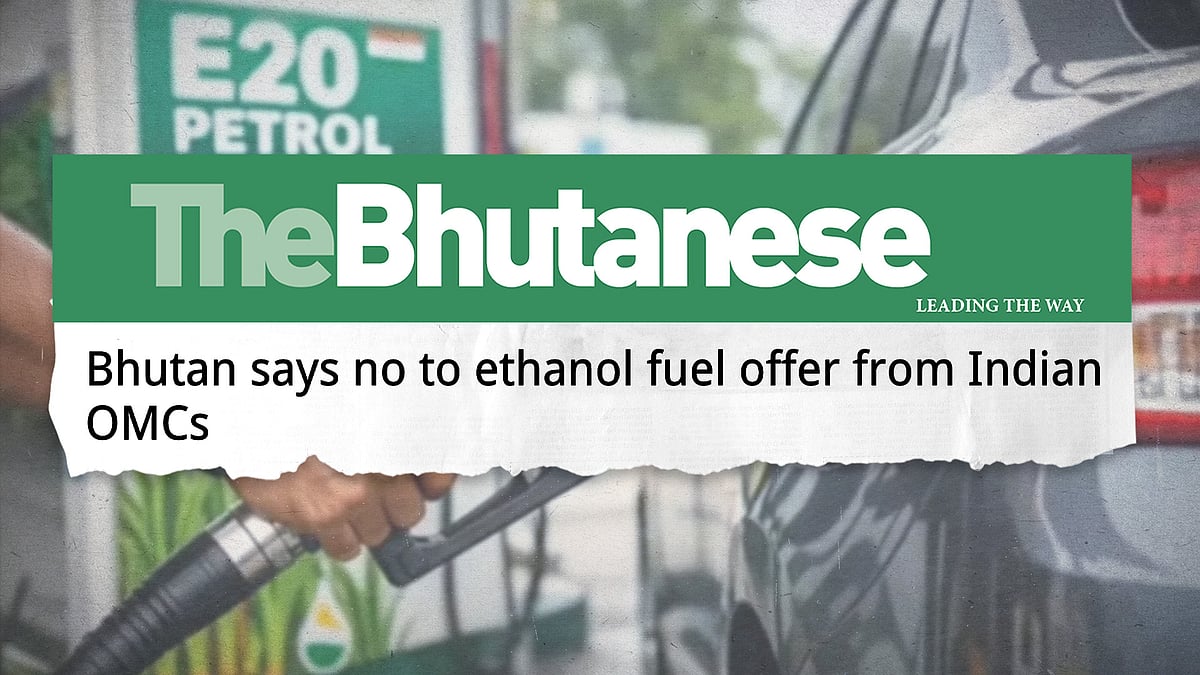
Last week, Bhutanese newspaper The Bhutanese reported that Bhutan had declined an offer from Indian Oil Marketing Companies (OMCs) to supply E20 petrol.
The report cited concerns over ethanol’s hygroscopic nature – its tendency to absorb water – which, combined with old and potentially leaky underground storage tanks in Bhutan’s Himalayan terrain, could contaminate the fuel and damage vehicles.
Bhutan has politely declined offers by Indian Oil Marketing Companies to buy E 20 petrol as Bhutan does not have the storage facilities for such a hygroscopic (water absorbing) fuel.
— Tenzing Lamsang (@TenzingLamsang) July 3, 2026
This is especially tricky in a Himalayan terrain with seepage in tanks.https://t.co/MTB09mp7oy
Three days later, India’s Ministry of Petroleum and Natural Gas disputed the report. In a fact-check posted on its official X account, the ministry said the claims were “incorrect,” adding that no OMC had made any such offer and that no proposal to export E20 to Bhutan existed.
Fact Check
— Ministry of Petroleum and Natural Gas #MoPNG (@PetroleumMin) July 5, 2026
❌ Claims that Bhutan declined an offer to import E20 petrol from India are incorrect.
No such offer has been made by the Oil Marketing Companies (OMCs), and there is no proposal for export of E20 petrol to Bhutan.
✅ Please rely only on official information from… pic.twitter.com/sqyAcEIvbw
However, Tenzing Lamsang, the editor of The Bhutanese, stood by the paper’s report. He tried to counter the ministry with his tweet, which had a written reply from Bhutan’s Department of Trade, confirming the claim that Indian OMCs had raised E20 during technical meetings, and that the department had asked them to continue supplying normal petrol instead. He said his verbal interviews with officials corroborated this account as well.
Since there is an official denial, please find the written response by the Department of Trade of the Bhutanese Govt confirming to me an offer was made by Indian OMCs & the Department requested the OMCs to supply normal petrol.
— Tenzing Lamsang (@TenzingLamsang) July 5, 2026
My verbal interviews confirmed it too. pic.twitter.com/0z1Q9zbqTD
The document does not use the words “formal offer” or “proposal,” which is the basis of the ministry’s denial. It does, however, detail Bhutan’s concerns over its storage tank infrastructure, and states that Bhutan has asked India for advance notice if the country eventually shifts to fully ethanol-blended petrol, so fuel dealers have time to upgrade their tanks.
Bhutan’s largest fuel distributor, Tashi BOD, has separately said its stations are not currently equipped to handle ethanol-blended fuel because of the seepage issue.
This comes as India’s own E20 rollout faces domestic scrutiny over reports of reduced mileage and vehicle wear.
Neither Lamsang nor the ministry uploaded the full document. So the question remains unresolved whether an offer was formally made or informally raised during discussions.
Newslaundry is a reader-supported, ad-free, independent news outlet based out of New Delhi. Support their journalism, here.