

The Most Decorated Skier of Our Time
Mikaela Shiffrin knows what it means to chase down a challenge. On the steepest mountain slopes, timing is everything; every moment counts, down to fractions of a second. Precision, discipline, and dedication have carried Shiffrin to the top of alpine skiing since she first burst onto the international scene as a teenager. Having bested the world’s top competitions across multiple disciplines, she remains widely recognized as the most dominant global alpine skier in history.

Shiffrin’s career is defined not by flashes of success, but by remarkable consistency – season after season of podium finishes, championships, and historic milestones. In 2023, Shiffrin broke the all-time win record with her 87th victory. Since, she has been resetting her own records. In 2025, she hit 100 World Cup victories. This record-resetting achievement was yet another to cement her legacy in the sport, but it also underscored something she has long embodied: resilience and greatness built over time, shaped by support systems, sacrifice, and an unwavering commitment to what matters most.
That foundation was laid early, and it’s something she credits in part to her beloved grandmother, Betty.
Betty: The Grandmother Who Inspired a Champion
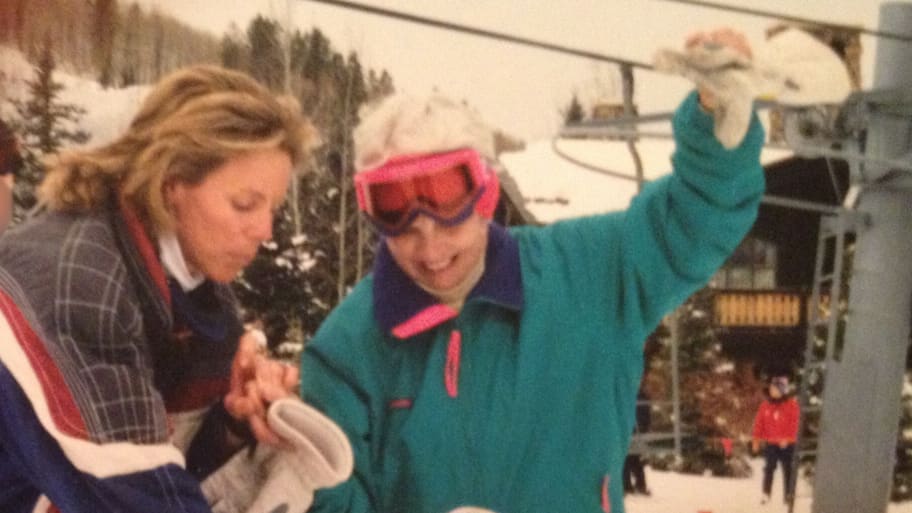
Shiffrin’s love for skiing began with Betty, who was a practicing nurse and an avid skier herself. She encouraged Shiffrin’s passion for skiing from an early age, spending countless hours together on the mountain, helping foster both Shiffrin’s technical skills and her confidence.
Shiffrin has described Betty as one of her biggest supporters and the reason she pursued skiing at the highest level. Throughout Shiffrin’s career, Betty’s influence has remained a constant presence, shaping her drive and dedication on the slopes.
That influence never faded, even as they navigated an unexpected and challenging chapter that reshaped their lives.

Navigating Alzheimer’s Disease Amid a Rising Career
When Shiffrin was a teenager, her grandmother was diagnosed with Alzheimer’s disease, which profoundly affected her entire family.
“When we first started noticing memory and thinking issues like misplacing things and forgetting important dates, we wrote it off as signs of normal aging,” Shiffrin explains. But they began to suspect something more when her refrigerator, once stocked with fresh, carefully chosen foods, was suddenly crowded with expired items.
By the time she was diagnosed, Betty had already begun experiencing more serious cognitive and functional decline. For those closest to her, the transformation was difficult.
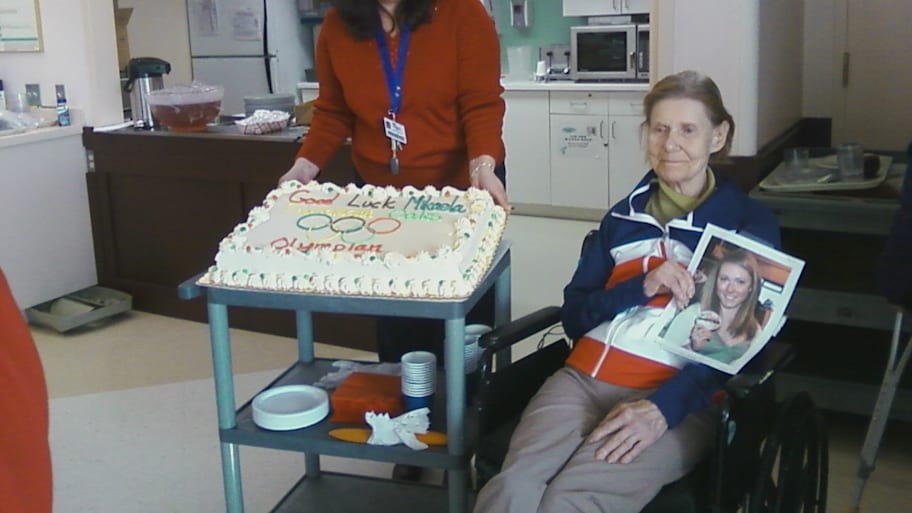
Shiffrin’s father, Jeff – a doctor – was familiar with the medical progression of Alzheimer’s disease. But despite understanding it clinically, he struggled emotionally as he stepped into the role of caregiver. At the time, treatment options were limited; there wasn’t much to do in the face of this devastating diagnosis. He made enormous sacrifices to care for Betty, while also supporting Shiffrin’s increasingly demanding ski career and travel schedule – a dual sacrifice that she says made her career success today possible.
Partnering With Lilly to Advocate for Earlier Action
As Shiffrin reflected on her grandmother’s journey, she began to understand it in new ways – not just as a granddaughter, but as an advocate – from watching the impact of cognitive changes on a loved one to seeing the toll on family caregivers.
Today, there are amyloid-targeting therapies available for eligible patients with early symptomatic Alzheimer’s disease. For those noticing memory and thinking issues in themselves or a loved one, it is critical to talk to a doctor right away.
It’s why Shiffrin has partnered with Lilly to share her family’s story. “I’m really grateful for the opportunity to share the importance of talking to a doctor about memory and thinking issues,” Shiffrin says. “I want to empower families to understand the treatment options available for early symptomatic Alzheimer’s disease.”
Early Symptomatic Alzheimer’s Disease Treatments Available Today, Like Kisunla
One amyloid‑targeting therapy (ATT) available today is Kisunla, which is approved and available in the U.S. as KISUNLA™ (donanemab-azbt) injection for intravenous use (350mg/20mL).
Kisunla is approved to treat adults with early symptomatic Alzheimer's disease. Kisunla targets and reduces amyloid plaques in people with early symptomatic Alzheimer’s disease, which includes mild cognitive impairment or mild dementia stage of disease. While Kisunla cannot reverse or stop existing memory and thinking issues that are due to early symptomatic Alzheimer’s disease, it can help slow the progression of the disease, which could offer people with the condition the opportunity to focus on what matters most to them.
[In a clinical study at 18 months, people treated with Kisunla showed a significant reduction in amyloid plaques compared with those who were given placebo.]
SELECT SAFETY INFORMATION
Kisunla can cause Amyloid-Related Imaging Abnormalities, or “ARIA.” ARIA is a common but serious side effect that does not usually cause any symptoms, but can be serious. ARIA can be fatal. ARIA is most commonly seen as temporary swelling in an area or areas of the brain that usually goes away over time. Some people may also have spots of bleeding on the surface of or in the brain and infrequently, larger areas of bleeding in the brain can occur.
[In a clinical study at 18 months, people treated with Kisunla showed a significant reduction in amyloid plaques compared with those who were given placebo.]
Empowering Families to Act Now
More than 7 million Americans are currently living with Alzheimer’s disease, and countless more are caring for loved ones affected by it. Diagnosing and treating Alzheimer’s disease in the early stages has the potential to slow disease progression, which could provide the opportunity for people to perform the tasks that are meaningful to them.*
[*While Kisunla (donanemab-azbt) is not a reversal or cure, it can help slow the progression of the disease.]
“I’ve seen firsthand the toll Alzheimer’s disease can take on loved ones and caretakers who are often carrying the emotional burden,” Shiffrin says. She hopes her story will encourage others to prioritize conversations about Alzheimer’s disease earlier, as taking a more proactive approach may lead to a more timely diagnosis and early intervention.
Shiffrin’s career has always been about momentum – building speed, maintaining control, and moving forward with purpose. Now, beyond the slopes, she is applying that same mindset to this cause that will forever remain close to her heart.
If you or a loved one is experiencing memory and thinking issues due to early symptomatic Alzheimer’s disease and would like to learn more about KISUNLA, visit kisunla.lilly.com.
INDICATION AND SAFETY SUMMARY WITH WARNINGS
Kisunla™ (kih-SUHN-lah) is used to treat adults with early symptomatic Alzheimer’s disease (AD), which includes mild cognitive impairment (MCI) or mild dementia stage of disease.
Warnings - Kisunla can cause Amyloid-Related Imaging Abnormalities or “ARIA.” This is a common side effect that does not usually cause any symptoms, but serious symptoms can occur. ARIA can be fatal. ARIA is most commonly seen as temporary swelling in an area or areas of the brain that usually goes away over time. Some people may also have spots of bleeding on the surface of or in the brain and infrequently, larger areas of bleeding in the brain can occur. Although most people do not have symptoms, some people have:
- Headache
- Dizziness
- Nausea
- Difficulty walking
- Confusion
- Vision changes
- Seizures
Some people have a genetic risk factor (homozygous apolipoprotein E ε4 gene carriers) that may cause an increased risk for ARIA. Talk to your healthcare provider about testing to see if you have this risk factor.
You may be at higher risk of developing bleeding in the brain if you take medicines to reduce blood clots from forming (antithrombotic medicines) while receiving Kisunla. Talk to your healthcare provider to see if you are on any medicines that increase this risk.
Your healthcare provider will do magnetic resonance imaging (MRI) brain scans before and during your treatment with Kisunla to check you for ARIA. You should carry information that you are receiving Kisunla, which can cause ARIA, and that ARIA symptoms can look like stroke symptoms. Call your healthcare provider or go to the nearest hospital emergency room right away if you have any of the symptoms listed above.
There are registries that collect information on treatments for Alzheimer’s disease. Your healthcare provider can help you become enrolled in these registries.
Warnings — Kisunla can cause serious allergic and infusion-related reactions. Do not receive Kisunla if you have serious allergic reactions to donanemab-azbt or any of the ingredients in Kisunla. Symptoms may include swelling of the face, lips, mouth or eyelids, problems breathing, hives, chills, irritation of skin, nausea, vomiting, sweating, headache or chest pain. You will be monitored for at least 30 minutes after you receive Kisunla for any reaction. Tell your healthcare provider right away if you have these symptoms or any reaction during or after a Kisunla infusion.
Other common side effects
- Headache
Tell your healthcare provider right away if you have any side effects. These are not all of the possible side effects of Kisunla. You can report side effects at 1-800-FDA-1088 or www.fda.gov/medwatch.
Before you receive Kisunla, tell your healthcare provider:
- About all medicines you take, including prescription and over-the-counter medicines, as well as vitamins and herbal supplements. Especially tell your healthcare provider if you have medicines to reduce blood clots from forming (antithrombotic medicines, including aspirin).
- About all of your medical conditions including if you are pregnant, breastfeeding, or plan to become pregnant or breastfeed. Kisunla has not been studied in people who were pregnant or breastfeeding. It is not known if Kisunla could harm your unborn or breastfeeding baby.
How to receive Kisunla
Kisunla is a prescription medicine given through an intravenous (IV) infusion using a needle inserted into a vein in your arm. Kisunla is given once every 4 weeks. Each infusion will last about 30 minutes.
Learn more
For more information about Kisunla, call 1-800-LillyRx (1-800-545-5979) or go to kisunla.lilly.com.
This summary provides basic information about Kisunla. It does not include all information known about this medicine. Read the information given to you about Kisunla. This information does not take the place of talking with your healthcare provider. Be sure to talk to your healthcare provider about Kisunla. Your healthcare provider is the best person to help you decide if Kisunla is right for you.
DN CON BS APP
Kisunla™ is a trademark owned or licensed by Eli Lilly and Company, its subsidiaries, or affiliates.
PP-DN-US-XXX 01/2026 [IA1] © Lilly USA, LLC 2025. All rights reserved.
Sources:
- Alzheimer’s Association. 2025 Alzheimer’s Disease Facts and Figures. Alzheimers Dement. 2025;21(5). doi:10.1002/alz.70235
- Porsteinsson AP, Isaacson RS, Knox S, Sabbagh MN, Rubino I. Diagnosis of Early Alzheimer's Disease: Clinical Practice in 2021. J Prev Alzheimers Dis. 2021;8(3):371-386. doi:10.14283/jpad.2021.3
[IA1]To be updated
This article was originally published on www.si.com as Beyond the Slopes: Mikaela Shiffrin’s Mission to Help Educate Families Facing Alzheimer’s Disease .