Get all your news in one place.
100’s of premium titles.
One app.
Start reading
The Times of India
The Times of India
World
TOI World Desk

Beyond Netflix and Narcos: The real story of drug cartels ruling over Mexico

Frederick Forsyth’s later works might not carry the genius of his originals. Familiarity does breed contempt, and that maxim holds true even for Forsyth’s novels where the attention-to-detail made it a class above most spy thrillers but familiarity with his style made it a little more pedestrian. However, one novel that stands apart in the tapestry Forsyth’s later works is Cobra, the sequel to his classic Avenger with two antagonists – spymaster Paul Devereux III and former Tunnel Rat-turned-bounty hunter Calvin Dexter -teaming up to take down the global cocaine cartel. In that Forsythian fiction, when the spymaster figures out a way to cut off the cocaine tap, the cartels in Europe, North America, and South America go berserk killing each other with thousands caught in the crossfire. It was oddly reminiscent of the violence that followed the killing of cartel overlord Nemesio Oseguera Cervantes, known by his moniker, El Mencho, in Mexico. It appeared that killing led to the cartels going berserk with violence reported alongside Mexico.

Netflix, mythology, and the illusion of cartel order
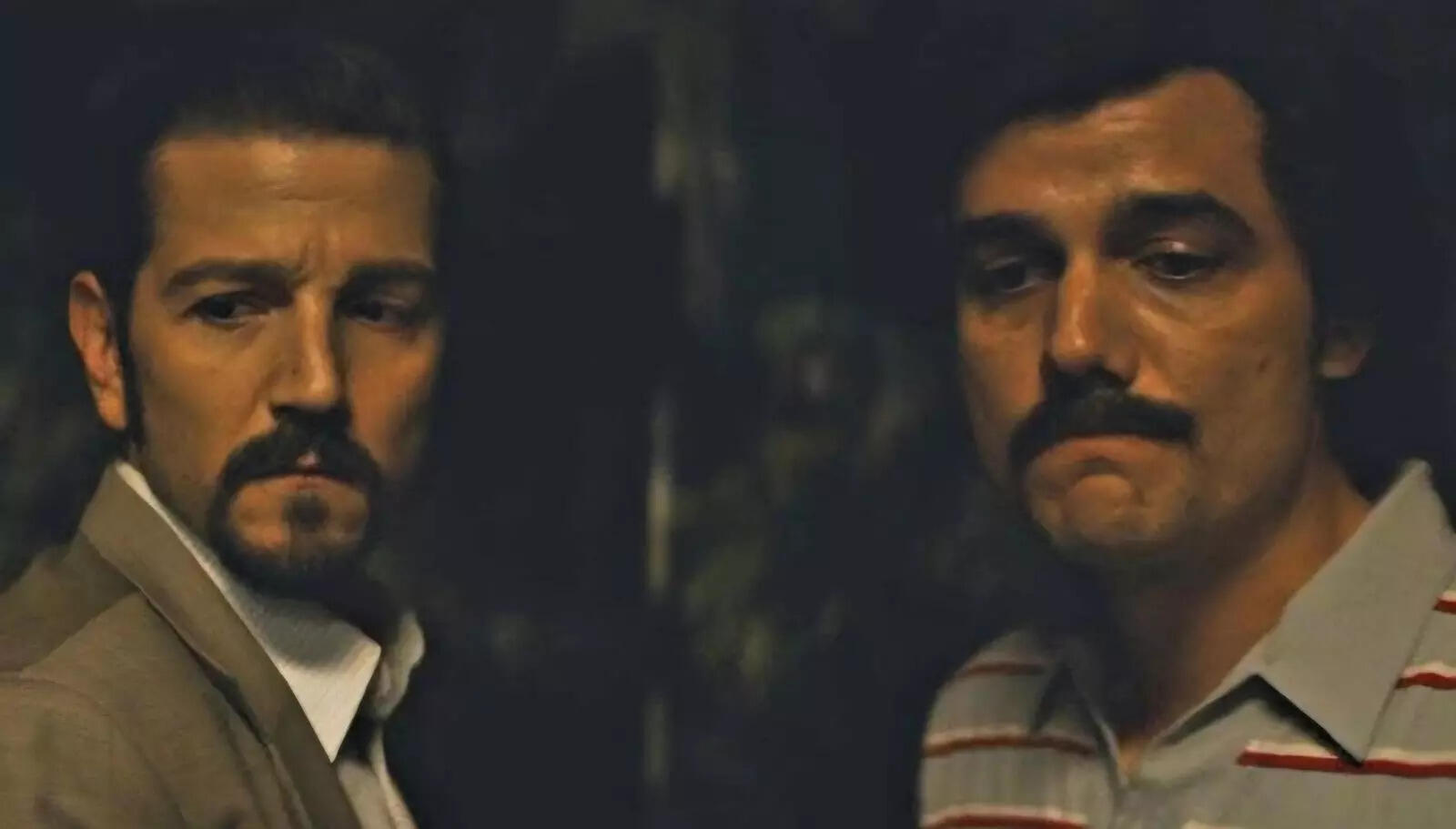
For most of the world, the Mexican cartels exist first as images before they exist as reality, and those images were shaped not by journalists or historians but by Netflix. Narcos: Mexico and El Chapo did not simply dramatise events; they provided the visual grammar through which cartel power became intelligible to outsiders. When Diego Luna’s Miguel Ángel Félix Gallardo calmly explains the logic of plazas, he appears less like a criminal and more like a man inventing a multinational enterprise, imposing rational order on an otherwise chaotic marketplace of smugglers. When Michael Peña’s Enrique “Kiki” Camarena slowly realises the scale of the system he is confronting, the viewer understands that this is not merely a law enforcement problem but a structural confrontation between two parallel sovereignties. When Marco de la O’s Joaquín “El Chapo” Guzmán rises from obscurity, he appears as the inevitable successor in a system that seems almost feudal in its continuity.

These portrayals endure because they make the cartel world legible, presenting it as a hierarchy with founders, lieutenants, betrayals, and succession. Yet the real cartel system was never as orderly as television required it to be. It was not a corporation with an organisational chart but a constantly shifting ecosystem of traffickers, transporters, financiers, corrupt officials, and opportunistic entrepreneurs who cooperated when it suited them and fought when it did not. The illusion of coherence came from profit, not discipline, and that illusion held only as long as the system continued to expand.

Netflix captured the mythology. Reality remained far more unstable.

The Colombian origin of Mexican power

The Mexican cartels did not become powerful because of Mexico alone. They became powerful because Colombia needed them. In the late twentieth century, Colombian traffickers such as Pablo Escobar, portrayed with unnerving magnetism by Wagner Moura in Narcos, had perfected the production of cocaine but struggled with its distribution. Moving narcotics into the United States required control over territory, logistics, and borders, and Mexico offered precisely that combination of geography and institutional vulnerability.

Mexican smugglers had spent decades transporting marijuana and heroin across deserts, rivers, and checkpoints, refining techniques of evasion that made them indispensable partners. Colombian producers initially treated them as contractors, paying them in cash for transportation services. Over time, however, Mexican traffickers began demanding payment in product rather than currency, recognising that control over distribution offered far greater leverage than one-time financial compensation. Once Mexican networks began receiving cocaine directly, they ceased to be intermediaries and became market participants, capable of controlling pricing, supply, and access.

This shift transformed Mexico from a corridor into a centre of gravity, and once that transformation occurred, it could not be reversed.

Félix Gallardo and the architecture of territorial control

Narcos: Mexico presents Miguel Ángel Félix Gallardo, played by Diego Luna, as the man who unified the plazas, and while the real process was more diffuse than the show suggests, the underlying structural innovation was real. Gallardo understood that trafficking routes could be organised territorially, that geography itself could be divided into jurisdictions governed not by formal law but by criminal authority. By allocating plazas to trusted associates, he created a system in which trafficking could expand without constant internal conflict, at least temporarily.

Among those operating within this system were Rafael Caro Quintero, portrayed by Tenoch Huerta in Narcos: Mexico, whose volatility contrasted with Gallardo’s managerial restraint, and Ernesto Fonseca Carrillo, played by Joaquín Cosío, who represented an older generation adapting to the emerging scale of narcotics capitalism. These men were not merely criminals moving product across borders; they were constructing the logistical architecture of an underground economy that would outlast their imprisonment, their exile, and in some cases their deaths.

When Gallardo was arrested in 1989, the state believed it had removed the central node of the system. What followed demonstrated that the system no longer required a centre.

The shock of 9/11 and the unintended strengthening of cartels

The attacks of September 11, 2001 did not target the drug trade, but they reshaped it nonetheless. In response to the attacks, the United States transformed its border enforcement, intelligence capabilities, and financial surveillance with unprecedented urgency. Airports hardened. Banking systems became subject to deeper scrutiny. Intelligence agencies expanded their reach. The architecture of global movement was re-engineered in the name of counterterrorism.

Initially, these changes appeared to threaten drug traffickers. Increased surveillance made traditional routes riskier. Financial monitoring complicated money laundering. Cross-border transport became more difficult. Yet the deeper effect of these changes was to concentrate power rather than eliminate it. As Caribbean routes became more heavily monitored and as American attention shifted toward wars in Afghanistan and Iraq, Mexico’s land border emerged as the dominant corridor through which narcotics could reliably enter the United States.

Cartels adapted not by retreating but by evolving. They invested in tunnels, maritime routes, compartmentalised logistics, and diversified revenue streams. Smaller traffickers struggled to survive under intensified enforcement, while larger organisations with resources and infrastructure consolidated their dominance. The post-9/11 security environment did not destroy the cartels. It accelerated their transformation into more sophisticated and resilient enterprises capable of surviving sustained pressure.

What began as a war on terror inadvertently reinforced the very criminal systems it intersected with.

Fragmentation and the rise of El Chapo

Following Gallardo’s arrest, the unified structure he had helped coordinate dissolved into competing organisations, each seeking to control territory and supply routes. Among the figures who emerged from this fragmentation was Joaquín “El Chapo” Guzmán, portrayed by Marco de la O in El Chapo, whose ascent reflected both personal ambition and structural opportunity. Guzmán understood that decentralisation could be a strength rather than a weakness, allowing networks to operate semi-autonomously while remaining economically integrated.

Under his leadership, the Sinaloa organisation evolved into one of the most durable trafficking systems in modern history. Its resilience did not depend solely on Guzmán himself but on the distributed nature of its operations, which allowed it to continue functioning even when leadership was disrupted. His eventual capture and imprisonment represented a symbolic victory for the state, yet it did not dismantle the system he had helped expand, because the underlying infrastructure remained intact.

The removal of individuals did not remove the system that had produced them.

The industrialisation of narcotics and the shift to synthetic power

The transition from cocaine to synthetic drugs represented a fundamental shift in the economics of organised crime. Cocaine production remained dependent on agricultural cultivation in South America, which imposed geographic constraints and vulnerabilities. Synthetic drugs such as methamphetamine and fentanyl, by contrast, could be manufactured in controlled environments with chemical precursors, allowing production to occur closer to distribution markets.

This transition allowed cartels to become manufacturers rather than merely distributors, increasing profit margins while reducing dependence on external suppliers. Synthetic drugs required smaller shipment volumes to generate equivalent profits, making detection more difficult and logistics more efficient. The cartel system, which had once depended on controlling corridors, now also depended on controlling production itself, further embedding it within the structure of global illicit markets.

The evolution from agricultural trafficking to industrial production marked the maturation of cartel capitalism.

El Mencho and the culmination of cartel evolution

Nemesio Oseguera Cervantes, known as El Mencho, emerged from this mature system rather than its formative stages. Unlike Félix Gallardo, portrayed by Diego Luna as the organiser of early trafficking networks, or El Chapo, portrayed by Marco de la O as the ambitious climber who expanded them, El Mencho represented the fully industrialised phase of cartel power. His organisation, the Cartel de Jalisco Nueva Generación, grew rapidly by combining decentralised operations with technological adaptation and diversified revenue streams.

CJNG operated not simply as a trafficking organisation but as a multi-sector criminal enterprise capable of adapting to changing enforcement and market conditions. Its structure reflected decades of evolution in response to state pressure, technological change, and economic opportunity. By the time of El Mencho’s death, the organisation had already achieved structural resilience that extended beyond any single individual.

His leadership symbolised the system at its most advanced stage, but it did not define the limits of that system.

The aftermath and the persistence of structure

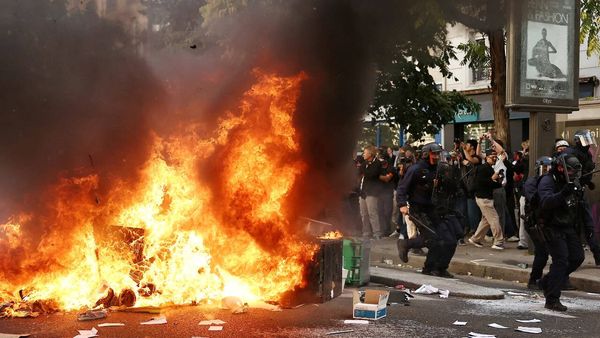
The killing of El Mencho in 2026 represented a tactical success for the Mexican state and its international partners, yet history suggests that such victories rarely produce permanent structural change. The immediate surge in violence that followed his death reflected not collapse but reorganisation, as factions moved to secure territory, authority, and legitimacy. These responses were not anomalies but predictable consequences of a system designed to survive disruption.

Narcos and El Chapo endure because Diego Luna and Marco de la O gave audiences individuals to focus on, allowing vast and complex systems to be understood through personal stories. Yet the deeper truth is that the cartel system was never dependent on any single leader. Gallardo organised it. Guzmán expanded it. El Mencho refined it. The system itself persists because it is embedded in geography, economics, and demand.

Frederick Forsyth understood this principle in Cobra, where the removal of a cartel leader unleashed forces that had previously been held in balance by hierarchy. The lesson, both in fiction and in reality, is that systems built on structural incentives do not disappear when individuals fall. In Cobra, the powers-that-be decide to half the war on drugs the moment it emerged that too many innocents were getting caught in the crossfire. Sadly, in the real world that we dwell in, beyond Forysthian fiction, it’s quite unlikely that that the cartels will come to heel.

They reorganise, adapt, and continue, indifferent to the fate of those who once appeared to control them. Somewhere, even now, the next successor is emerging from within the same structure, shaped by the same forces that produced those who came before him.

Sign up to read this article
Read news from 100’s of titles, curated specifically for you.
Already a member? Sign in here
Related Stories
Top stories on inkl right now
One subscription that gives you access to news from hundreds of sites
Already a member? Sign in here
Our Picks
Fourteen days free
Download the app
One app. One membership.
100+ trusted global sources.