
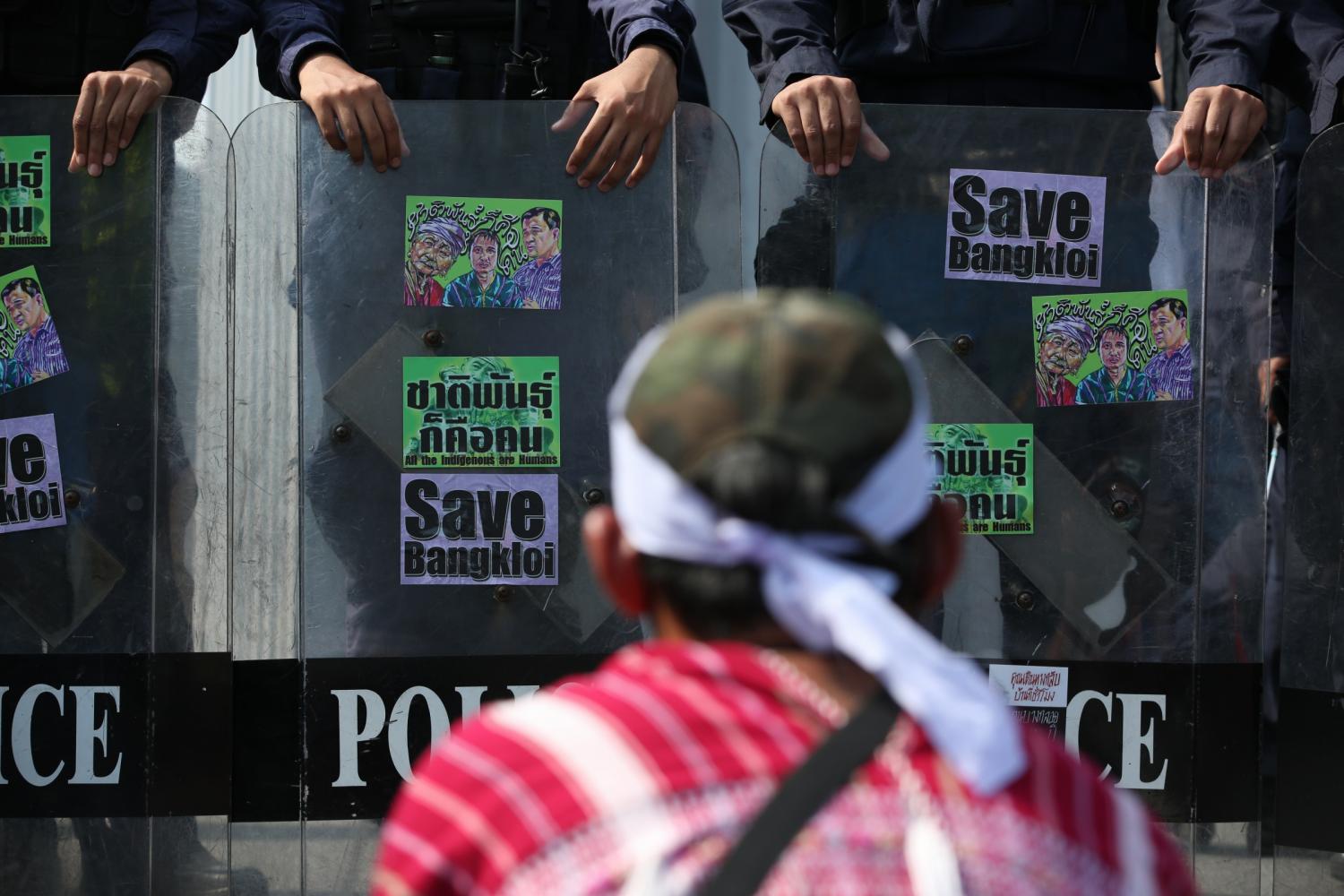
The term "rule of law" has a resonant ring which sounds both familiar and distant. It seems familiar because it is employed frequently by lawyers to analyse the makings of a legal system. Yet, it is distant because it sounds "legalese", harbouring both the thin version and the thick version of its intrinsic self. The thin version covers various legal safeguards for litigants and accused persons, such as a fair trial, accompanied by the advocacy of an independent judiciary. The thicker version demands more, namely: adherence to human rights and democracy.
The international trend witnessed by the global Rule of Law index regrettably indicates a decline in the rule of law, undermined impliedly by the spread of the "Law of Rule(r)s" of an authoritarian kind. It coincides with the reduced civic and political space witnessed in many parts of Asia-Pacific and elsewhere, as a disquieting contraction of the democratic landscape. It is thus timely for key stakeholders, jurists, and more to coalesce more assertively to strengthen various entry points to open up that space rather than to overlook the global warning of negative seepage inherent in the change of political climate. There are some gateways of note, namely: access to justice and judicial integrity-cum-independence.