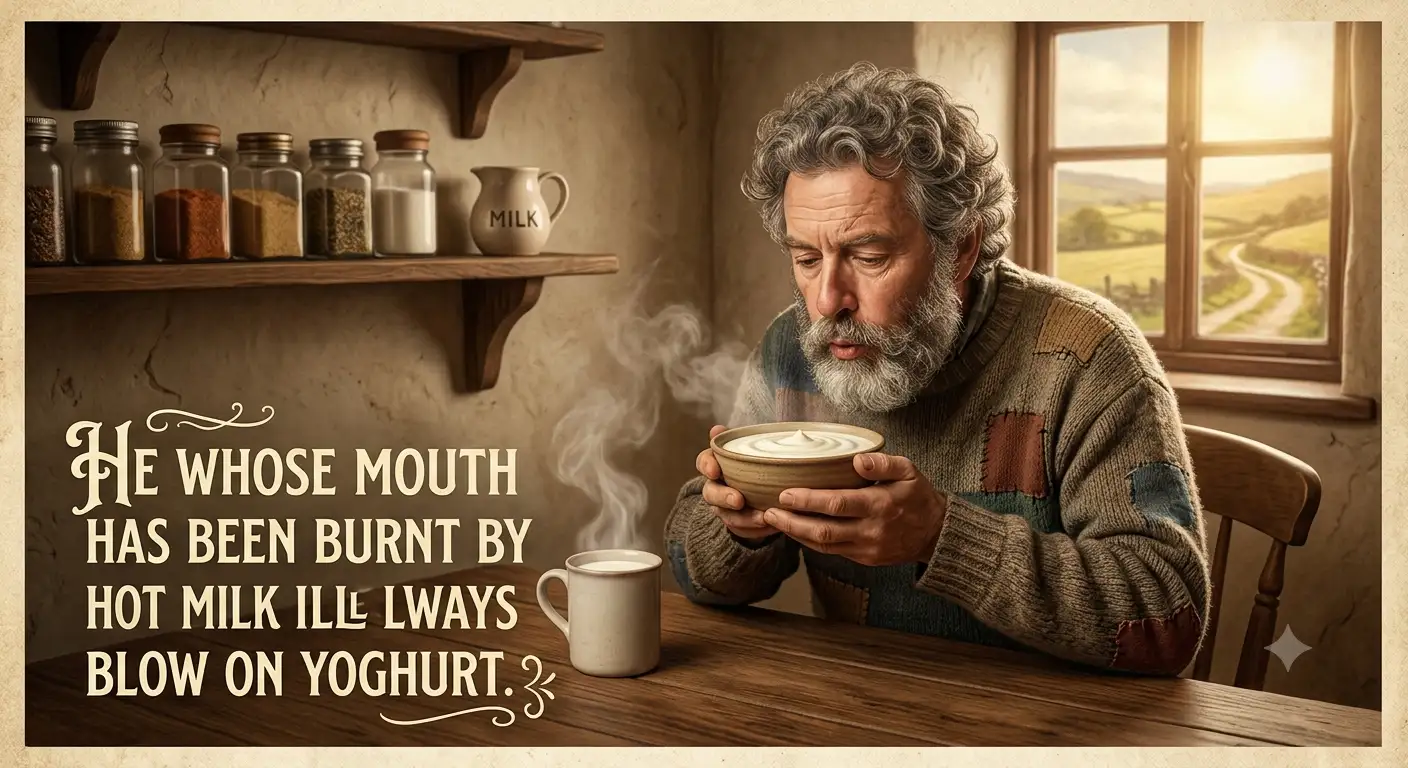
Some proverbs stay relevant across generations because they capture real human behaviour and nature in a simple line. One such timeless saying is today’s best Turkish proverb of the day: “He whose mouth has been burnt by hot milk will always blow on yoghurt.”
At first glance, it sounds like a simple food-based image. But the meaning goes much deeper and it reflects how past experiences shape caution, fear, and decision-making in everyday life.
ALSO READ: iPhone 18 Pro Max Price in US
Proverb of the Day
“He whose mouth has been burnt by hot milk will always blow on yoghurt.”
This exact phrase is a well-known Turkish proverb ( "Sütten ağzı yanan, yoğurdu üfleyerek yer" ), but the same psychological truth is found across many cultures. For example:
Indian (Hindi) equivalent : "Doodh ka jala chach bhi phook phook kar peeta hai" (He whose mouth is burnt by milk will even blow on buttermilk).
What does this proverb actually mean?
The proverb describes a basic human reaction: when someone gets hurt once, they become extra careful in similar situations later. It highlights how past mistakes or trauma shape behaviour. After getting hurt once, people tend to stay cautious, even when the new situation is not actually dangerous.If a person burns their mouth with hot milk, they don’t just avoid hot milk afterward—they start being careful even with things that look similar, like yoghurt. The fear carries forward.
ALSO READ: Florida mother who drowned her baby in a bathtub and stabbed her husband, daughter found not guilty
Deep meaning of the proverb in real life
In real life, this proverb explains how people behave after painful experiences:A failed relationship can make someone hesitant to trust again
A financial loss can make a person overly cautious about investments
A betrayal can make someone emotionally guarded
A bad experience at work can affect confidence in new opportunities
It shows how memory of pain often influences future choices, even when the situation is no longer dangerous.
Why humans become over-cautious after failure
Psychologically, the proverb connects to a simple truth—our brain is wired to avoid repeated harm. Once we experience pain, the mind stores it as a warning signal. This helps protect us, but it can also create unnecessary fear. Sometimes we avoid good opportunities just because they remind us of past mistakes.The balance between caution and fear
While being careful is important, the proverb also teaches a hidden lesson: not every similar situation is harmful. Healthy learning means:Learning from mistakes
Staying alert, but not fearful
Not letting one bad experience control future decisions
True wisdom lies in finding balance between caution and confidence.
How to apply this proverb in your daily life
This saying applies in many modern situations:After a scam, people become cautious of all online offers
After one bad investment, people avoid all financial risks
After one failure, people hesitate to try again
The proverb reminds us that while experience is valuable, overgeneralizing fear can limit growth. The Best Proverb of the Day — “He whose mouth has been burnt by hot milk will always blow on yoghurt” — is a simple but powerful reminder of human psychology. It teaches that past pain naturally makes us cautious, but wisdom is knowing when that caution helps us—and when it holds us back.