Get all your news in one place.
100's of premium titles.
One app.
Start reading
The Economic Times
The Economic Times

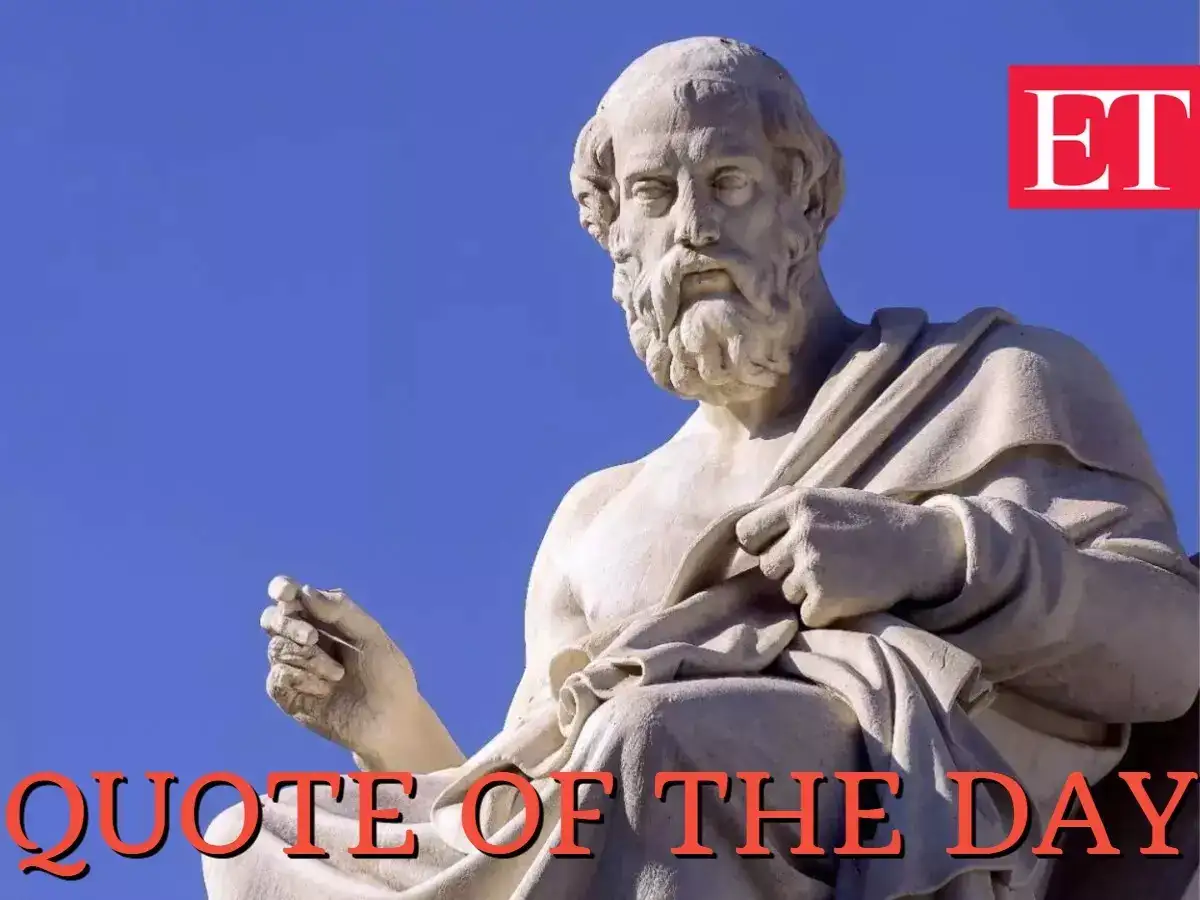
Best Motivational Quote by Plato: 'Better a little which is well done, than a…’ - Why quality beats quantity in modern life; Greek philosopher’s secret to true success

Do you ever feel like you are constantly running on a treadmill, doing so much yet achieving so little? Do you find yourself drowning in endless to-do lists, only to end the day feeling like none of your work was actually good? Have you ever wondered why doing less might actually be the key to achieving more?

That exact sentiment is captured in a famous quote attributed to the ancient Greek philosopher Plato: “Better a little which is well done, than a great deal imperfectly.” This timeless piece of wisdom serves as a simple reminder that quality will always beat quantity. In a world obsessed with hustle culture and multitasking, this quote calls us back to depth, focus, and true craft.

Why Quote matters today

Modern society rewards volume. People wear busyness like a badge of honor, rushing from one goal to the next while constantly checking notifications. However, spreading attention across twenty different tasks usually leads to mediocre results and deep mental exhaustion. Plato’s advice acts as a refreshing counter-narrative for our fast-paced lives. It urges people to slow down, eliminate distractions, and dedicate real effort to what truly matters.

What quote means in real life

In everyday terms, this quote is all about execution over volume. For a professional, it means delivering one polished project instead of five rushed assignments. For an artist, it means mastering a single detail rather than throwing together a sloppy canvas. For anyone navigating relationships, it means offering fifteen minutes of undivided attention instead of spending hours sitting in the same room while staring at a phone screen. Real success comes from doing things well, not just getting them done.

Who is Plato

Plato was one of the most influential classical Greek philosophers. Born in Athens around 428 BCE, he was a student of Socrates and the teacher of Aristotle. Plato founded the Academy in Athens, which was one of the earliest institutions of higher learning in the Western world. Through his famous philosophical dialogues, Plato explored topics like justice, human nature, knowledge, and virtue. His ideas helped shape Western thought for thousands of years.

Context and meaning of quote

This line appears in Plato’s famous dialogue titled Theaetetus, spoken by Socrates. In the text, Socrates and Theaetetus are attempting to define the exact nature of knowledge and false belief. Rather than rushing to cover every possible detail half-heartedly, Socrates argues that it is far better to thoroughly analyze a smaller point with total clarity. Authentic knowledge requires deep, careful thought. Rushing through concepts just to cover ground leaves room for error and confusion.

Life lessons

The primary lesson here is to prioritize depth over breadth. When you feel overwhelmed by a massive workload, narrow your focus to the single most important task on your list.

Another vital lesson is the value of intentionality. Slowing down allows you to build real mastery. Excellence is not built on rushed results, but on deliberate care, patience, and consistency. When you choose to complete a small task with genuine effort, you build lasting pride in your work.

Sign up to read this article
Read news from 100's of titles, curated specifically for you.
Already a member? Sign in here
Related Stories
Top stories on inkl right now
One subscription that gives you access to news from hundreds of sites
Already a member? Sign in here
Our Picks
Fourteen days free
Download the app
One app. One membership.
100+ trusted global sources.