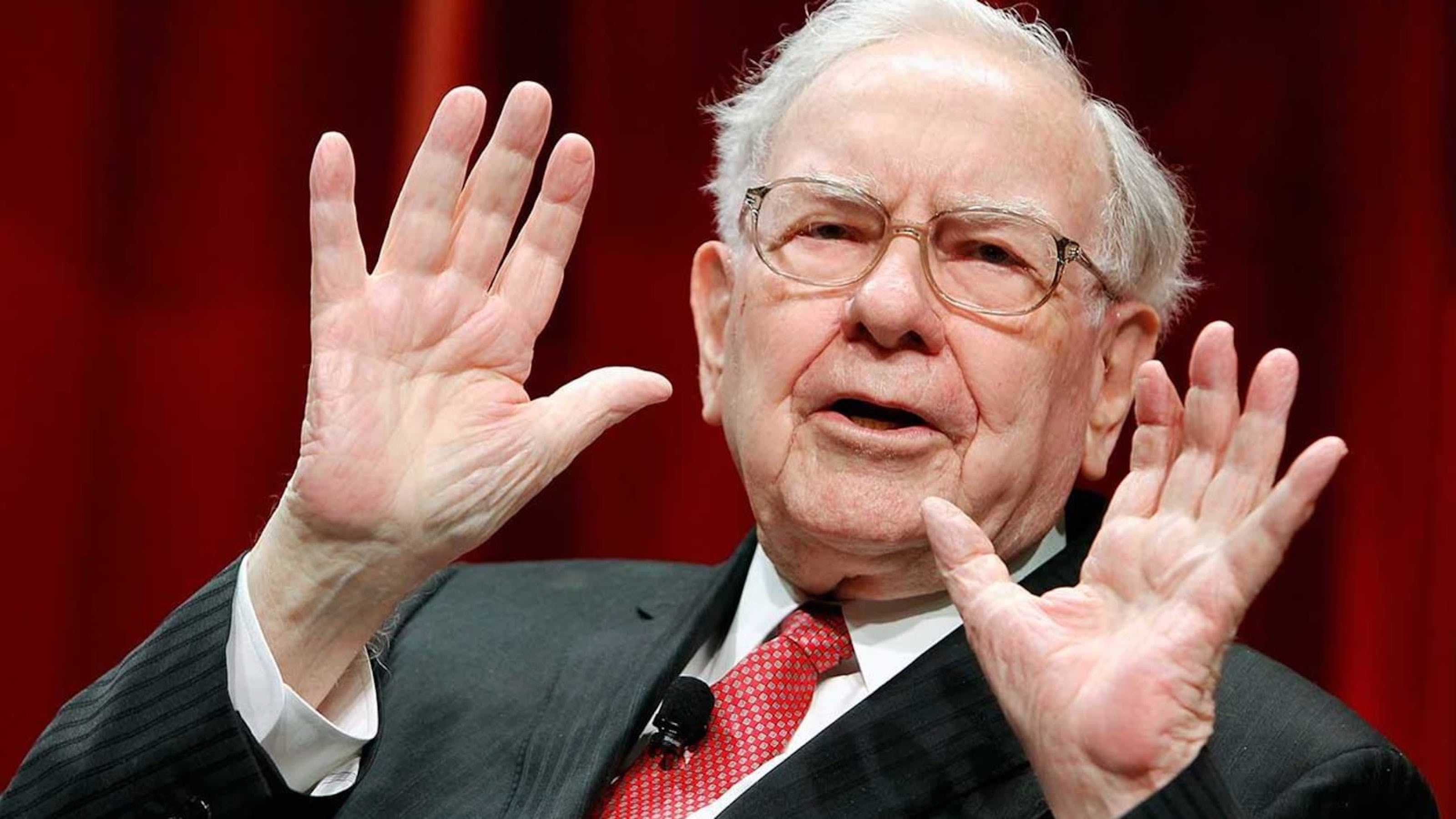
Berkshire Hathaway (BRK.B) CEO Greg Abel doesn't sound as if he intends to mess with the success that Warren Buffett and the late Charlie Munger built over more than six decades.
That said, the holding company's new chief likely won't have the same kind of leeway with the market that his predecessor did. Under Buffett, Berkshire's returns nearly doubled those of the S&P 500 since 1965, with a compound annual growth rate of 19.7% vs 10.5% for the benchmark index. When you generate that sort of outperformance, folks tend to give you the benefit of the doubt.
That's why it makes sense that Abel has publicly committed to maintaining Buffett's way of doing things.
"Berkshire's culture and values form the basis of our operating framework, which shapes the strategy we pursue and the choices we make as we build Berkshire," Abel wrote in his first letter to shareholders (PDF), released in February. "As CEO, the framework governs how I lead every day."
Besides, it's not as if Buffett has retired. The Oracle of Omaha remains chairman of the sprawling conglomerate of 68 subsidiaries and its $300 billion stock portfolio. Buffett still comes to the office five days a week and remains available to consult on operations, dealmaking and investment ideas, Abel notes.
How Abel might lead Berkshire
Make no mistake, however: This is Abel's show. He will oversee the entire Berkshire stock portfolio, supported by investment manager Ted Weschler. Todd Combs — who previously managed a portion of the portfolio alongside Weschler — departed in late 2025 to run money at JPMorgan Chase (JPM). Weschler and Combs were thought to oversee 10% of the firm's equity holdings.
In perhaps a nod to stretched valuations, Berkshire was once again a shedder of stocks in its most recent quarter, with net sales of approximately $4 billion. The holding company has now sold more stocks than it has bought for 13 consecutive quarters.
Otherwise, it should be business as usual. Berkshire has always let the management teams of its subsidiaries work independently. Abel said that won't change.
"We operate a decentralized model with autonomy grounded in deserved trust," the CEO wrote. "In return, we expect accountability and integrity in performance."
What about dividends and repurchases?

Berkshire's policy of not paying a dividend will likewise continue, Abel said. Buffett famously loves receiving dividends but has refrained from disbursing them himself. Berkshire shareholders incur taxes on dividends. More important, Berkshire has been able to generate superior returns by re-investing the cash it would otherwise spend on payouts.
Abel also indicated that he'll maintain Buffett's attitude toward stock repurchases. He'll buy back Berkshire stock if its price trades below its intrinsic value. What constitutes the company's estimate of intrinsic value has always been something of a secret sauce, but the level was triggered after a rough start to 2026.
After not buying any of its shares since May 2024, Berkshire resumed stock repurchases in March 2026. Moreover, Abel personally bought $15.3 million of Berkshire stock, committing to invest his entire after-tax salary in the company going forward.
One of Abel's biggest challenges will be what to do with Berkshire's massive pile of cash. Analysts note that the company would like to put some of its hoard to use in acquisitions, but finding large enough deals is a persistent challenge. In 2023, Buffett lamented that there were only a "handful of companies in this country capable of truly moving the needle at Berkshire, and they have been endlessly picked over by us and by others."
Argus Research analyst Kevin Heal thinks Berkshire will remain patient and opportunistic with its riches.
"We continue to believe that some of the company’s $369 billion in cash will eventually be used to invest in a 'distressed' situation, either an industry or individual company similar to what BRK did during the last economic crisis," says Heal, who rates shares at Buy.
What could Berkshire's performance look like going forward?
Berkshire Hathaway has always been a long-term bet on the dynamism of the U.S. economy. It's also a low-beta stock, which means it tends to underperform in bull markets and outperform in downturns.
Regardless of what a post-Buffett Berkshire looks like, shares are highly unlikely to match their historical performance. True, BRK.B beats the S&P 500 in the past 20 years, but only by a slight margin.
The reality is that Berkshire is now so big — its market cap exceeds $1 trillion — that it's unreasonable to expect anyone to repeat Buffett's historic run.
However, that doesn't mean BRK.B can't continue to be a market beater going forward. Wall Street is mostly bullish on the name, giving it a consensus recommendation of Buy, according to data from S&P Global Market Intelligence.
Nevertheless, Berkshire's era of generating truly outstanding returns would appear to be behind it.
That was true even before Buffett left the main stage.
The bottom line is that Berkshire Hathaway is no longer a vehicle for extraordinary outperformance. Rather, it's evolved into something closer to a fortress of capital.
Under Abel, investors shouldn't expect Buffett-like results, but they can still expect disciplined decision-making, downside protection and steady, if unspectacular, compound returns.