Get all your news in one place.
100's of premium titles.
One app.
Start reading
The Conversation
The Conversation
Timothy J McCoy, Supervisory Research Geologist, Smithsonian Institution

Bennu asteroid reveals its contents to scientists − and clues to how the building blocks of life on Earth may have been seeded

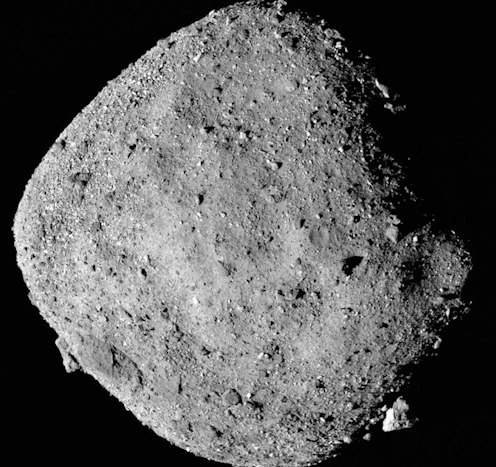
This photo of asteroid Bennu is composed of 12 Polycam images collected on Dec. 2, 2024, by the OSIRIS-REx spacecraft. NASA

A bright fireball streaked across the sky above mountains, glaciers and spruce forest near the town of Revelstoke in British Columbia, Canada, on the evening of March 31, 1965. Fragments of this meteorite, discovered by beaver trappers, fell over a lake. A layer of ice saved them from the depths and allowed scientists a peek into the birth of the solar system.

Nearly 60 years later, NASA’s OSIRIS-REx mission returned from space with a sample of an asteroid named Bennu, similar to the one that rained rocks over Revelstoke. Our research team has published a chemical analysis of those samples, providing insight into how some of the ingredients for life may have first arrived on Earth.

Sign up to read this article
Read news from 100's of titles, curated specifically for you.
Already a member? Sign in here
Related Stories
Top stories on inkl right now
One subscription that gives you access to news from hundreds of sites
Already a member? Sign in here
Our Picks
Fourteen days free
Download the app
One app. One membership.
100+ trusted global sources.