Get all your news in one place.
100’s of premium titles.
One app.
Start reading
The Guardian - UK
The Guardian - UK
World
Jennifer Rankin in Brussels

Belgium hits back at EU plan to use frozen Russian assets to aid Ukraine

A resident looks through a broken window of an apartment building in Kyiv hit by a Russian drone strike
A resident looks through a broken window at an apartment building in Kyiv after a Russian drone strike. Photograph: Valentyn Ogirenko/Reuters

Belgium has hit back against an EU plan to use Russia’s frozen assets to aid Ukraine, describing the scheme as “fundamentally wrong” and throwing into doubt how Europe will fund Kyiv.

In a sharply worded letter, Belgium’s prime minister, Bart De Wever, said the proposal violated international law and would instigate uncertainty and fear in financial markets, damaging the euro. “These risks are unfortunately not academic but real,” he wrote to the European Commission president, Ursula von der Leyen.
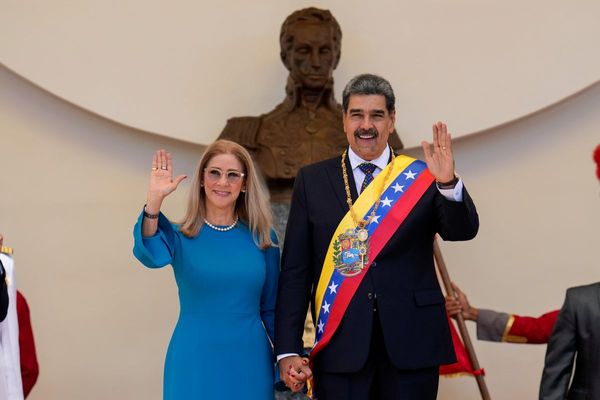
Belgium hosts €183bn of Russian assets, about two-thirds of the Russian assets immobilised in the west, at the Brussels-based central securities depository Euroclear.

De Wever’s intervention comes amid growing pressure on the EU to agree the use of Russia’s frozen assets to aid Ukraine, after a US-led plan to end the war called into question Europe’s control of the funds.

The commission is expected to present imminently a draft legal text on using Russian assets immobilised in Europe as the basis for a €140bn (£122bn) loan for Ukraine.

De Wever said the scheme posed “systemic risks for the EU as a financial marketplace” and warned that Euroclear could be sued by Russians with a claim on the assets, landing the Belgian government with a multibillion euro bill.

He said he would not not sign off on the scheme unless all Belgium’s concerns were addressed, including “a full guarantee to be provided by willing member states” if the loan went wrong, according to the letter seen by the Guardian, which was first reported by Politico.

The Flemish nationalist leader also argues that moving forward with the reparations loan plan would prevent the EU from reaching a peace deal, because the Russian assets would not be available for the reconstruction of Ukraine.

In language that will dismay many of Ukraine’s EU backers, he suggested Ukraine could lose the war. “In the very probable event Russia is ultimately not officially the losing party, it will, as history has shown in other cases, be legitimately asking for its sovereign assets to be returned,” De Wever said.

EU leaders failed to agree on the idea in October, but are under added pressure to finalise the plan after the White House revealed its thinking on Russia’s frozen assets, which are mostly held in Europe, above all Belgium.

The controversial US-led 28-point plan that emerged last week proposed that $100bn (£76bn) in frozen Russian assets would be invested in “US-led efforts to rebuild and invest in Ukraine”, with the US reaping 50% of profits from the venture. The rest of Russia’s frozen assets would be invested in a US-Russian investment vehicle focused on joint projects.

These ideas are understood to have been removed from the latest version of the plan to end the war, but have underscored for European leaders the urgency of acting quickly.

“The US proposal has maybe sharpened some European minds,” Latvia’s former prime minister Krišjānis Kariņš told the Guardian, saying he had been taken aback by the original proposals on the funds. There had been “the realisation that things could go very, very differently [so] better to keep those funds under European control and therefore take some decisions in Europe which would preclude anyone else getting their hands on the assets”, he said.

The assets are seen as a key element of upping pressure on Russia, as well as a means of funding Ukraine’s defence at a time when many EU governments are grappling with tight budgets or deficits.

Following a meeting with EU foreign ministers on Wednesday, the EU’s high representative for foreign policy, Kaja Kallas, said using the frozen assets “would send the strongest message to Moscow, that it cannot wait us out”, adding that “we need to make this decision fast”.

An EU diplomat said “the overwhelming majority of member states feel there is an increased urgency to take decisions”, referring to using the frozen assets for Ukraine. “Under any scenario there is a large need for financing for Ukraine.”

EU leaders are due to discuss the idea at a summit on 18 and 19 December, having already pledged to meet Ukraine’s funding needs. Kyiv is estimated to need €136bn to maintain its defence and keep the country running in 2026 and 2027.

The Belgian government said it wanted to see a legal text and has faulted the lack of detail about risk-sharing with the other 26 member states if the plan goes wrong.

Brussels has also called for legal proposals on common EU borrowing to fund Ukraine, using unspent funds in the EU budget as the guarantee. De Wever argues this option would be cheaper than using the assets, once the risks are factored in.

The commission has suggested money for Ukraine could be funded by common borrowing on capital markets, but member states are unenthusiastic. Germany, Sweden, as well as central and eastern European states and von der Leyen, argue the frozen assets plan is the best option.

The commission says the scheme does not equate to confiscation of the Russian assets.

EU diplomats admit the plan is fraught with complexity, not least because it requires a unanimous decision – including Hungary’s Kremlin-friendly government – to ensure the Russian assets remain frozen in perpetuity. Some say that even under a best-case scenario the frozen assets plan could take months to yield funds for Ukraine and that other short-term bridging loans could be needed.

Sign up to read this article
Read news from 100’s of titles, curated specifically for you.
Already a member? Sign in here
Related Stories
Top stories on inkl right now
One subscription that gives you access to news from hundreds of sites
Already a member? Sign in here
Our Picks
Fourteen days free
Download the app
One app. One membership.
100+ trusted global sources.