Get all your news in one place.
100's of premium titles.
One app.
Start reading
The Economic Times
The Economic Times
Nikhil Agarwal

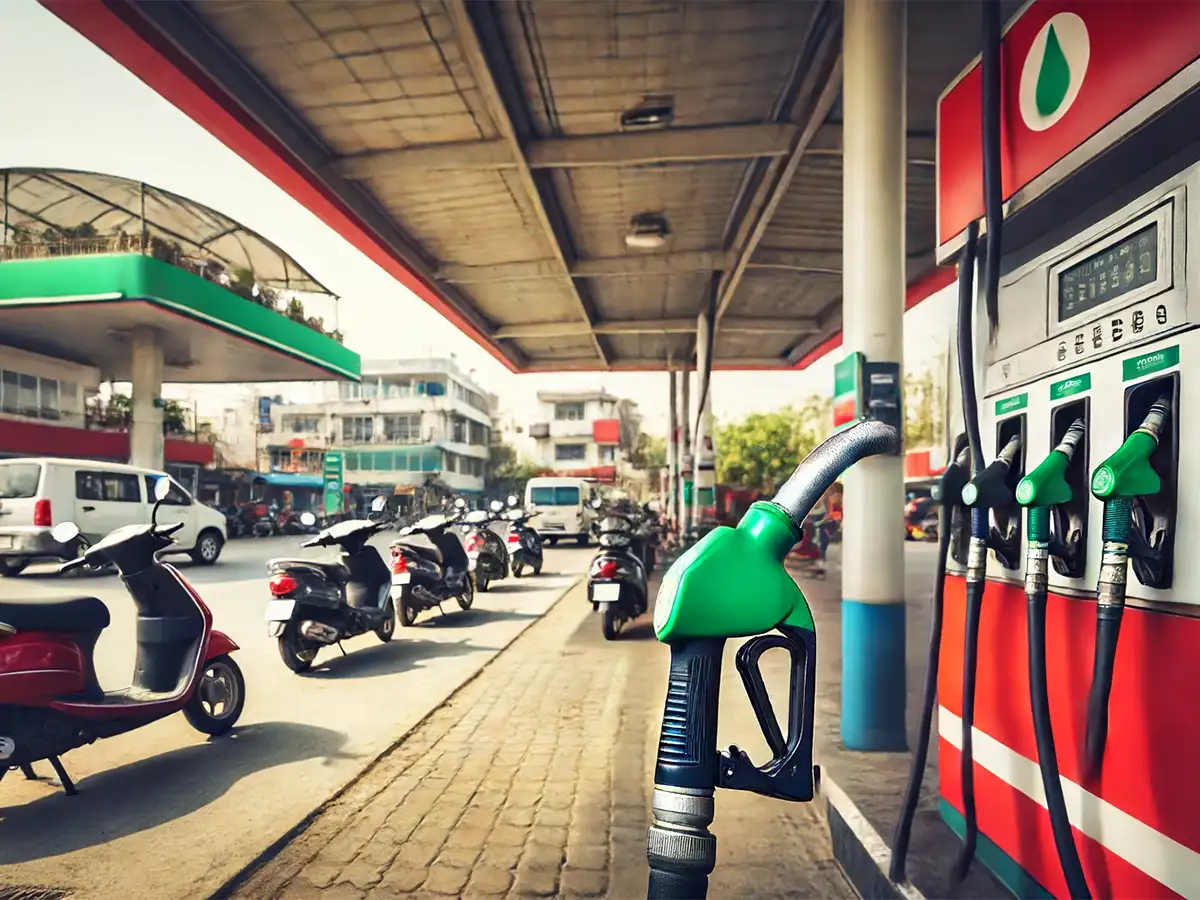
Behind the petrol pump: Why fuel retailers losing Rs 7-8 per litre need $85 crude oil to stop bleeding cash

Oil marketing companies (OMCs) will stop bleeding petrol and diesel only if crude slips to about $85-87 a barrel, because current pump prices still leave them with losses of Rs 7-8 a litre despite a recent hike and duty cuts that the government is reluctant to reverse.

Jefferies' top analyst Mahesh Nandurkar said even after an 8% increase in retail fuel prices, auto fuels are “currently being sold at a loss of ~Rs7-8/ltr,” with state-owned OMCs absorbing these losses. These under-recoveries reflect the gap between elevated international product prices and politically constrained domestic pump prices.

The problem is compounded by the fact that excise duties on petrol and diesel were slashed by about 40 per cent in March 2026, taking them to 10‑year lows, and the report assumes this cut will be retained in FY27. With the Centre unwilling to give up that relief to consumers, there is little room to rebuild OMC margins through tax tweaks.

The 85-87 Dollar Breakeven

According to the Jefferies report, “on current retail prices, the OMCs will have a breakeven at US$85-87/bbl,” implying that any crude price above that band keeps them in the red. The Brent assumption in Jefferies’ base case is $90 a barrel from July 2026 onwards, which by definition means continued losses at the pump for the marketing companies if prices are not raised further.

This breakeven band effectively marks the point at which current domestic fuel prices and global input costs align. Below $85, OMCs can begin to earn at least normal marketing margins; above $87, either losses persist or politically difficult price hikes are required to restore profitability.

Fiscal Math Forces OMCs To Absorb Pain

The Centre’s fiscal compulsions are central to why OMCs, rather than the budget, are being used as a shock absorber. Jefferies estimates that higher petroleum and fertiliser subsidies plus lower oil tax revenues, assuming Brent at $90, will hit the central government’s fiscal position by Rs 75,000-90,000 crore, or 20-25 basis points of GDP.

To preserve its fiscal consolidation path and a fiscal deficit target of 4.3% of GDP in FY27, the government is seen as unlikely to loosen the purse strings or reverse fuel duty cuts. “We believe that this will need to be offset by lower expenditure elsewhere — most likely non-defence capex — which may make it flat YoY in FY27,” the analysts warned. That also makes it harder for New Delhi to directly compensate OMCs for their losses.

Subsidies, drought risk and limited room to manoeuvre

High crude prices are already driving up the subsidy bill, limiting fiscal space to bail out oil companies. The report estimates that at $90 Brent, fertilizer subsidy outgo could be Rs 30,000–40,000 crore higher in FY27, as international urea prices have already doubled and imported LNG costs have climbed 40–50%. LPG subsidies could also rise by Rs 20,000–30,000 crore, with Jefferies assuming only limited pass-through to consumers after a recent Rs 60 per cylinder hike and part of the burden still being borne by OMCs.

On top of that, the IMD is forecasting a weak monsoon, with rainfall expected to be 8% below normal, which could push up spending on the rural employment guarantee scheme by Rs 10,000–20,000 crore. Against this backdrop, the report argued that “the hit is likely to be felt by the discretionary pool” of expenditure, especially non-defence capital spending, rather than through higher fuel taxes or larger compensatory transfers to oil companies.

What it means for prices, disinvestment and markets

With OMCs breaking even only at $85-87, Jefferies believes “retail fuel prices need to rise further from the current level” if crude stays around $90 and the government sticks to its fiscal roadmap. That poses obvious political challenges, given that petrol and diesel prices in Mumbai had only recently retreated from post-Russia-Ukraine War peaks of Rs 121 and Rs 105 per litre, when they were 7-8% higher than current levels.

In parallel, the Centre is leaning on other levers to manage the oil shock. It has raised customs duties on gold and silver by 9 percentage points to 15%, which Jefferies estimates could generate an additional Rs 40,000–50,000 crore, while windfall taxes on fuel exports are expected to contribute another Rs 5,000-10,000 crore. Disinvestment receipts are also budgeted to more than double compared with FY26 revised estimates, underlining the need to raise non-tax revenues as OMCs shoulder the burden of expensive crude until prices fall back into the $85-87 comfort zone.

Sign up to read this article
Read news from 100's of titles, curated specifically for you.
Already a member? Sign in here
Related Stories
Top stories on inkl right now
One subscription that gives you access to news from hundreds of sites
Already a member? Sign in here
Our Picks
Fourteen days free
Download the app
One app. One membership.
100+ trusted global sources.