Get all your news in one place.
100's of premium titles.
One app.
Start reading
The Economic Times
The Economic Times
Trending Desk

Bee theft in Australia: Over 800,000 bees stolen from Queensland farms, beekeepers face heavy losses

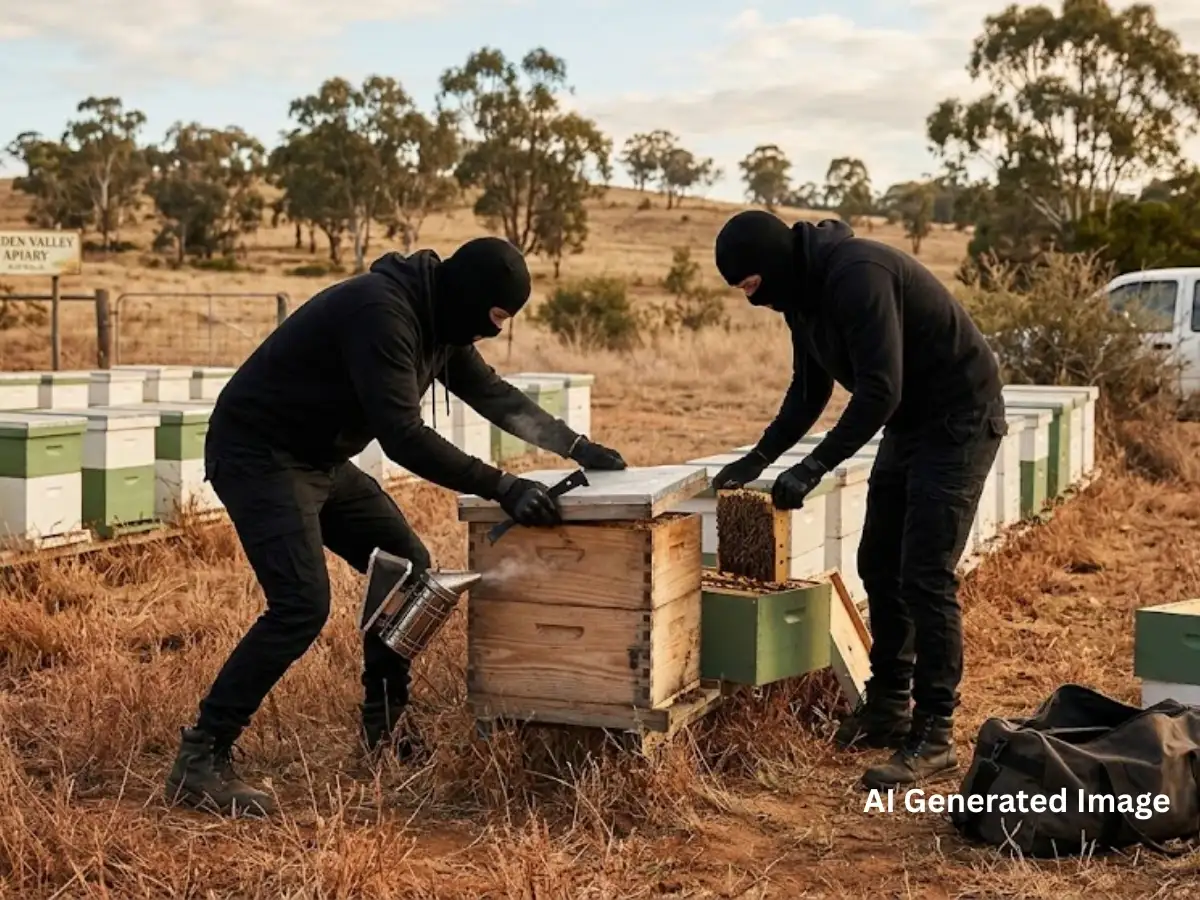
More than 800,000 honeybees have been reported stolen from commercial hives across Queensland’s Atherton Tablelands in northern Australia, leaving beekeepers with losses running into tens of thousands of dollars. The colonies were removed intact from multiple properties, raising suspicion that the theft may have involved people familiar with commercial beekeeping and the handling of active hives.

The missing bees belonged to commercial operators whose colonies are used for both honey production and agricultural pollination. One affected beekeeper estimated the value of the stolen hives at about A$20,000, while the wider losses could also include income from honey and pollination services.

Also Read: McDonald’s Rajkot video shows rats moving across tables; civic body takes action against the outlet

14 hives emptied at Kairi, 41 more found without colonies

The missing colonies were discovered during routine checks by beekeepers across the region. On one property in Kairi, 14 hives were found empty. At another location, 41 commercial hives had been stripped of their bees, brood and frames.

Because a single commercial hive can house thousands of bees, the removal of dozens of colonies resulted in a loss that quickly reached hundreds of thousands of insects. Additional missing colonies were later identified, bringing the estimated total to more than 800,000 bees.

Investigators said the hives had not simply been left unused or damaged. Their colonies had been taken out, along with brood and frames, indicating that the bees were deliberately removed rather than lost through ordinary hive failure.

Established colonies could be valuable for honey and crop pollination

The financial impact extends beyond the value of the insects themselves. Commercial honeybees play an important role in Australian agriculture because beekeepers can transport colonies to farms to pollinate flowering crops.

Healthy, established colonies can also continue producing honey and be used repeatedly for pollination work, increasing their value to commercial operators.

The thefts took place around the avocado-growing season, a period when demand for commercial pollination services is particularly significant. Losing established colonies at that time could therefore affect both the immediate value of the hives and expected income from agricultural work.

One beekeeper placed the value of the stolen hives at around A$20,000, although the total economic impact may be greater once lost honey production and pollination work are taken into account.

How could hundreds of thousands of bees be moved?

The circumstances of the theft have led police to examine whether those involved may have experience with beekeeping. Transporting large numbers of active colonies requires the bees, brood and frames to be handled carefully so that the colonies remain viable.

The scale of the operation has also raised the question of where the missing bees may now be. Rather than being sold individually, entire colonies could potentially be moved to another property and used for honey production or crop pollination.

That could make the colonies harder to identify once they have been transferred into other commercial operations.

Also Read: Delhi homes to pay higher waste collection charges soon: MCD plans 50% hikes in solid waste management. Check new rates for different colonies

Bee theft adds to pressure from varroa mites

The loss of the colonies comes as beekeepers in the region are already dealing with another threat to honeybee populations: varroa mites. The parasite can seriously damage honeybee colonies and has become an additional concern for the industry.

For local beekeepers, the disappearance of established colonies adds another layer of pressure, combining the loss of working hives with an existing pest threat.

Police are continuing their investigation and are seeking information that could help locate the missing colonies or identify those responsible. For the affected operators, the reported theft has already meant the loss of more than 800,000 bees, dozens of commercial colonies and potential income from honey production and crop pollination.

Sign up to read this article
Read news from 100's of titles, curated specifically for you.
Already a member? Sign in here
Related Stories
Top stories on inkl right now
One subscription that gives you access to news from hundreds of sites
Already a member? Sign in here
Our Picks
Fourteen days free
Download the app
One app. One membership.
100+ trusted global sources.