Get all your news in one place.
100's of premium titles.
One app.
Start reading
The Independent UK
The Independent UK
Hannah Stephenson

Beat the heat and get ahead in the garden for autumn

Essential gardening jobs to do now (Alamy/PA) - (Alamy/PA)

The heat may seem incessant, the ground as dry as a bone, and many gardening jobs need to wait until the rain comes – but there are still things you can be doing to get ahead for autumn.

“A lot of plants have gone over much earlier this year because of the heat,” says Jonathan Brocklebank, head gardener at Barnsdale Gardens in Rutland, East Midlands, made famous by the late TV presenter Geoff Hamilton on BBC’s Gardeners’ World. “They’ve just scorched away.”

Until the rain comes, planting may be limited and mulching – designed to keep moisture in the ground – may have little effect, not only because it would be covering bone dry soil, but also because the mulch itself may dry out.

But there are some things you can do to help things along, even with the current heatwave.

1. Cut back perennials

(Alamy/PA)
(Alamy/PA)

“We are cutting down and clearing anything in the borders that is past it,” says Brocklebank.

“There’s no point leaving deadwood there looking sad. Most of the herbaceous perennials such as the summer flowering (cranesbill) geraniums have finished,” he says.

Others which are likely to have suffered in the heat and would do well to be cut back include astrantias and astilbes, he adds.

Later-flowering perennials such as rudbeckias and asters should still be giving you colour.

2. Prune lavender

If your lavender has finished flowering, cut it back to keep it in shape and preserve its energy, but don’t cut into old wood because it won’t recover.

3. Clear pots

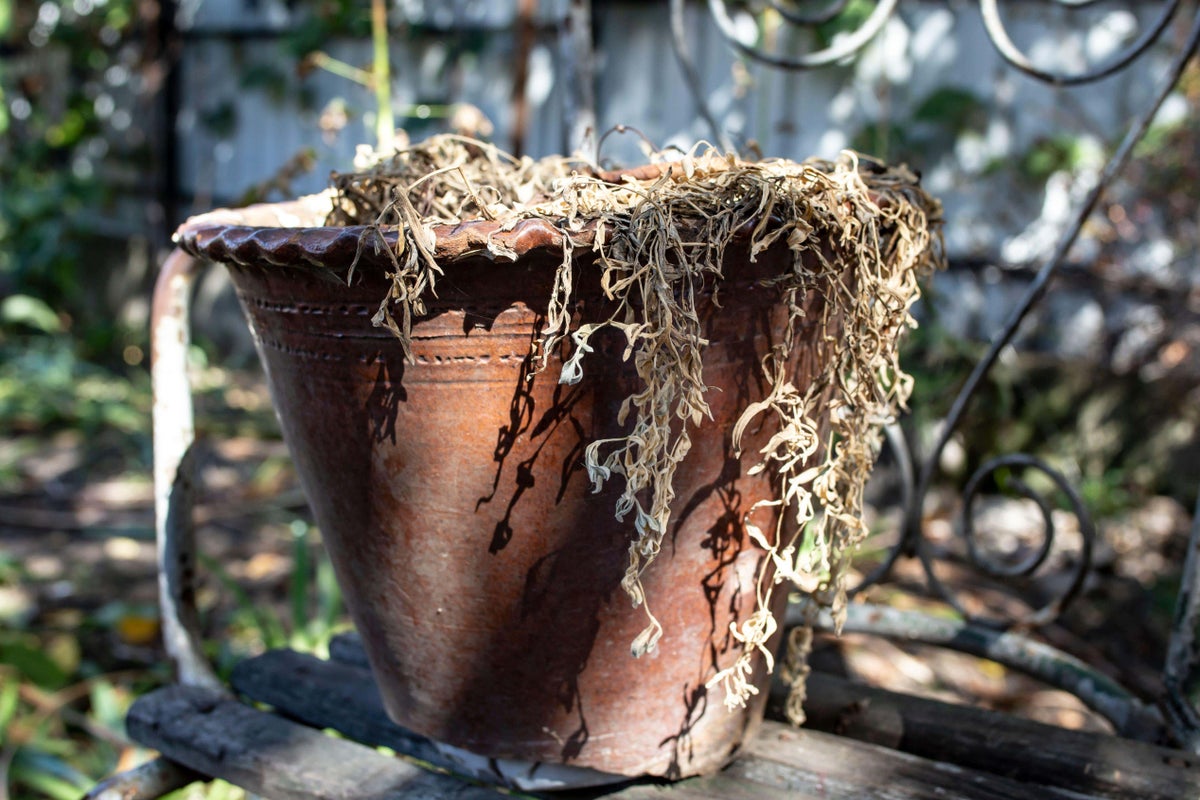
If your summer bedding container and hanging basket plants are looking bedraggled, especially when you’ve been on holiday without anyone there to water the plants, empty them into the compost bin and give the pots a wash in anticipation of autumn. Summer bedding is unlikely to come back if it has succumbed to prolonged drought conditions and little watering.

4. Place water butts strategically

The rain must come eventually, so get your water butts in place to catch any rainwater which does finally appear. It may also be a good time to install water diverters from your drainpipes to any water butt or other receptacle in anticipation of rain.

5. Plant early spring bulbs

(Alamy/PA)
(Alamy/PA)

Early spring bulbs such as snowdrops, early crocuses, Dutch iris and narcissi can be planted in August, without coming to any harm. They will tolerate a period of drought in their dormant state, says Brocklebank.

“It wouldn’t do any harm to get them in now but it’s a bit hot for digging the hard ground,” he admits. “I grow lots of bulbs here in pots for a big display of daffodils – they are in pots that we put on a bed through the summer after they’ve flowered and died back.

“They’ve just been sat in the pots all summer and are very dry. They’ll just stay dormant until some moisture comes along.”

6. Harvest early

Some people are reporting earlier ripening fruits including apples and plums, so pick them to eat straightaway or to create chutneys and preserves. Store what apples you have left in a cool, dry place like a shed.

“Things like onions and potatoes, which we would normally harvest a bit later on, can be lifted. But if you are lifting potatoes now, they really need to be kept somewhere dark and cool.”

7. Plant drought-tolerant species

“If you have plants which have really suffered or died this year and you are thinking about replanting, look at more drought-tolerant plants which you could get in place ready for going in those spots for next year,” Brocklebank suggests.

“If the summers are going to continue like this, then we are going to have to start growing more suitable plants, silver-leaved plants and things that will tolerate hot and dry weather, such as lavender and rosemary.”

8. Collect seed

“If you normally collect seed, that can be done earlier. A lot of things like eryngium (sea holly) and agapanthus have run to seed. So much is going over earlier than it would normally.”

9. Take cuttings

Now is a good time to take semi-ripe cuttings, using current season stems which have started turning slightly woody at the base but the tip is still soft, from plants including lavender, hydrangea, cistus, hebe and rosemary.

They take longer to root than softwood cuttings and will need watering while they are establishing, but most can be planted out or potted up in May.

Do it by cutting just below a leaf and trimming the base where there’s about 5-10mm of woodier-looking stem at the bottom, removing lower leaves from prickly plants. The prepared cutting should be around 10-15cm in length.

“You’ll need to keep them well watered and not in blazing sun, but ideally with a bit of shade over them,” Brocklebank advises.

Sign up to read this article
Read news from 100's of titles, curated specifically for you.
Already a member? Sign in here
Related Stories
Top stories on inkl right now
One subscription that gives you access to news from hundreds of sites
Already a member? Sign in here
Our Picks
Fourteen days free
Download the app
One app. One membership.
100+ trusted global sources.