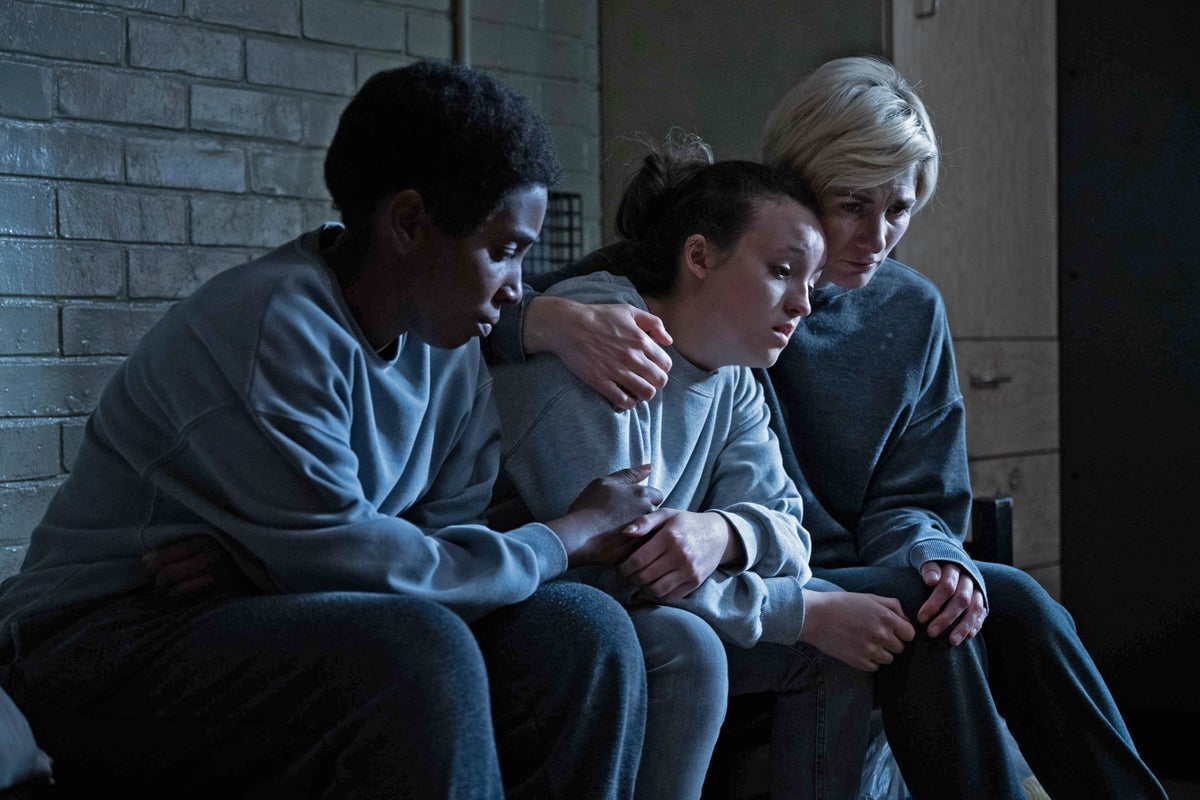
When I came in here, I had a house, a job and a family – now I’ve got nothing.” This line, delivered by Jodie Whittaker in BBC prison drama Time, sums up her character’s plight with devastating efficiency. Orla, a single mother to three young children, has been sentenced to six months inside for tampering with her electricity meter (“fiddling the leccy”, as she puts it). This six-month stretch will see her lose her job and her home, with her kids placed in foster care. And all, Time seems to ask, for what? The crime of not having enough money to keep the lights on?
Cases like this one are all too real. While 51 per cent of the population of England and Wales is female, women make up less than five per cent of prisoners. Last year, a House of Commons committee report found that women are “often sentenced for non-violent, low-level but persistent offences”, and in 2020, 72 per cent of women who entered prison under sentence had committed a non-violent crime. The charity Women in Prison reports that three out of five women are jailed for sentences of less than six months. Female prisoners are, you could argue, operating within a system that was made for men, and it seems to consistently fail them. And Time is a show seeking to shed light on these frustrating, complex stories.