
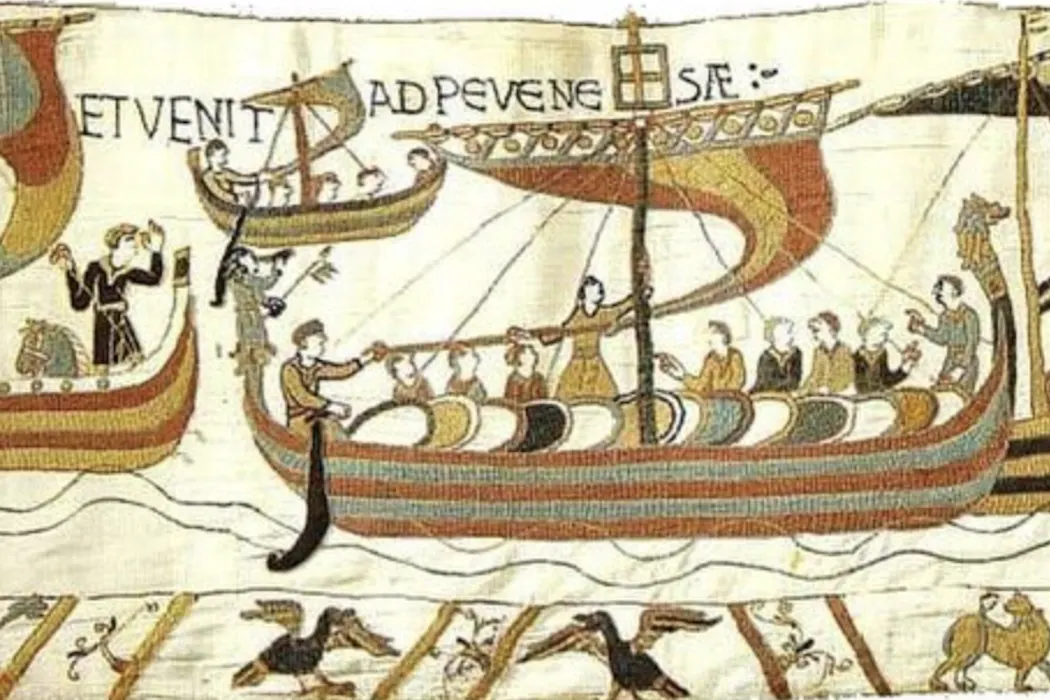
Just three women appear in the main body of the Bayeux tapestry: Edith of Wessex, shown grieving at the deathbed of her husband Edward the Confessor; the mysterious and much-debated shrouded figure named Ælfgyva; and a woman fleeing a burning building with her child. Missing from the tapestry is the one woman who played a key part in the success of William the Conqueror’s campaign: his wife of 30 years, Matilda of Flanders, co-ruler of England and Normandy.
In the 18th century, scholar Father Bernard of Montfaucon recorded the rumour that Matilda herself had sewn the Bayeux Tapestry for her husband. It was known as Queen Matilda’s (or Maud’s) tapestry until the 19th century when other theories found favour. A replica (now at Reading Museum), made by a team from the Leek School of Art Embroidery between 1885 and 1886, also made it clear that multiple embroiderers were likely involved.












