
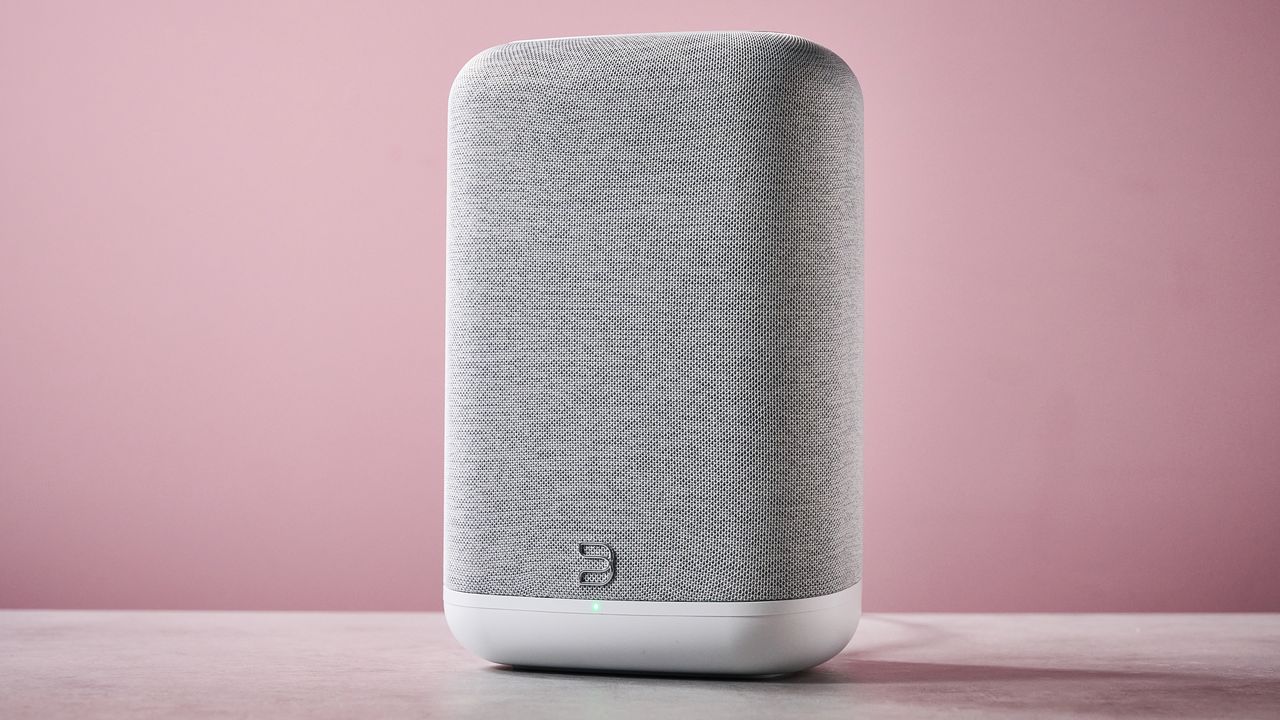
Bluesound Pulse Flex: two-minute review
The Bluesound Pulse Flex is a reboot of the brand’s 2018 wireless speaker. Capable of hi-res playback and being part of a multi-room setup, its most obvious rival is the Sonos Era 100. But is it capable of squaring up to Sonos’s entry level option?First off, it deftly handles the separation of various elements in the mix. Listening to Nervous Tics by Maribou State, I was impressed with how judiciously it balanced each instrument, with the guitar and the arpeggiated synth given plenty of room. Vocals especially always felt like they were given their due deference, sounding fantastically clear and soaring above the rest of the mix.A big part of this is that the Pulse Flex dedicates plenty of space in the mix for the mids to express themselves, rather than boosting bass and treble as a cheap way of adding punch. Playing Cirrus by Bonobo, I was immediately struck by how energetic the Kalimba sounded and the satisfying resonance and reverb to the chimes. Honestly, its performance in this frequency range is as good as I’ve heard from any of the best wireless speakers in this price range.That’s not to say it doesn’t have any sonic shortcomings though. For example, as it doesn’t have stereo drivers, it’s only capable of mono playback unless you pair it with another Bluesound speaker, meaning you’re not going to get as satisfying a soundstage as you might otherwise. The speaker’s also surprisingly quiet – I rarely need to run most speakers at more than 50% volume, whereas I had to crank the Pulse Flex at around 65% just to get a similar level of loudness out of it.There are also some areas of the mix it handles less well than the mids. For example, when playing Us (Pola & Bryson Remix) by Alchemist, I was immediately struck by how subdued the sub felt, particularly compared to a more bass-heavy wireless speaker like the Sonos Era 100. On occasion, transients like hi-hats can also feel like they’re lacking in crispness and bite, suggesting the treble is a little muted.Of course, this is where many speakers would fall back on their EQ settings as a defence, reasoning that at least you can compensate for their audio weaknesses here, should you wish. Unfortunately for the Pulse Flex, its EQ settings are seriously limited, only allowing you to boost or reduce bass or treble. It also doesn’t have any form of built-in room calibration, meaning it won’t compensate for unfavorable placement.But while it’s a little lacking in audio features, it makes up for it in terms of connectivity options. Wireless options are impressive enough, with integrated streaming apps, AirPlay 2 and Bluetooth aptX HD. However, it’s the variety of wired inputs that really impressed me – it offers a staggering range for a speaker of this price, including a 3.5mm analog jack, optical in, USB for connecting external drives and USB-C for running a digital input from your PC or laptop.This smart physical design is echoed elsewhere throughout the Pulse Flex’s build. I’m a big fan of its styling, with its flattened front face and attractive colorways helping it to stand out from the crowd of interchangeable wireless speakers. Meanwhile, the acoustically transparent fabric of its grille and matte plastic of its body feel wonderfully tactile. I only wish that its buttons were slightly less fine, as they’re not as pleasant to press as circular buttons would be.All things considered, the Bluesound Pulse Flex is an effective speaker for its $349 / £279 price. It offers excellent resolution and handles crowded mixes pretty deftly, as well as making vocals and other mid-range elements shine. Unfortunately, it does lack where sub is concerned and offers too few sound-tweaking features though, so if you’re into a bassier sound or just like tailoring audio to suit your preferences, you might be better off with one of the best wireless speakers instead.