
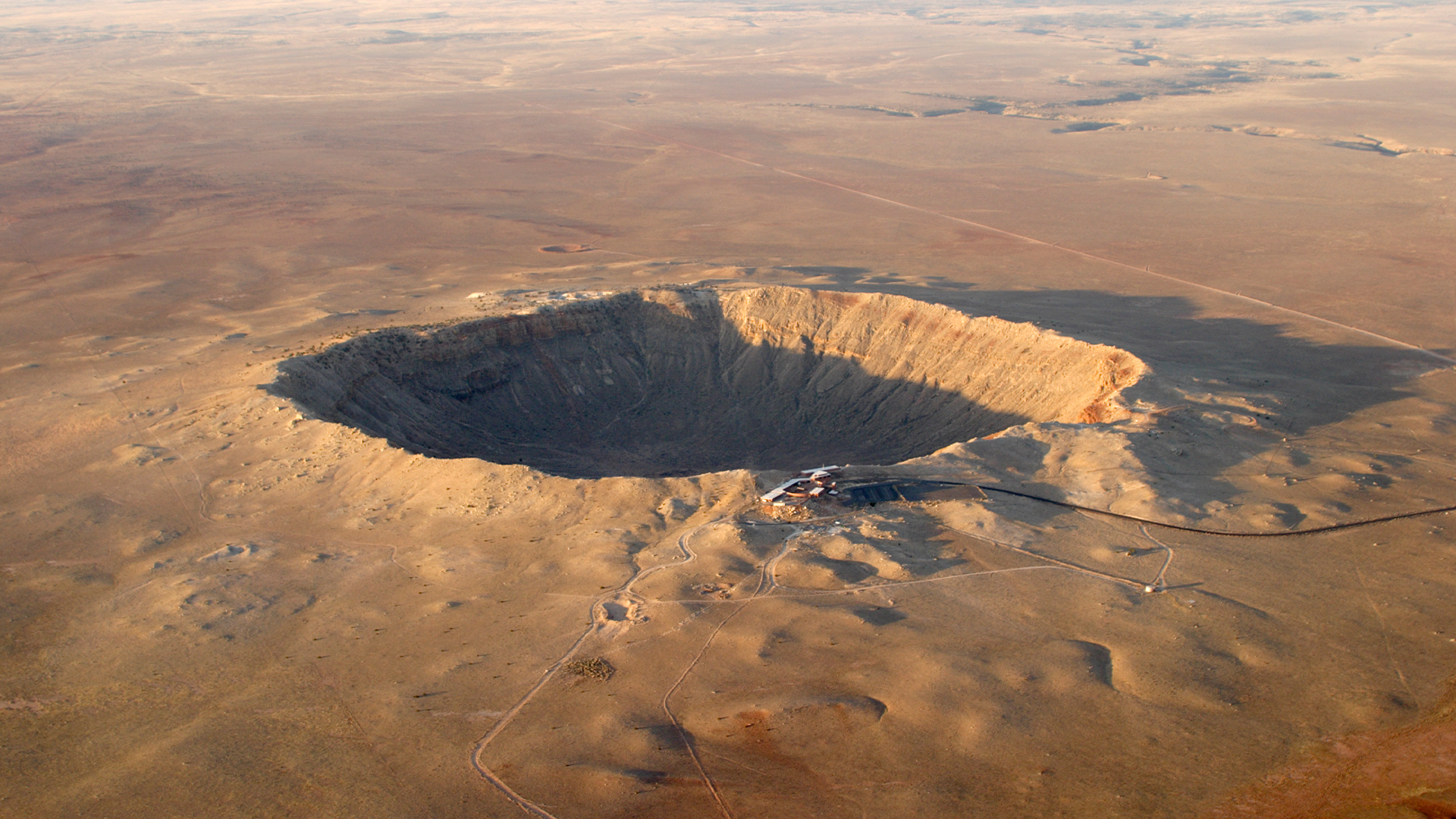
Loosely-bound clumpy asteroids with curveball-like spins may have scooped out some of Earth's most distinctly shaped craters, including Arizona's bowl-like Barringer Crater, a study published Nov. 22 in the journal Physical Review E suggests. Craters carved by fast-spinning space rocks tend to be wider and shallower than those formed from their slower-spinning counterparts, the study authors found — a potentially counterintuitive finding if you've ever seen a curveball slam hard against a player's bat in a game of baseball.
Impact craters ― pock-marks created by space rocks ― scar the surface of most of the solar system's rocky bodies, from Jupiter's moon Io to our own home planet. But these traces of past celestial encounters have a bewildering diversity of shapes.