The more things change, the more it feels the same.
The Independent Officiating Board (IOB) is a little more than three months into its formation and yet things are already starting feel sloppy.

On Monday morning, IndyCar Officiating - the new independent and not-for-profit organization governed by the IOB’s trio of Ray Evernham, Raj Nair, and Ronan Morgan (appointed by the FIA) - announced multiple items needed to help properly oversee the IndyCar Series. Among them included finalizing the IndyCar Officiating budget for the 2026 season, along with noting a need for a separate race director for Indy NXT, the developmental category for IndyCar.
That’s it.
Upon review, there were no changes made. Kyle Novak continues as the race director, a role held since 2018, and is also the vice president of IndyCar Officiating. Kevin “Rocket” Blanch, who joined IndyCar in 2003, remains IndyCar Officiating’s technical director. Arie Luyendyk and Max Papis will continue to lend their expertise as chief stewards, roles held since 2016, for IndyCar Officiating. And the only notable addition was Nick Allen, who was most recently with Andretti Global and brings 20 years of experience as a race team and chief mechanic, taking on the role as a technical inspection manager.
With the season just a few days away, the IOB continues to search for the ideal candidate to take over as the Managing Director of Officiating (MDO). As a result, all three members of the IOB will be on-site for the opening three rounds of the season.
During a call with select media following the announcement, Motorsport.com asked what the timeline is to find an MDO, to which Nair said, “I think we can safely say we're targeting the first half of the season to have an MDO in place.”
Honestly, none of this -- the same personnel being retained or a yet-to-be-hired MDO -- should come as a shock.
First and foremost, it seemed extremely unreasonable to expect changes when, during an offseason that lasted for six months, IndyCar introduced an independent officiating system halfway through. Additionally, according to when the independent officiating system was announced in December, it was noted that the MDO is charged with full officiating oversight, which includes the hiring of personnel for race control, IndyCar technical inspection and is responsible for enforcing the IndyCar rulebook in both IndyCar and Indy NXT.
It’s a curious case to try and make sense of it all, especially for a sport trying to reclaim integrity and minimize the conflict of interest that was called into question the last two years.
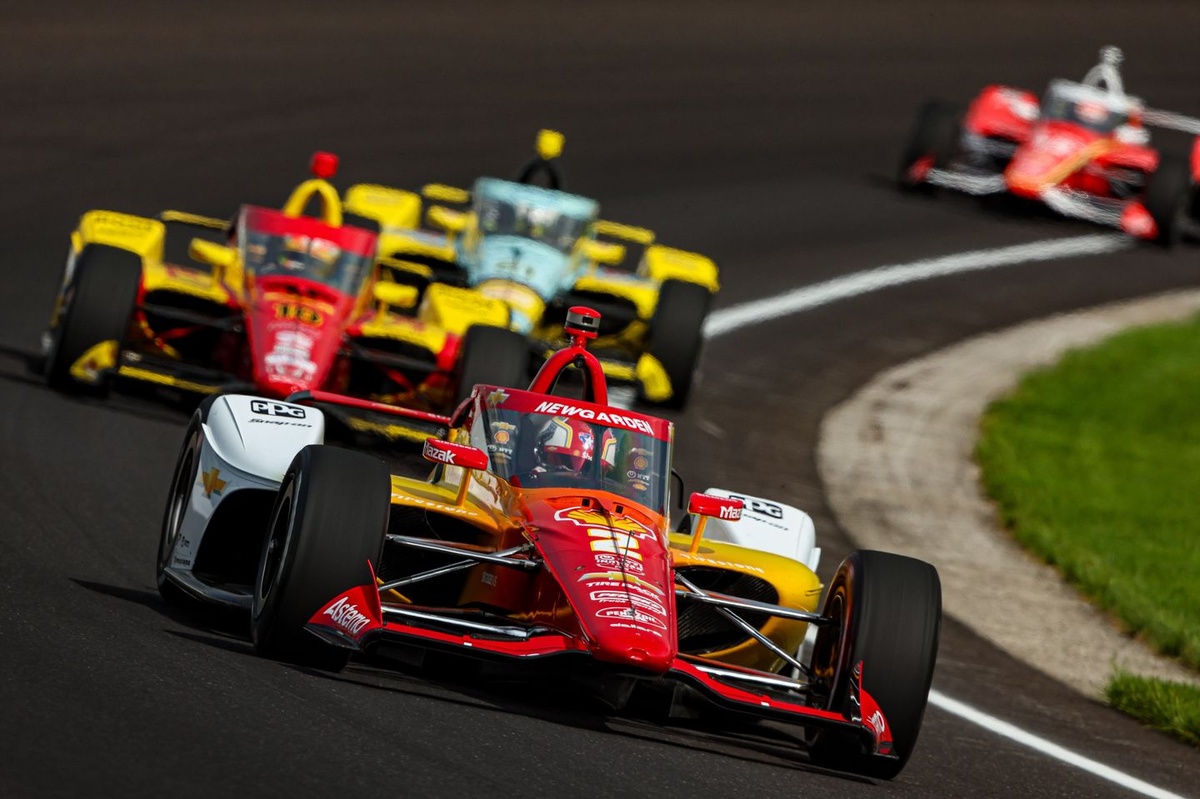
A brief trip down memory lane for those that have forgotten… Roger Penske owns Team Penske, a race team that competes in the IndyCar Series, which he also owns - under the Penske Entertainment umbrella - in addition to the Indianapolis Motor Speedway. In 2024, his team was found - albeit a month later - in violation of illegal overtake use (dubbed the push-to-pass scandal) in the season-opening race at St. Petersburg, which resulted in Josef Newgarden being stripped of victory.
Then, last year during pre-qualifying inspection for the Indianapolis 500, two of Penske’s cars were found with illegal modifications to the rear attenuator, which is a key safety component on an Indy car. The fallout led to the three high-level firings: Team President Tim Cindric, IndyCar Managing Director Ron Ruzewski, and IndyCar General Manager Kyle Moyer.
The oddity in the firings is that while Moyer and Ruzewski found new homes as Arrow McLaren and Andretti Global, respectively, Cindric returned last month to Team Penske as a race strategist for Scott McLaughlin.

Considering the violations happened under the same officials who were retained for 2026, it’s a unique decision to not make any changes.
“First of all, a primary goal was establishing a separate officiating organization to eliminate any perception of conflict of interest, but that wasn't the only goal,” Nair said.
“Certainly, looking at the existing processes and personnel and resources, including eventually evaluating what happened over the last two years and what could be done to prevent any repeat of that. We've already determined through those reviews that there's certainly a need for some incremental resources, and talked about three of those. One, the (Indy) NXT Race Director, and on the tech side particularly, adding an IndyCar-dedicated tech to support ‘Rocket’ and an (Indy) NXT-dedicated tech to support Rocket.
“We've also been looking at the rulebook and both the way it's written as well as the way it's reviewed, updated. That was certainly a factor that played into what happened over the last couple of years. And so, although the rulebook's fundamentally sound, it's not the most usable and accessible and searchable. … There are aspects of technical bulletins that come out from our technical partners, whether it's on the engine side or on the chassis side, that aren't always captured in the rulebook. So that aspect, we've got a concerted effort going on as we speak that would be probably rolling out through 2026 to improve the technical bulletin alignment to the rulebook, as well as make that very easily accessible, not just to the officiating team, but everybody in the paddock.”
"We don't want conflicts of interest"
During the IndyCar Content Days at the end of last month, several drivers were asked their thoughts on the Independent Officiating Board, to which many confessed - or played coy - to not knowing much about it.
Needless to say, it was interesting for a couple of drivers to find out the IOB - that saw Evernham and Nair selected by the chartered team owners - was being funded by Penske Entertainment.
“We don't want conflicts of interest,” said Pato O’Ward, driver of the No. 5 Arrow McLaren Chevrolet. “I think it's good to have people that have nothing to do and are not paid by him.”
And in that moment, O’Ward became more aware of the arrangement.
“They are? Got it,” he said. “I'm just going to shut up.”
To which an IndyCar representative chimed in to say, “It's separate, but yes.”
And O’Ward replied, “Separate, not separate. We just want things to be fair.”
Graham Rahal wants to wait and see how this process pans out before giving too deep of an opinion.
“Let's give it a few races and then we'll figure it out,” said Rahal, driver of the No. 15 Rahal Letterman Lanigan Racing Honda. “I feel like independence is good, but I feel like it really needs to be independent. We'll just go from there.”
Rahal went on to sympathize with the situation Novak, in particular, is in, saying, “It's a pretty thankless job.”
The immediate reaction on how everything has evolved to this point is how Penske Entertainment have maintained control despite the creation of the IOB.
And in many things, perception is reality.
It’s a slippery slope as Novak and Co. were praised during the call by Nair, Evernham, and Morgan for their effort, but just in need of more resources to further bolster the ability to do their respective jobs at a higher level.
“With the support of extra staffing and tools and process and communication, I think I'm sure that you'll see a much different group,” Evernham said.
Could the formation of IndyCar Officiating truly help create the divide the paddock has longed for since Penske bought the series in late 2019? Yes. Given how the last couple of years have played out, however, it is going to take a lot to win over the skeptics.
While the formation of IndyCar Officiating is a step in the right direction, it’s yet tedious details such as timing of the formation, who is funding it, a lack of officiating changes, that keep it from feeling like a complete separation of church and state. Instead, it feels like another piece that can be controlled by Penske Entertainment.
IndyCar fans are a passionate and well-educated bunch, and in this day and age it’s a helluva lot easier to call bullshit when you see it.
Time will tell how this new officiating era will go, but it’s off to a sloppy start.