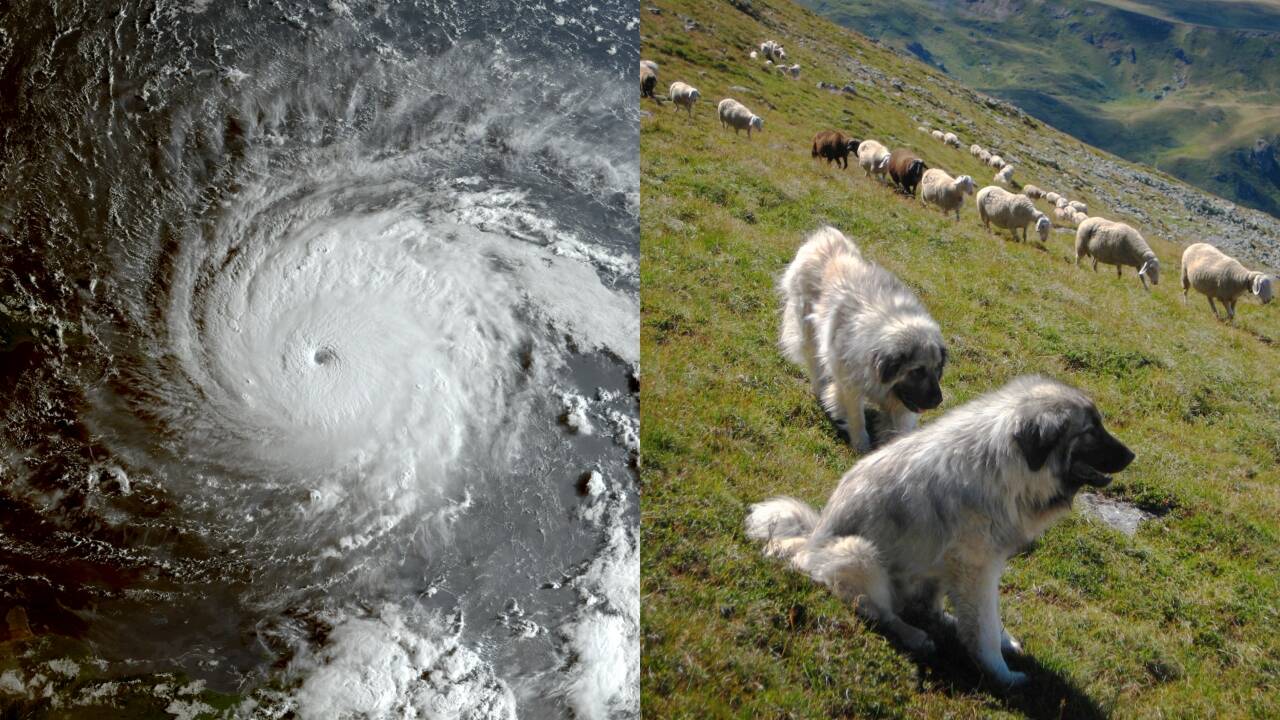
Above all, evacuation instructions are based on one thing: that people come first and everything else may wait. That rationale is sound when a Category 5 hurricane is about to hit a small island. But the evacuation created an immediate problem that disaster plans often struggle to address: what happens to animals left behind? Hundreds of pets and thousands of farm animals were left with nowhere to go and no one to feed them. And exactly that happened on the Caribbean island of Barbuda in September 2017 when Hurricane Irma forced Barbuda’s residents to evacuate the island, leaving pets and livestock behind.
Get breaking news anytime, anywhere. Download the TOI app now!

At its peak, Irma hit Barbuda, the smaller of the two islands that make up Antigua and Barbuda. The storm destroyed or damaged almost 95 per cent of the island’s structures, leaving it without water or communications and making Barbuda practically uninhabitable, the National Hurricane Centre said. Irma destroyed about 95% of Barbuda’s infrastructure and forced its roughly 1,800 residents to evacuate to Antigua; after Hurricane Jose approached days later, the remaining residents also left, leaving the island temporarily without its population.
Animals left to fend for themselves
The evacuation could not take the animals with it. Dogs, cats, cows, horses and other animals were left to roam freely over a landscape no longer divided by fences, pens and shelter, because most of the structures that had once held them were crushed by Irma’s storms. In the immediate aftermath of the storm, Karen Corbin, president of the Antigua and Barbuda Humane Society , was one of the first responders to arrive on the island, and what she found frightened her enough to issue a public warning almost immediately.
Corbin was more concerned about the pets. Hundreds of former pets, abandoned by their owners and growing hungrier, started to exhibit early indications of going wild within days, and she warned that without intervention they would eventually start hunting the animals now roaming unsecured throughout Barbuda’s farms. Local farmers, many of whom had left cattle behind thinking they would be returning in a week or two, watched the crisis unfold from Antigua with no way to get back and intervene.
The prediction comes true
It wasn’t long before that prophecy came true. Weeks became months as Barbuda struggled to recover, far more slowly than anybody had planned. Packs of canines, some of them family pets just weeks before, began preying on the very goats, sheep and poultry that had survived the hurricane itself. Farmers who returned to rebuild found that dogs, which had recently been household pets, had attacked some of their surviving livestock. Cats were also affected, hiding from wandering groups of dogs and finding it particularly difficult to source food in the aftermath. World Animal Protection reported that its response teams found distressed animals and warned that hungry dogs and pigs could attack livestock. Animal welfare groups hurried to respond, setting up temporary shelters in whatever facilities were available, including one damaged hotel that residents started calling the Dog Hotel, where rescued animals were placed until a true long-term refuge was created. Volunteers drove around the island, feeding and treating whatever animals they could reach, while others worked to reunite pets with owners who had been forced to leave without them, sometimes making the difficult decision to euthanise dogs that were too far along in their transformation to be safely rehomed.
Recovery, slowly and unevenly
Barbuda’s human recovery was slow, with many islanders opting to stay on Antigua permanently rather than rebuild homes that Irma had reduced to ruins. Shiraz Hopkins, a farmer who returned, often found himself patching fences and replacing sheep lost to attacks by feral dogs, while urging local officials to speed up the restoration of electricity, water and schools. The animal crisis eased gradually as more loose dogs found their way to shelters and farmers put the fencing that had separated predator from prey back together, but the episode lingered as a reminder of how quickly domesticated animals could begin behaving differently when the structures and human care around them disappeared.
What happened in Barbuda has become a kind of case study for disaster preparedness agencies around the Caribbean, exposing a hole that evacuation protocols don’t often cover: what to do with an island’s animals when its inhabitants can’t take them with them. The dogs were responding to a landscape in which food, shelter and human control had suddenly disappeared, while the livestock were left exposed to predators in an environment very different from the one they had known before the storm.