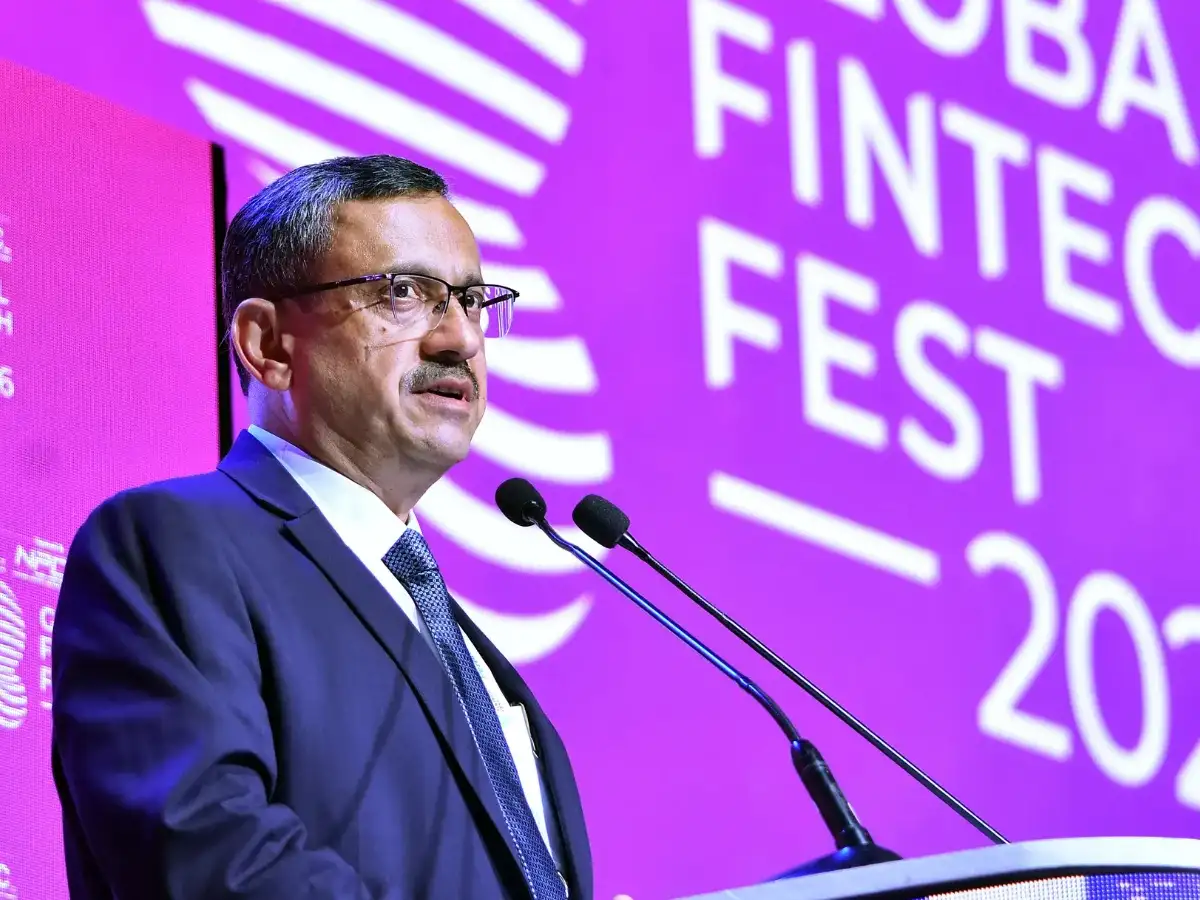
Technology is no longer just an enabler for banks but is becoming the very architecture through which their risks are created and managed, RBI Deputy Governor Rohit Jain said on Thursday, warning that a failure in a critical technology system can disrupt essential financial services even when a bank remains financially sound.
“Technology is no longer solely an enabler of banking. Technology architecture is becoming the risk architecture of a bank,” Jain said at the SBI Banking Conclave.

Also read: Sunrise Sectors: SBI chief Setty sees next wave of global investment taking shape
A bank may have adequate capital and liquidity, sound governance and a strong balance sheet, but an unavailable technology system, cyber incident or failure of a key technology dependency can leave customers unable to access essential financial services, he said.
This means financial and technological resilience can no longer be treated separately, Jain said, as banks increasingly depend on interconnected technology infrastructure spanning core banking, payments, APIs, cloud infrastructure, data centres, software providers and cybersecurity systems.
Technology risk moves to the boardroom
Jain said technology risk should now be treated as a “first-order enterprise risk”, comparable in importance to traditional balance-sheet risks, rather than as a back-office or purely technical issue handled by IT departments.
“Technology is now embedded in almost every critical banking function, from core banking and payments to customer onboarding, credit assessment, fraud monitoring, and even regulatory reporting,” he said.
The expanding technology perimeter also means banks cannot outsource accountability along with technology, Jain said. Institutions may rely on external providers for infrastructure, software or cybersecurity, but must continue to understand risks around access controls, concentration, recoverability, data protection and exit options.
A vulnerability at a fintech, software provider, payment interface or common cloud environment can therefore have consequences beyond a single institution, he said.
Outages can become financial risks
Jain pointed to cyberattacks, banking-channel outages and the 2024 CrowdStrike disruption as examples of how technology failures can affect financial institutions.
The lessons from such incidents extend beyond cybersecurity, he said, requiring banks to focus on capacity planning, legacy-system modernisation, change management, disaster recovery and third-party resilience.
“For customers, a technology outage is not simply a system issue; it is an inability to access their own money or complete an urgent financial transaction,” Jain said.
The scale of India's digital payments ecosystem makes resilience increasingly important. UPI processed 24.9 billion transactions worth approximately Rs 30 lakh crore in August 2026, according to Jain.
He said the investments banks make in technology should therefore also be viewed as investments in risk management, continuity, confidence and financial stability.
Also read: Financial sector must fund next generation of enterprises, not just next year's growth: P K Mishra
AI raises stakes for banks
Jain said artificial intelligence could improve customer service, fraud detection, risk assessment and productivity, but could also amplify errors and influence decisions involving credit, fraud alerts, customer access, pricing and service delivery.
“AI is expected to fundamentally change the financial sector, but governance must precede scale,” he said.
Banks will need appropriate validation, monitoring, human oversight and clear accountability as they deploy AI, he said.
Jain also stressed that boards and senior management must have enough technological understanding to question assumptions, assess dependencies and determine whether resilience arrangements have actually been tested.
“The advantage will not necessarily belong to the institution that deploys the most sophisticated technology; it may belong to the institution that can understand, govern, and deploy technology with the greatest degree of discipline and foresight,” he said.