Bangladesh's foreign minister is on a three-day visit to India in what is seen as an effort to mend strained bilateral ties.
Khalilur Rahman will visit India and from 7-10 April and hold talks with national security advisor Ajit Doval. He will also meet his Indian counterpart, S Jaishankar, on Wednesday.
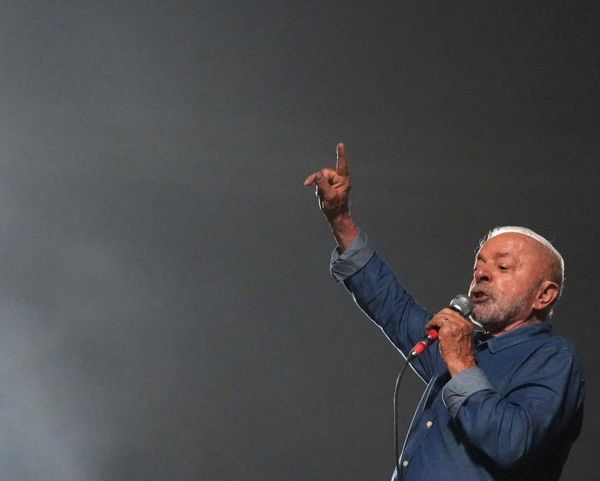
Both ministers are expected to discuss energy cooperation amid the ongoing war in the Middle East, river water sharing, and the normalisation of visa services which were suspended following the anti-government protests in Bangladesh.
This marks the first visit by a Bangladeshi minister to India since the monsoon protests of 2024, which forced the then prime minister Sheikh Hasina to flee to India. Hasina has since been living in the capital Delhi close to the corridors of power and treated like "any head of state", according to her son.
Mr Rahman was selected as the foreign minister by prime minister Tarique Rahman following his Bangladeshi Nationalist Party's landslide victory in the first general elections since the protests held in February this year. Mr Rahman had previously served as the national security advisor in the interim government led by Nobel peace laureate Muhammad Yunus.
Ahead of the visit, Mr Rahman told Prothom Alo that the discussions will focus on the “future of relations” between the two countries. “We want a normal relationship with India based on mutual respect, dignity, and interests,” he said.
Ties between Delhi and Dhaka sank to a historic low under the interim government. The anti-India rhetoric intensified, marked by the administration’s repeated summons to the Indian high commissioner and sharp criticism of Delhi over hosting Hasina.

Rising attacks on minority Hindu communities in Bangladesh were also a point of contention between the both nations, which Dr Yunus initially dismissed as “exaggerated” or politically motivated.
India halted transshipment access for Bangladeshi exports through its territory and temporarily shut visa application centres across several cities, citing security concerns. The growing animosity with India also made way for Pakistan, long shunned by Dhaka, to make inroads into Bangladesh, giving rise to security concerns for Delhi.
However, ties have shown signs of a reset since the new government took office, with India’s prime minister Narendra Modi among the first to congratulate Bangladesh’s Tarique Rahman.
Both nations have deepened cooperation on maritime and energy security this month when Dhaka took part in the ongoing IOS SAGAR navy exercise, which was flagged off from the western city of Mumbai.
India has offered to export an additional 40,000 tonnes of diesel to Bangladesh in April, as the South Asian nation grapples with one of the region’s worst fuel shortages triggered by the war in the Middle East. Dhaka is also negotiating with New Delhi to secure wheat from India to meet its domestic demand.
Although Tarique Rahman’s government has adopted a “Bangladesh first” foreign policy, it has continued to signal a prioritisation of regional engagement.
India is willing to rebuild ties with Bangladesh with a “forward-looking approach”, Indian high commissioner Pranay Verma told prime minister Rahman on Monday.
During the meeting, Mr Verma and Mr Rahman "discussed bilateral engagement with a focus on people-centric cooperation in multiple domains aligned with the national development priorities of the two countries," according to the Indian High Commission.
Humayun Kabir, the prime minister's foreign advisor, said this week: "Our bilateral relation should be focused on people-to-people ties so that it will not be focused on individuals. We want to ensure this relation avoids the mistakes of the past." He will accompany the foreign minister during the India visit.”
Earlier, he told The Independent: "We're prioritising the region, not any country".
When asked how Dhaka would manage relations with China, India and Pakistan, he said: "All these three countries are important countries in our region. But we believe that a strong mandate has given us the opportunity to negotiate with any country from a position of strength".
He said Bangladesh's policy will won't be "country-dependent or any country-specific and it will be flexible".
"In our approach, there will be a regional vision, in terms of regional cooperation, regional leadership, on creating common ground and common positions.
"We believe, through the SAARC [South Asian Association for Regional Cooperation] framework, that we can work with all the countries in our region for peaceful progress, stability, economic development, and security cooperation."