
Get all your news in one place.
100’s of premium titles.
One app.
Start reading
The Times of India
The Times of India
World
Sachin Parashar

Bangladesh polls: After Hasina, Delhi gears up for new regime in Dhaka; PM Modi dials Tarique Rahman

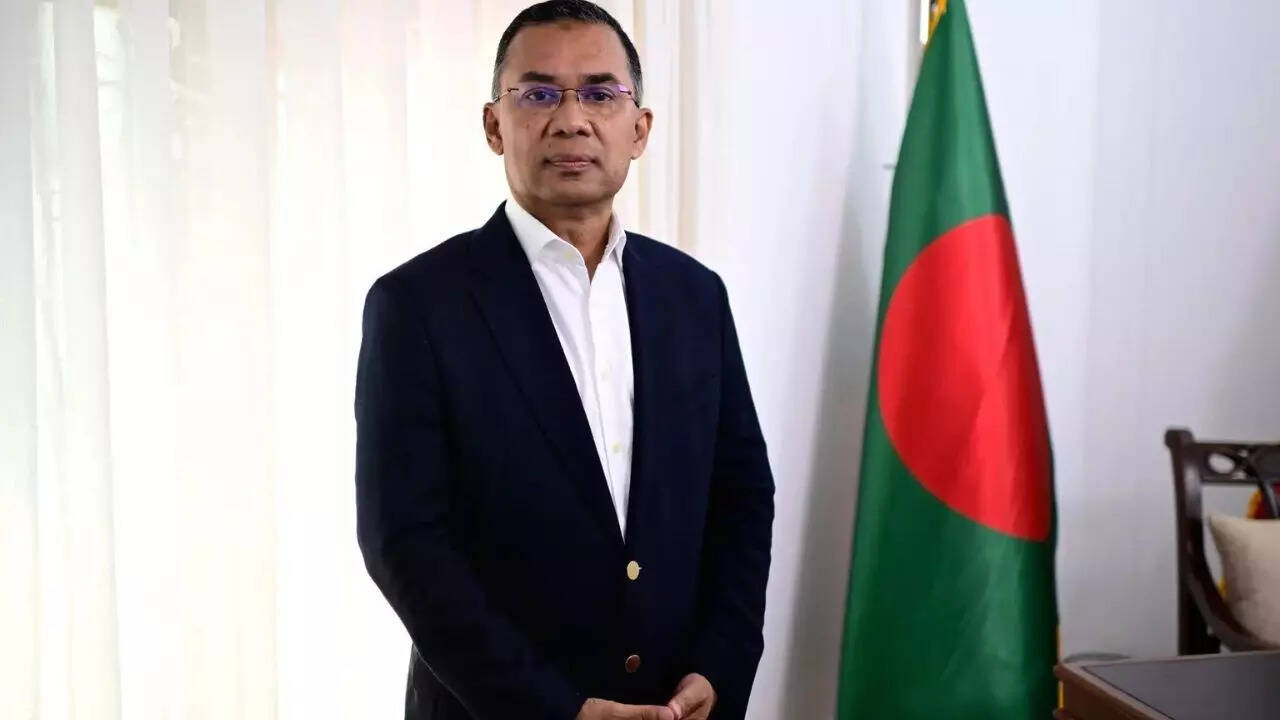
PM Narendra Modi was amongst the first global leaders to congratulate BNP chief Tarique Rahman for leading his party to a "decisive victory" in the Bangladesh parliamentary elections, building upon his earlier outreach to both Rahman and his recently deceased mother Khaleda Zia.

Effectively endorsing the poll process, for which India had refused to send observers, Modi said in a post on X that the victory reflected the trust Bangladeshi people had in Rahman’s leadership. The PM also committed to working with him to strengthen bilateral relations and to fulfil the aspirations of the people of Bangladesh.
With Sheikh Hasina’s Awami League proscribed, a clear majority for the BNP was always going to be the optimal result for India under the circumstances. However, an ascendant Jamaat-e-Islami that won more than 60 seats is likely to trigger fresh security concerns in India. The Islamist party’s tally in the past had not exceeded 18 seats.

Later in the day, and still before the results were officially declared, Modi also spoke to Rahman about the latter’s “remarkable” victory and backed his endeavour to fulfil the aspirations of the people of Bangladesh. “As two close neighbours with deep-rooted historical and cultural ties, I reaffirmed India’s continued commitment to the peace, progress, and prosperity of both our peoples,” said Modi, the first foreign leader to call Rahman.
In his earlier post in the morning, Modi said India will continue to stand in support of a democratic, progressive and inclusive Bangladesh. “I look forward to working with you to strengthen our multifaceted relations and advance our common development goals,” added the PM, possibly the second leader in the region to reach out to Rahman on X after Pakistan President Asif Ali Zardari. The US was the first country to congratulate Rahman but at the ambassadorial level.

Ahead of the elections, India had conveyed to the BNP leaders that India was interested in peace, stability, inclusion and democracy in Bangladesh and would continue to engage with all stakeholders for the same, even as it continued to host Hasina. Modi had himself later doubled down on this outreach as he offered support for the treatment of Rahman’s ailing mother and, after Zia’s demise, sent foreign minister S Jaishankar to attend her funeral. Modi also wrote to Rahman acknowledging the three-time PM’s contributions to the development of Bangladesh and strengthening of Bangladesh’s ties with India.

Rahman is learnt to have responded positively to these gestures as he maintained that Bangladesh will work towards a more “balanced” relationship with India. However, in doing so, the new PM is unlikely, as evident from the BNP manifesto, to go slow on issues like border killings and sharing of transboundary river waters, or even the pending demand for Hasina’s extradition. As Bangladesh opens its doors again to Pakistan, Rahman is also likely to seek an early revival of the SAARC summit process.

Equally for India, issues like northeast security, increasing radicalisation and threat to minority communities particularly the Hindus will remain non-negotiable with any Bangladesh government. India will also expect Dhaka to be mindful of its security concerns, as Bangladesh recalibrates its ties with Pakistan and China, both of which have been courting India’s eastern neighbour since the departure of Hasina. The former PM and Indian ally expanded Bangladesh’s economic ties with Beijing but not at the cost of India’s strategic interests.

India will also closely follow the likely democratic reforms in the wake of the July Charter referendum that accompanied the general election and was passed with over 60 percent of votes. The reforms, meant to prevent recurrence of authoritarianism, include introduction of an upper house in Parliament, two-term limit for PM and also emphasis on Bangladeshi, not Bengali, identity.

Sign up to read this article
Read news from 100’s of titles, curated specifically for you.
Already a member? Sign in here
Related Stories
Top stories on inkl right now
One subscription that gives you access to news from hundreds of sites
Already a member? Sign in here
Our Picks
Fourteen days free
Download the app
One app. One membership.
100+ trusted global sources.






