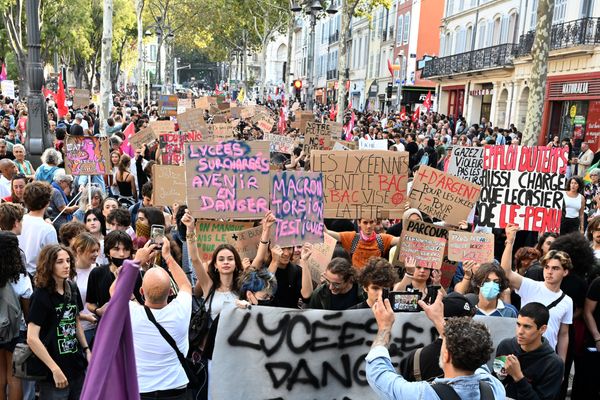
Banning phrases such as “globalise the intifada” is “likely to disproportionately affect Muslim Australians, including Palestinian and Arab communities,” a New South Wales parliamentary inquiry has been told.
The submission by the Australian National Imams Council [Anic] has been echoed by activist group the Palestine Action Group [PAG], who said a ban on the chant risks “importing repressive models from overseas, particularly the United Kingdom”, where police have announced they will arrest protesters who use the phrase.

The inquiry into “measures to prohibit slogans that incite hatred”, which will not hold any public hearings, closed to submissions on Monday, three weeks after the Bondi terror attack that catalysed it.
Sign up: AU Breaking News email
Minns had singled out the phrase as “hateful, violent rhetoric”, when changes to gun control, hate speech and protest laws were rushed through parliament after the Bondi attack. He said he intended to ban it, but the government decided to ask a parliamentary committee to investigate it before bringing in legislative changes.
Guardian Australia contacted the representative organisation for the Jewish community in the state, the NSW Jewish Board of Deputies (JBD) and national peak body the Executive Council of Australian Jewry (ECAJ).
The groups have not yet made their submissions, but have been granted an extension because of the significant demands from supporting the Jewish community since the attack.
A spokesperson for ECAJ said hate speech legislation needed to be “broad and flexible enough to capture the constant changes in symbolism and coded messaging that are utilised by extremist organisations”.
The NSW JBD has previously welcomed the move to ban the phrase “globalise the intifada” as a “watershed moment in confronting the hate and incitement which has proliferated on our streets”.
The phrase, from the Arabic for uprising or “shaking off”, is used to refer to two uprisings by Palestinians against Israel in 1987 and 2000, and remains controversial. A woman was arrested but released without charge for allegedly wearing a jacket adorned with the phrase at a protest in Sydney this month.
Many in the Jewish community strongly associate the word intifada with indiscriminate acts of violence and terrorism.
The director of the Australian Centre for Jewish Civilisation, David Slucki, has called “globalise the intifada” an “offensive” and “threatening” phrase.
“Intention and impact are two separate questions, and I think it is worthwhile recognising the impact, especially when the impact is harmful and threatening,” he said.
In its submission, Anic said phrases such as “from the river to the sea” – which is not explicitly mentioned in the inquiry’s term of reference – and “globalise the intifada” did not have “a single or fixed meaning and are employed in a variety of political, cultural, and human rights contexts”.
“Content-based bans risk arbitrary enforcement and may disproportionately impact particular communities and advocates.”
In its submission, PAG said it had not itself led the chant “globalise the intifada” at rallies it had organised since October 2023, but “reject[ed] the suggestion that this chant, or any associated chant, is threatening in any way”.
It drew attention to the UK, where human rights groups have condemned an announcement in December by the Metropolitan and Greater Manchester police that they would arrest protesters who chant or display “globalise the intifada”.
“The NSW Government should exercise extreme caution in seeking to introduce similarly oppressive policies to those adopted in the United Kingdom,” PAG said.
Other submissions to the inquiry included the NSW Council for Civil Liberties [NSWCCL]. In its submission, seen by Guardian Australia, the council warned that the banning of slogans had the potential to undermine social cohesion as well as the implied freedom of political communication and various international human rights treaties.
“How would community expectations regarding what conduct is threatening be determined by a court?” it said, adding there was no current legal definition of “community”.
“To this end, the NSWCCL contends that the criminal law is a ‘blunt instrument’ to manage tension in the community, and that an approach centred around education and human rights is more likely to be effective.”
Prof Anne Twomey, a constitutional law expert said she had made a submission but would allow the committee to release it.
The inquiry, which is being run by the Labor-majority committee on law and safety, is expected to hand its final report to the government on 31 January.