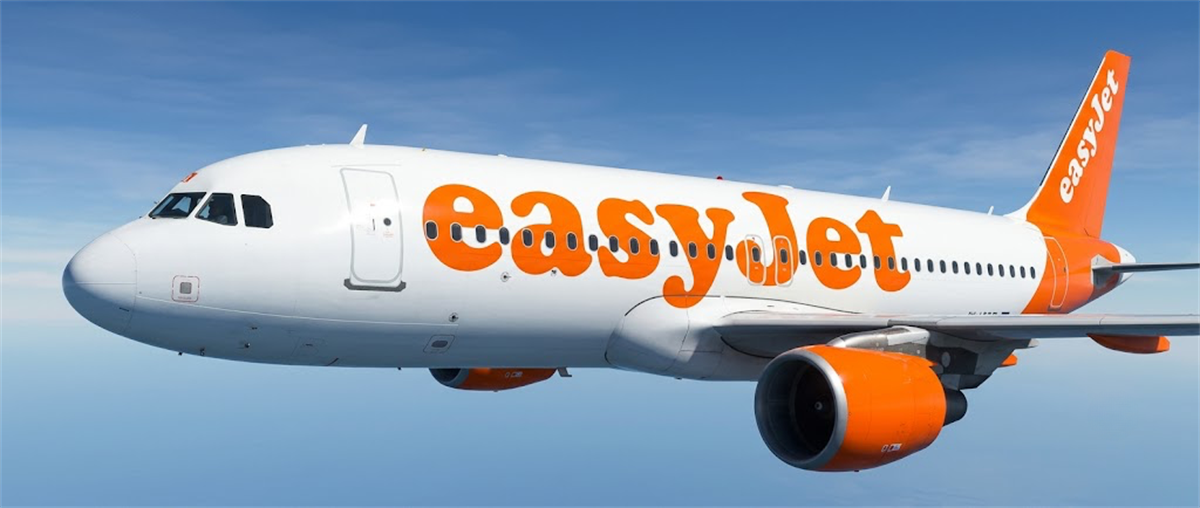
European budget aviation has spent the better part of the year navigating heavy turbulence. Rising jet fuel costs and geopolitical route disruptions have battered public valuations, pushing market sentiment toward distress levels.
Alternative asset managers see a severe dislocation between public equity pricing and actual free cash flow generation. The recent £5.7 billion (approx. $7.7 billion) cash offer from Apollo Global Management (NYSE: APO) for easyJet (OTCMKTS: EJTTF) highlights the rapid deployment of dry powder into hard-transport assets.

Catching Falling Knives at 30,000 Feet
When public markets apply steep discounts across entire sectors amid macroeconomic fears, private equity often steps in to fill the valuation gap.
The Apollo Global Management bid fundamentally shifts how investors should view the current pricing of European low-cost carriers.
This acquisition attempt proves that strategic buyers are perfectly willing to catch falling knives when the underlying business model remains sound.
Prior to this buyout premium, public markets heavily discounted easyJet. The airline traded at remarkably low price-to-sales and price-to-book ratios of 0.51 and 1.46, respectively.
Investors assessed the geopolitical challenges affecting European airspace and saw systemic risk, while private equity examined the same balance sheet and identified highly resilient, deeply discounted cash flows.
Altitude Adjustment: The 46% easyJet Rally
When Apollo Global Management superseded a competing bid from Castlelake, the move forced an immediate repricing event. Shares of easyJet rallied aggressively from a $6 base, gaining over 46% in 30 days to reach $8.81. This bidding war confirms that institutional capital views current aviation headwinds as cyclical pricing inefficiencies rather than terminal business declines. Apollo Global Management deploying billions in cash proves that the underlying demand for budget travel remains intact even when operating margins face temporary compression.
Upgrading the Itinerary: Expanding Profit Margins
Acquiring an airline in a high-fuel-cost environment requires a specific operational roadmap. Apollo Global Management is not stepping in to execute standard cost-cutting measures. The management team intends to scale the package holiday division of easyJet, which offers higher profit margins and better revenue predictability than standalone flight bookings.
Apollo Global Management plans to expand ancillary revenues. Services such as seat selection, checked baggage, and in-flight catering have completely transformed the fundamental economics of low-cost carriers over the past decade.
By upgauging the easyJet Airbus fleet and maximizing aircraft utilization on popular routes, private equity operators can extract significant margin expansion. This multi-layered approach to revenue generation acts as a natural hedge against volatile energy markets, ensuring the operations generate cash regardless of broader economic friction.
Ground Stop: The August 7 Compliance Deadline
A hard valuation floor sounds robust on paper, but executing a transnational buyout carries substantial friction. Under European Union acquisition protocols, Apollo Global Management has until August 7, 2026, to execute a legally binding offer or walk away from the table. Currently, the £7.15 (approx. $9.68) per share proposal remains an agreement in principle.
Non-EU entities acquiring controlling stakes in EU-based airlines historically face severe regulatory scrutiny. Strict foreign ownership and control limits dictate that EU airlines must be majority-owned and effectively controlled by EU nationals to retain operating licenses. Apollo Global Management will likely have to navigate heavy compliance restructuring to finalize the deal without compromising the established route network.
To mitigate the risk of forced divestment upon delisting, the prospective buyers plan to preserve the existing brand license agreement. The proposed deal structure would allow easyJet founder Stelios Haji-Ioannou, who holds a stake exceeding 15%, to remain invested. This strategic structuring demonstrates how carefully Apollo Global Management must tread to satisfy both shareholders and international regulators.
Cleared for Expansion: Apollo's Upside Potential
Investors monitoring the acquiring side of this transaction should weigh the internal mechanics of Apollo Global Management. Shares of the company have declined roughly 18% year to date, currently trading near $118. A capital outlay of this magnitude introduces near-term execution risk, prompting noticeable insider selling among key executives leading up to the bid.
Analysts maintain a moderate buy consensus on Apollo Global Management, with a $149.50 price target that implies over 25% upside. The investment manager sports a trailing price-to-earnings ratio near 75, but a forward price-to-earnings ratio of 14 suggests that Wall Street anticipates significant earnings growth. The market will closely evaluate how this specific airline acquisition might impact near-term liquidity and dividend strength before those operational improvements materialize.
Final Call: Will Private Capital Save Budget Travel?
When a company gets acquired at a premium, it establishes a comparative baseline for its entire industry. Regional ultra-low-cost carriers and low-cost carriers are now trading in the shadow of this new multiple. Institutional models will leverage this transaction print to adjust enterprise value-to-EBITDA ratios across the board.
Competitors like Ryanair (NASDAQ: RYAAY) and Wizz Air (OTCMKTS: WZZZY) operate with distinct balance sheets but share the same geopolitical airspace and fuel constraints. Ryanair maintains a structurally superior margin profile, while Wizz Air has navigated similar routing disruptions. Because the easyJet premium re-anchors sector multiples, these non-dividend-paying peers reliant strictly on capital appreciation become prime candidates for institutional re-rating.
Competitors facing similar macroeconomic pressures are underpriced relative to the newly established private-market valuation. Retail and institutional traders often scan the remaining independent carriers for deep-value entry points, creating sympathetic pricing action. The $7.7 billion buyout figure acts as a hard valuation floor, signaling that private capital is ready to step in if public equity markets continue to undervalue transport networks.
Investors may want to add European budget carriers to their watchlists to monitor for multiple expansions as the August 7 deadline approaches. Cautious traders might prefer to wait for clear regulatory approval on the easyJet acquisition before increasing exposure to the broader regional airline space.
The article "Baggage Claim: Apollo’s $7.7 Billion Bid to Acquire easyJet" first appeared on MarketBeat.