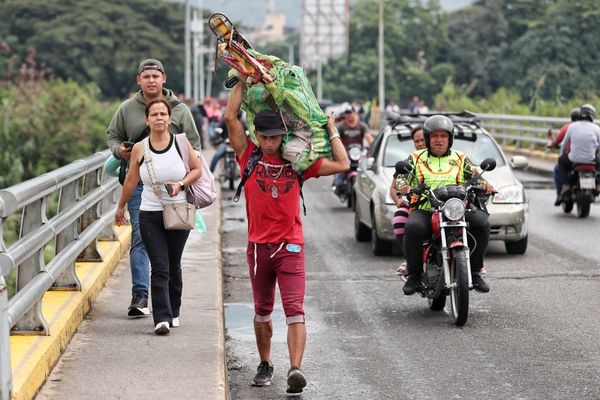
Mexican truckers, protesting strict inspections ordered last week by Texas Gov. Greg Abbott, began blocking on Monday the United States’ most important entry point for berries, avocados, bell peppers, cabbage and carrots and second-most-important for tomatoes and peppers.
We are rapidly running out of fingers on which to count the blows to the once seemingly seamless supply chain: Covid-19 and intermittent but continuing lockdowns in China, the Russian invasion of Ukraine, a ship wedged in the Suez Canal and now a blockade at the Pharr International Bridge southeast of Laredo in the Rio Grande Valley.
At a time of rampant inflation — figures announced today put the annualized inflation rate at a 40-year high of 8.5% — the slowdowns and the blockade do not help.
While fuel and some other categories were larger contributors to the inflation rate, fruits and vegetables are rising at the same 8.5%.
The back story of the blockade in Pharr is a little complicated but here it is in a nutshell:
The Texas governor, in apparent response to an expected decision by President Biden to unravel a policy directive of former President Donald Trump to refuse asylum requests of those crossing the U.S.-Mexico border during the Covid-19 pandemic, has ordered state troopers to inspect all commercial trucks entering the state, overlapping with more intermittent federal inspections.
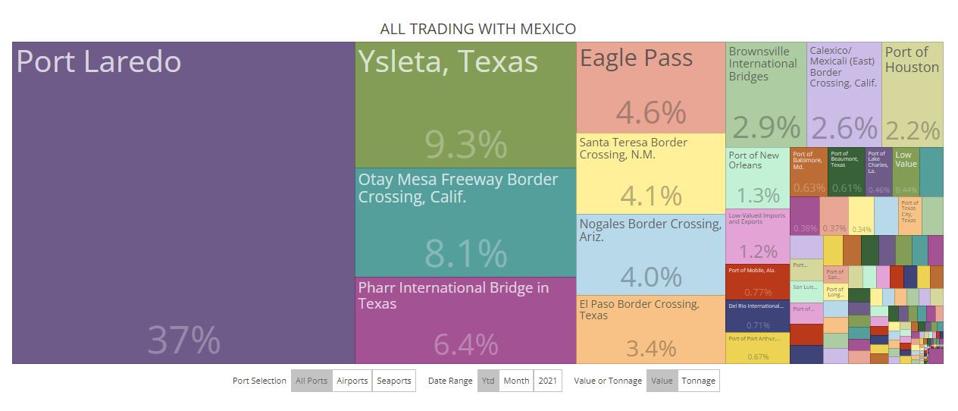
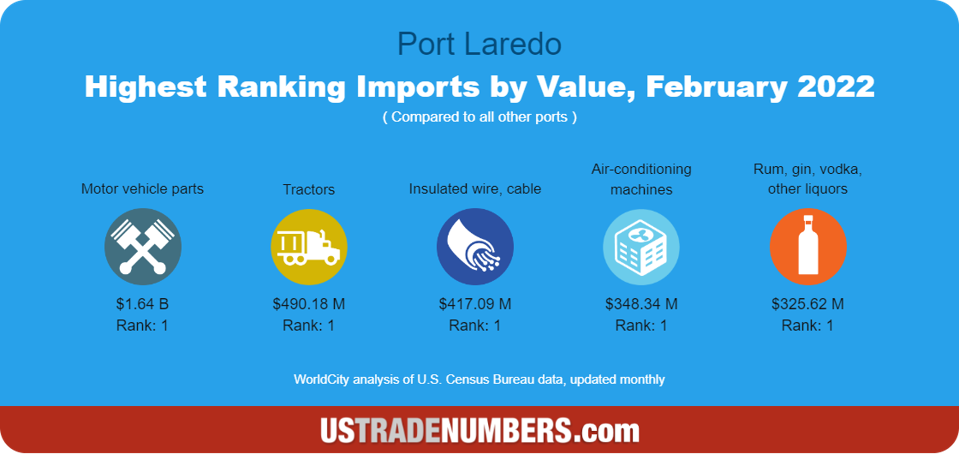
The bigger risk is if the blockade spreads to Laredo, which is accounting for 37 of all U.S.-Mexico trade this year, including not only perishables but nation-leading imports in the automotive sector and other categories. It is the nation’s third-ranked gateway for U.S. trade and the top border crossing.
For perspective, its primary bridge for commercial traffic, the World Trade Bridge, has twice the lanes (at eight) as the Pharr International Bridge. Both cities intend to double their number of lanes within the next few years. The bridges are significant tax revenue drivers for their communities.
The blockade in Pharr came about because of lengthy delays created by the inspections, which Abbott ordered last week. The inspections limit the ability of the Mexican truckers to work by greatly lengthening the time for each trip, cut the quantity of fruits and vegetables arriving in the United States, and limit their shelf-life.
Even without a blockade, Port Laredo was already experiencing delays related to the inspections.
But other border crossings are also important, including Eagle Pass, where more than 50% of all imported beer enters the United States, and the Ysleta Bridge in El Paso. De Rio was the site of a significant encampment of largely Central Americans looking to enter the United States last year that affected commercial traffic there.
The Texas cities of Pharr, Laredo, Eagle Pass and Del Rio are current clients of my company, WorldCity, which provides export-import trade data services for them as well as for airports, seaports and other border crossings around the country.
The blockade in Pharr on Monday — the bridge was reportedly closed all day — affects specific fruits and vegetables where it is the dominant entry point.
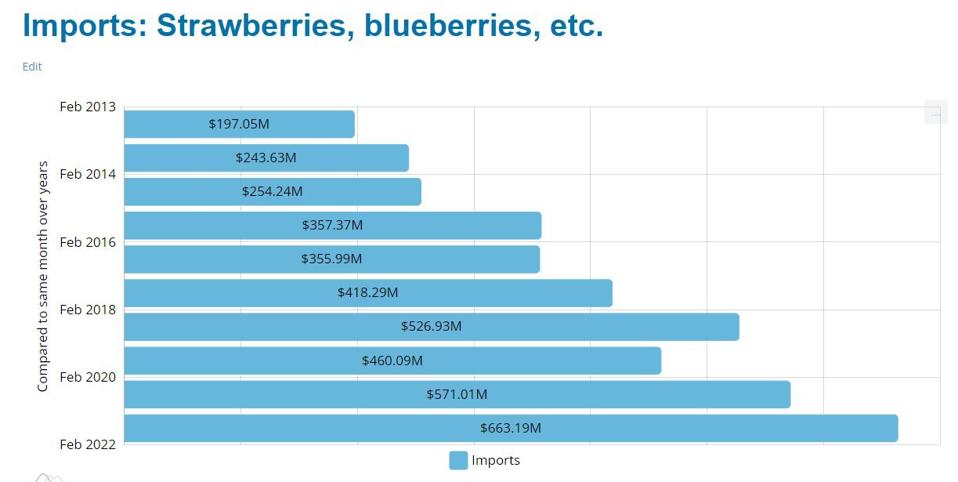
The first is berries, with almost 50% being strawberries and another roughly 20% each for raspberries and blackberries. About 75% of all berries entering the United States this year are entering from Mexico, and Pharr and Port Laredo are accounting for 57% of all those U.S. imports.
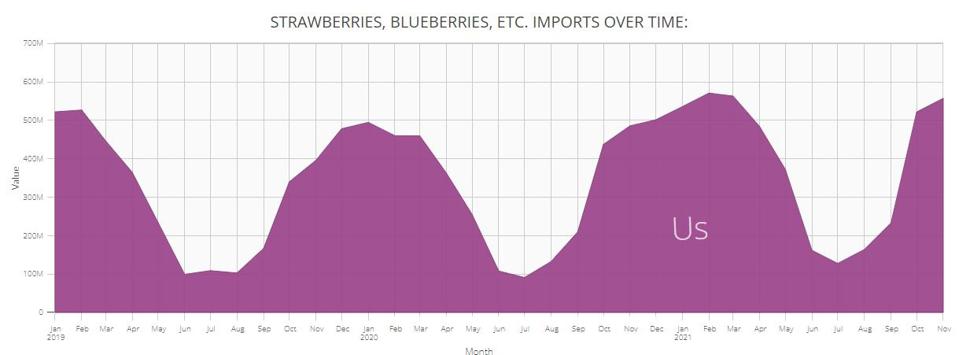
The good news is that, unlike most other perishables that transit over the Pharr International Bridge, the berry season is slowing down. The peak months are October through April, as the chart above shows.
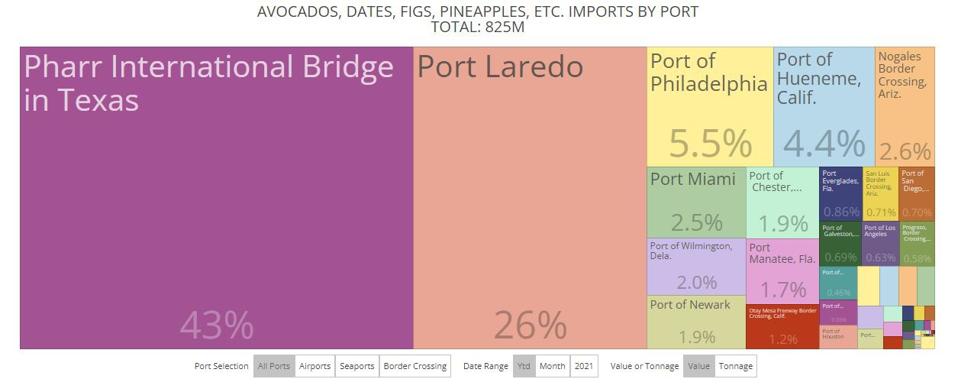
Pharr is accounting for 43% of all imports in the category that includes not only avocados but also pineapples, figs and dates. In Pharr, it is almost all avocados. Here again, Mexico accounts for about 75% of all U.S. imports, with Pharr and Port Laredo at 69% of all U.S. imports.
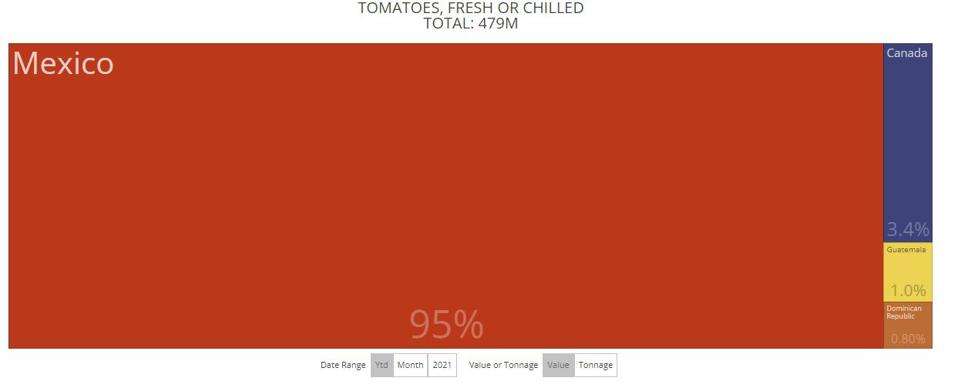
Pharr and Port Laredo are less dominant with tomatoes, although 95% of U.S. imports come from Mexico. The two accounted for 48% of the total through February, the latest government data available.
Pharr is at just under two-thirds of the value of all lemon and lime imports — Pharr’s are largely classified as limes — this year. It is accounting for 33% of the cabbage category.
The impact on food prices will be seen — or not — in the coming weeks and months.