
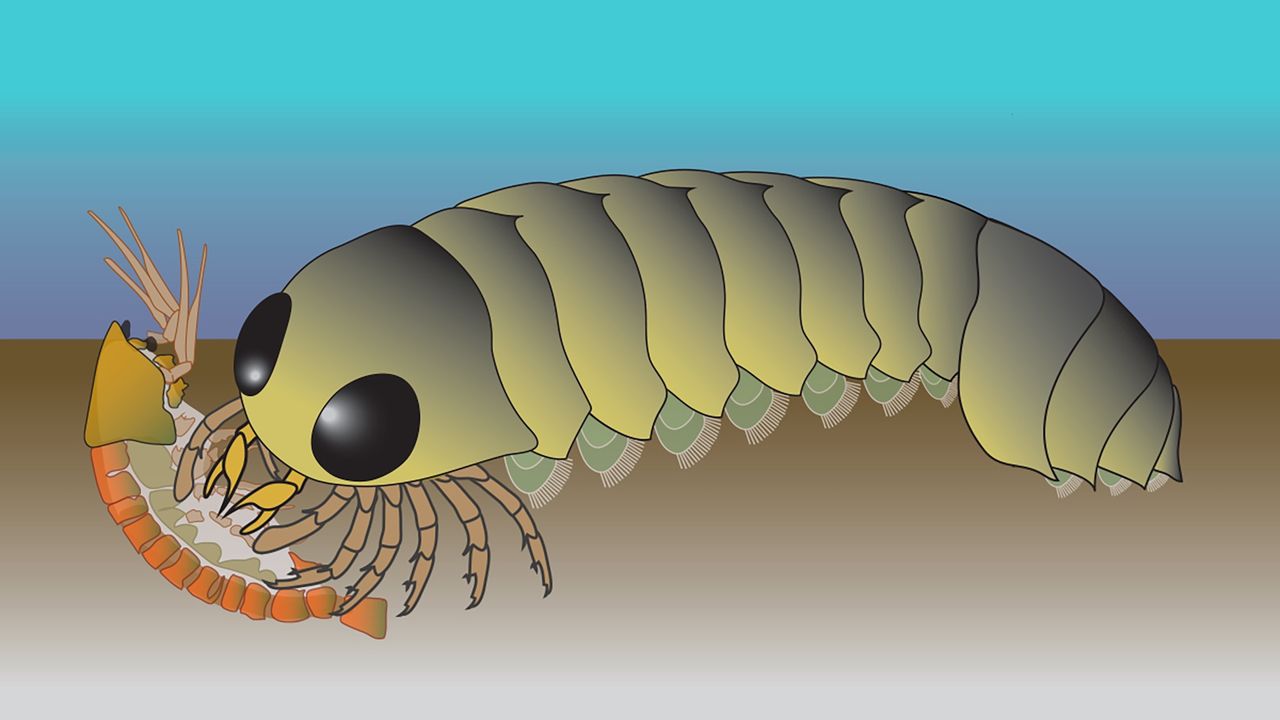
An unusual fossil brain suggests that the ancestors of spiders and other arachnids may have once scuttled around the sea, rather than on land as was long thought, a new study finds.
The fossil shows that certain features of the brain of a now-extinct animal known as Mollisonia symmetrica are arranged backward compared with those of most modern arthropods, a large group of invertebrates that includes animals like insects, crustaceans and millipedes. However, M. symmetrica's brain is similar to those in one arthropod group: arachnids, a class that includes spiders, scorpions and ticks. This difference suggests that the marine-dwelling M. symmetrica is an early ancestor of modern arachnids, researchers reported Tuesday (June 22) in the journal Current Biology.