
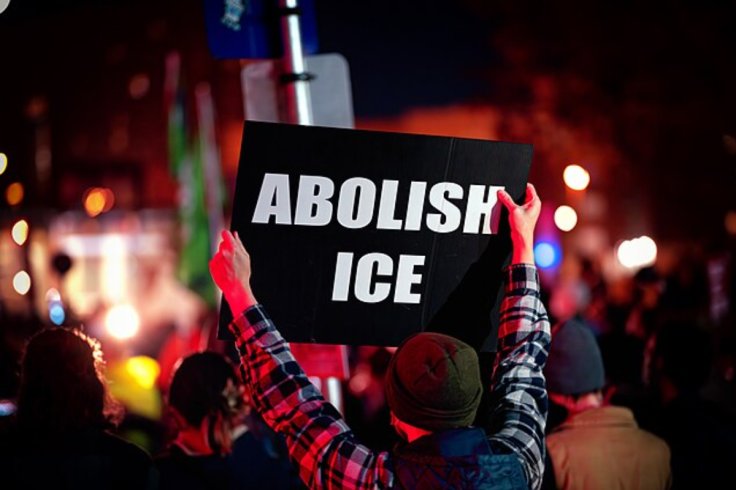
A family's routine journey home turned into a life-threatening crisis when federal law enforcement's tear gas and crowd-control munitions engulfed their vehicle, leaving a 6-month-old baby unresponsive and several children hospitalised. The Jackson family of Minneapolis says their vehicle, carrying six children including a baby, was hit by tear gas and flash-bang devices deployed by Immigration and Customs Enforcement (ICE) officers amid protests on the night of Jan. 14, 2026 — an incident that has ignited fresh scrutiny of federal tactics in civilian areas.

Family's Account of Incident During Police Action
Shawn and Destiny Jackson were driving home from their children's basketball practice when their SUV became trapped in North Minneapolis as federal agents confronted protestors. The couple maintains they were not participating in protests and were attempting to leave the area.
According to their account, officers deployed flash-bang munitions and tear gas directly at their vehicle. Shawn Jackson told a local news crew that a flash-bang detonated close enough to trigger his vehicle's airbags. He recounted tear gas quickly filling the interior of the car, which contained six children aged between 6 months and 11 years.
His wife, Destiny Jackson, said the tear gas cloud formed rapidly around the SUV after a canister appeared to be rolled underneath it. She described rushing to unlock and open car doors as her children struggled to breathe.
Bystanders and neighbours assisted in pulling the family from the smoke-filled vehicle. Their infant son, who had stopped breathing and was unresponsive, was carried into a nearby house. Destiny Jackson said she gave mouth-to-mouth resuscitation until first responders arrived and stabilised the baby.

Emergency services confirmed the Minneapolis Fire Department responded to a medical emergency at the scene after reports of an infant experiencing breathing difficulties following tear gas exposure. The baby and two other children, including an older sibling with asthma, were transported to hospital in serious condition.
Federal Enforcement, Protests and Community Safety
The incident occurred amid heightened tensions in Minneapolis, where federal agents including ICE have been deployed in large numbers following earlier shootings involving ICE officers and community members. Protests and counter-protests have drawn national attention and contributed to volatile street confrontations.
A baby was hospitalized after being tear gassed by ICE.
— Congressman Shri Thanedar (@RepShriThanedar) January 16, 2026
The family was not illegal, and not even protesting—just driving home from their son's basketball game.
This can't be reformed. Time to abolish ICE. https://t.co/vbhPLLPC9L pic.twitter.com/Ir06QSqyHY
Local officials, including the Minneapolis Office of Community Safety, issued statements confirming that tear gas deployed by law enforcement near the protests impacted civilians. The office stated that the infant was moved into a nearby home where first responders later confirmed the baby was breathing and in serious but stable condition.
Federal authorities, including the Department of Homeland Security and ICE, have not publicly released a detailed official account of how tear gas was deployed in relation to the family's vehicle. A DHS social media post that appeared to shift blame onto protesters and the family was later deleted amid backlash.
DHS deleted this one because:
— Adam Cochran (adamscochran.eth) (@adamscochran) January 16, 2026
-The family was driving home and got blocked.
-ICE deployed flashbangs and tear gas INSIDE the car.
-The 6-month old child stopped breathing and had to be rushed to hospital.
DHS did NO investigation & rushed to lie to defend the officers. pic.twitter.com/lJVY2cribM
Medical, Legal and Civil Liberties Questions
It is important to note that tear gas, a chemical irritant intended for crowd control, can cause severe respiratory distress, especially in children and infants with developing airways. Exposure within an enclosed space such as a vehicle can amplify those effects, potentially leading to acute hypoxia, pulmonary irritation and unconsciousness. Advocates have begun questioning whether the deployment of crowd-control munitions in densely populated residential areas, particularly against vehicles with young children, violates constitutional protections or public safety standards.
As of writing, the Jackson family have not announced formal legal action, but community support campaigns and calls for independent investigation are underway. Minneapolis police reportedly intervened to assist the family when emergency medical services encountered barriers reaching the scene, highlighting tension between federal and local enforcement operations.
The Jackson family's ordeal is part of a larger backdrop of confrontation between federal immigration enforcement and Minneapolis communities. Recent federal deployment followed the shooting of Renee Nicole Good by an ICE agent on Jan. 7, 2026, which sparked protests and intensified mistrust of federal operations.
The subsequent expansion of ICE presence has prompted debates over federal jurisdiction, use of force protocols, and the safety of bystanders during enforcement activities. Local and federal officials are now under increasing pressure to clarify rules of engagement and ensure civilian safety, particularly for vulnerable populations such as families with children.







