
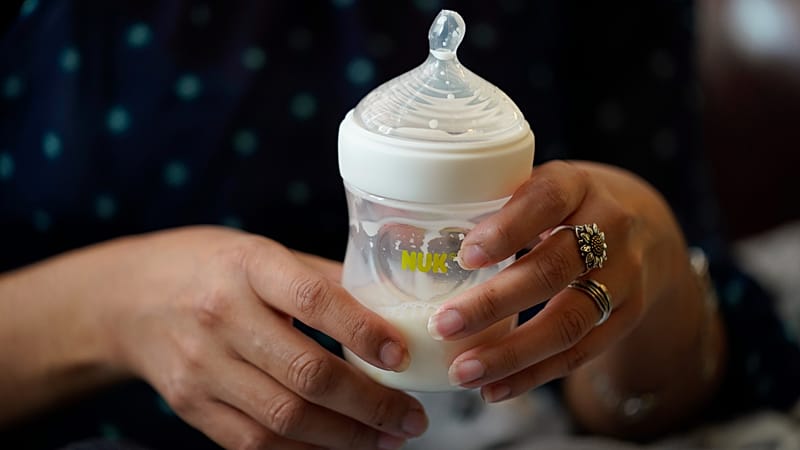
The United Kingdom’s Health Security Agency has confirmed 36 reports of children with symptoms consistent with cereulide poisoning after consuming contaminated baby formula.
The reports come amid a global scandal affecting the biggest dairy companies over cereulide toxin contamination and large product recalls.
Nestlé and Danone have recalled specific batches of their infant formula in the UK since the first contamination reports – the latest withdrawal happened this week.
The UK is not the only country investigating possible links between the consumption of the recalled formula and ill infants.
France is investigating the death of two babies who consumed formula from some of the recalled batches in the country. No confirmed link has yet been established between the formula and the cause of death.
A second cereulide case has been confirmed in Flanders, Belgium, after a baby fell ill in January 2026 from contaminated Nestlé formula, a Flemish Department of Care spokesperson told Euronews Health.
The spokesperson added that they are investigating other possible links.
As of 6 February, Nestlé states that it has not received any medical reports confirming a link to illness associated with its products.
The recalls continue
While the largest part of the recalls took place in January, dairy companies continue to withdraw products from the market.
The European Food Safety Agency (EFSA) announced this week it will set the first EU-wide safety limits for cereulide in baby formula in response to the contamination cases.
They created an Acute Reference Dose (ARfD) – the maximum safe amount of toxin a baby can consume in one day without likely getting sick – setting the limit at 0.014 micrograms per kilogram of body weight.
For a 4kg newborn, that's about 0.056 micrograms total daily from all formula.
Nestlé said it welcomes the assessment and said that their internal limits remain lower than the new guidelines.
What is cereulide?
Cereulide is a heat-stable toxin produced by Bacillus cereus bacteria that can grow in food.
The most common symptoms of a possible cereulide infection are vomiting and diarrhoea shortly after ingesting the milk between 30 minutes and three hours – very similar symptoms to a stomach flu.
The contamination has been traced to a single Chinese supplier of ARA (arachidonic acid) oil, a critical ingredient in premium infant formulas.
This story has been updated to include a statement from the Flemish government regarding the latest cases.
The image originally depicted the company Reckitt, which was not included in the product recall. The image was changed on 9 February.