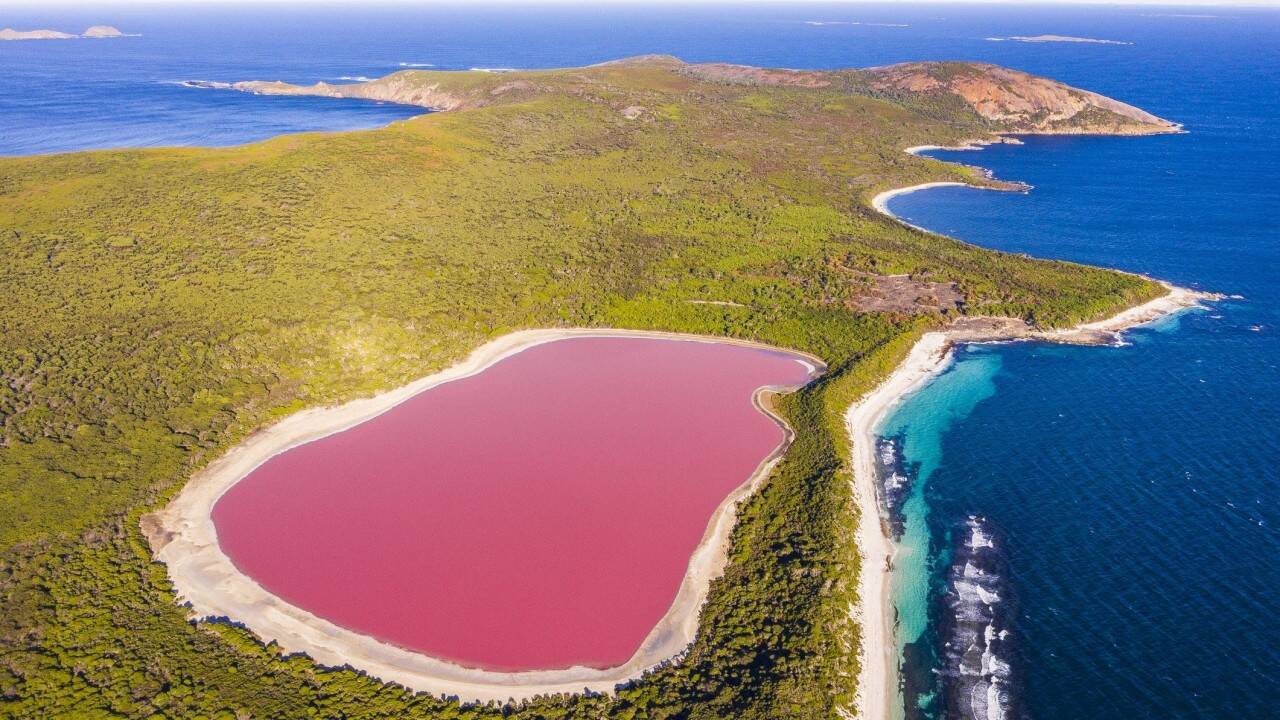
From the window of a plane, lakes in Australia look like giant pools of strawberry milkshake. On the ground, they appear almost too vibrant to be real— vast stretches of bubblegum pink framed by brilliant white salt crusts, ochre earth and, in some cases, the deep blue waters of the Southern Ocean. It is little surprise that Australia's pink lakes have become some of the country's most photographed natural wonders, drawing visitors from around the world who often wonder whether the colours have been digitally enhanced.
Get breaking news anytime, anywhere. Download the TOI app now!
Australia is home to hundreds of naturally occurring salt lakes that can turn shades of pink, salmon, crimson or even purple. Some, like South Australia's Lake Bumbunga, change colour with the seasons, while others, most famously Lake Hillier off the coast of Western Australia, have long been celebrated for retaining their vivid bubblegum hue throughout the year, even when the water is poured into a bottle.
For decades, these lakes were regarded as little more than geological curiosities. Today, they are attracting attention for a very different reason. Scientists studying their unusual ecosystems say they offer valuable clues about how life survives in some of Earth's harshest environments, knowledge that could even help researchers searching for life beyond our planet.
The science behind these coloured lakes
At first glance, it might seem that salt alone gives these lakes their remarkable colour. Salt is certainly part of the story, but the real artists are microscopic organisms that flourish where very little else can survive. Most pink lakes are hypersaline, meaning they contain salt concentrations several times higher than seawater. Such extreme conditions are inhospitable to most plants and animals but ideal for specialised microorganisms known as halophiles, literally meaning “salt lovers”.
Among the best known is the microscopic algae Dunaliella salina , which produces large amounts of beta-carotene; the same orange-red pigment that gives carrots their colour. The pigment acts as a natural sunscreen, protecting the algae from intense ultraviolet radiation and oxidative stress in the scorching, salty environment.
A genomic study carried out under the Extreme Microbiome Project revealed that Lake Hillier hosts an astonishing ecosystem comprising nearly 500 different species of bacteria, archaea, algae and viruses. When researchers analysed DNA from the lake's water and sediments, they discovered something unexpected: Dunaliella salina , long believed to be the primary source of the lake's colour, accounted for less than 0.1% of the genetic material sampled. Instead, one organism stood out.
“The algae was there, but it was there in low amounts. And really one thing stood out to us and that was this bacterium called Salinibacter ruber. It wasn't one species making the lake pink but really a community working together,” molecular biologist Dr Ken McGrath, who worked on the project, told ABC Science.
The bacterium produces bacterioruberin, an intensely pink pigment that is even richer in colour than beta-carotene. Researchers now believe Lake Hillier's iconic appearance results from the combined pigments produced by several microorganisms rather than a single dominant species.
Why Australia has so many pink lakes
Pink lakes can also be found in countries including Senegal, Spain, Mexico and Azerbaijan. Australia, however, has an unusually high concentration, thanks largely to the continent's ancient geology and arid climate.
Millions of years ago, many of today's inland salt lakes formed as river systems gradually dried up. Water evaporated faster than it could be replenished, leaving dissolved salts behind. Over time, these basins became increasingly saline, creating environments where only highly specialised microorganisms could survive. Environmental scientist Tilo Massenbauer says the process has been unfolding over geological timescales.
“Underneath those lakes sit saline water tables and, with a drying climate and that stable hydrology for millions of years, the evolution has just occurred,” he told ABC News.
The microorganisms thriving there evolved colourful pigments for practical reasons rather than aesthetics. Beta-carotene and bacterioruberin help shield cells from damaging ultraviolet radiation while also playing a role in capturing light energy. Viewed individually, these microbes are microscopic. Collectively, numbering in the billions, they transform entire lakes into shades ranging from pale blush to deep crimson.
To microbiologists, these lakes are extraordinary ecosystems filled with extremophiles— organisms capable of surviving conditions that would kill most life forms. Studying them is helping scientists understand how life adapts to environments with intense salinity, heat and radiation, conditions that resemble parts of early Earth and may even exist on planets such as Mars.
Why these pink lakes may not stay pink forever
For years, Lake Hillier was regarded as Australia's most dependable pink lake, famous for remaining colourful throughout the seasons. That assumption was challenged in 2022.
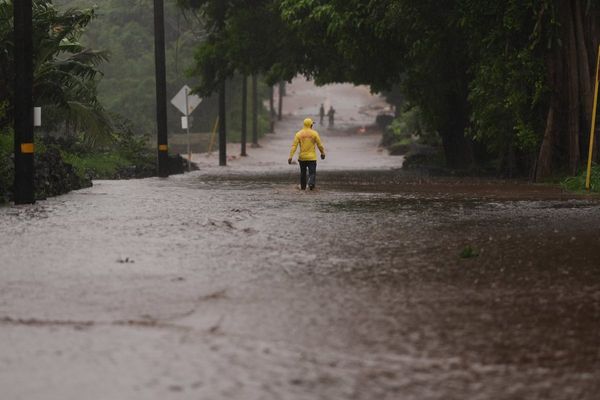
After exceptionally heavy rainfall associated with a powerful weather system, large volumes of freshwater and nutrients flowed into the lake. The influx diluted its salinity and altered the delicate balance that had sustained its unique microbial community for decades. Visitors arriving afterwards were surprised to find that the famous bubblegum hue had faded dramatically.
Scientists believe the additional nutrients encouraged other microorganisms to flourish, temporarily outcompeting the pigment-producing halophiles responsible for the lake's vivid colour.
Researchers remain optimistic that Lake Hillier could gradually recover as evaporation restores the lake's extreme salinity, but they caution that the process may take years rather than months.
The episode also highlighted how vulnerable these ecosystems are to environmental change.
Another well-known Western Australian attraction, Pink Lake near Esperance, offers an even starker warning. Once celebrated for its brilliant colour, the lake lost its trademark pink decades ago after salt harvesting, road construction and changes to its natural water flow disrupted the conditions required by its microbial inhabitants. Scientists have explored whether the ecosystem could eventually be restored, but one question remains unanswered.
“Are the right organisms still there, or have they gone extinct?” Dr McGrath said.
As climate change alters rainfall patterns, temperatures and evaporation rates across Australia, researchers believe more pink lakes could become increasingly unpredictable. Their famous colours depend on a remarkably delicate balance of salinity, sunlight, water chemistry and microscopic life. Even relatively small disturbances can shift that balance, turning a vibrant pink lake pale, grey or blue.
For tourists, Australia's pink lakes remain breathtaking natural spectacles. For scientists, they are living laboratories that continue to rewrite what is known about life in extreme environments. Their vivid colours may look whimsical, but they are the visible signature of ecosystems that have evolved over millions of years— and whose future may depend on how well those fragile conditions can be preserved.