Get all your news in one place.
100's of premium titles.
One app.
Start reading
The Economic Times
The Economic Times
Rana Sarkar

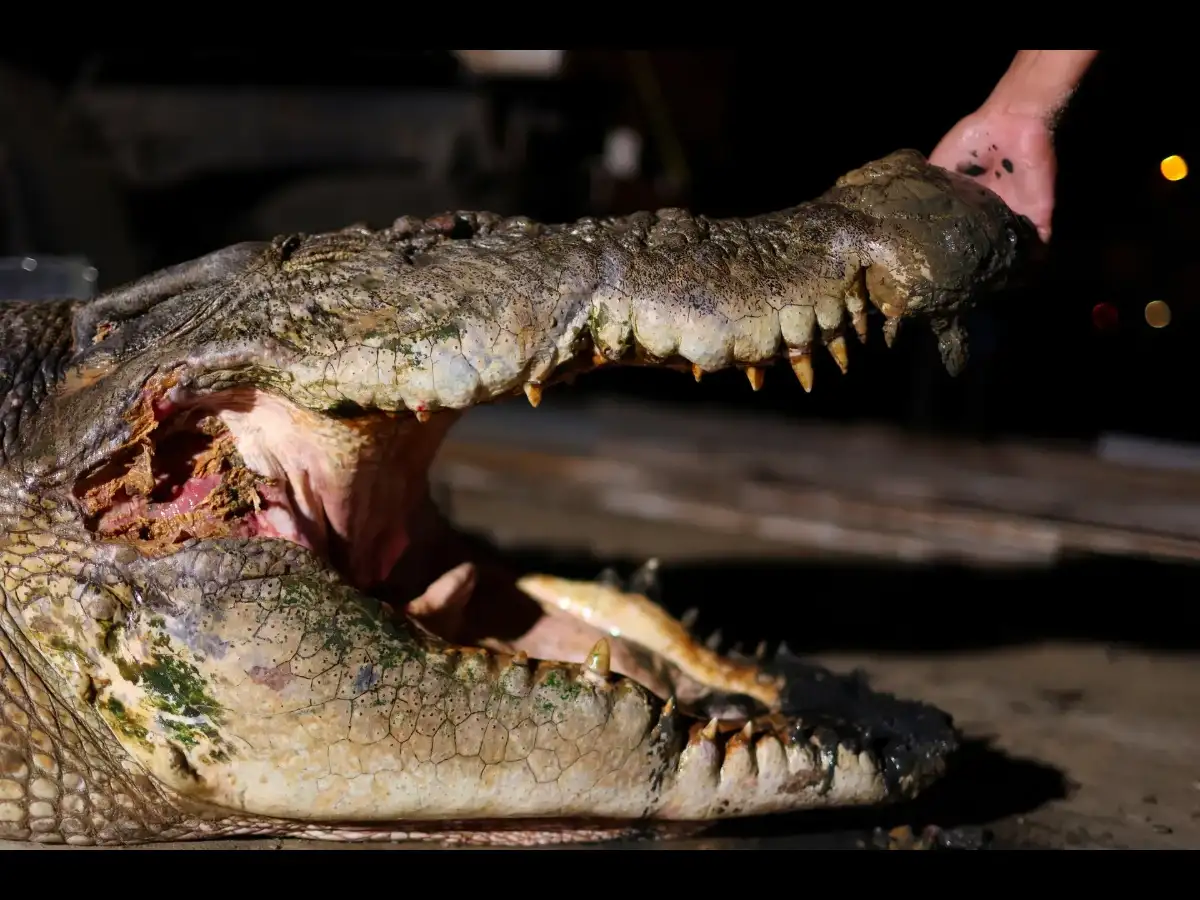
Australian researchers in 2010 had 103 people hold a live crocodile before gambling to see whether excitement could increase betting; some at-risk gamblers bet more afterward

Gambling is often associated with excitement. The anticipation of a win, the thrill of almost winning, and the rising tension before the next result can all create a powerful sense of arousal. But does being highly aroused actually make people gamble more? Researchers Michael J. Rockloff and Nancy Greer set out to test that question in an unusual experiment involving 103 adults, a simulated electronic gaming machine and a one-meter saltwater crocodile.

Their findings, published in the Journal of Gambling Studies in 2010, suggested that the answer was more complicated than simply saying that excitement makes people bet more.

The crocodile was part of the experiment

The participants were recruited at the Koorana Saltwater Crocodile Farm in Australia. They were randomly assigned to one of two conditions. Some played a simulated electronic gaming machine on a laptop before entering the crocodile farm. Others played after holding a one-meter saltwater crocodile.

The researchers used the crocodile experience to create a naturally high-arousal situation.

Each participant received $20 and was encouraged to use it to play the electronic gaming simulator. The machine had three reels displaying fruit symbols. It was programmed to pay out during certain trials but to stop after trial 20.

The researchers measured several aspects of gambling behavior, including bet size, betting speed, number of bets and final payouts. They also measured participants' physiological arousal using galvanic skin response.

Holding a crocodile really did raise arousal

The experiment showed that participants in the crocodile condition were more physiologically aroused than those in the control condition.

That gave researchers the situation they needed to examine what happens to gambling behavior when a person is already highly aroused.

But the results did not show that everyone simply started gambling more.

For recreational gamblers, higher arousal reduced bet size

Among non-problem gamblers, bet size actually decreased after the crocodile experience, regardless of their level of negative affect. This was important because it ran counter to the simple idea that heightened excitement automatically leads to more intense gambling.

The results became more interesting among participants considered at-risk gamblers.

Negative mood changed the response

The researchers found that negative affect appeared to matter among at-risk gamblers. At-risk gamblers who experienced high negative affect reduced their bet size in the high-arousal crocodile condition.

But those with low negative affect responded differently. They showed more intense gambling after the crocodile experience.

In other words, high arousal did not have one universal effect. The emotional state accompanying that arousal appeared to influence how some gamblers behaved.

At-risk gamblers also bet more often

The study found another difference between gambling groups. At-risk gamblers placed more bets than non-problem gamblers. However, participants in the high-arousal crocodile condition placed fewer bets than those in the control condition.

Men and problem gamblers also bet faster than women and non-problem gamblers.

Yet the speed of betting did not differ between the crocodile and control conditions. Neither did the participants' final payouts.

What did the experiment actually show?

The study did not show that arousal simply makes people gamble more. Instead, it suggested that physiological arousal can influence electronic gaming-machine behavior, and that the effect may depend on a person's gambling risk and emotional state.

For recreational gamblers, high arousal was associated with smaller bets. Among at-risk gamblers, however, the picture was more complicated: those experiencing little negative affect became more intense in their gambling, while those experiencing more negative affect reduced their bet size.

The researchers therefore found evidence that negative affect can moderate the relationship between arousal and gambling behavior, particularly among at-risk gamblers.

An unusual experiment with important limits

The study had several limitations. Participants in the crocodile condition began gambling almost immediately after holding the animal, so researchers could not obtain a baseline measure of their affect before gambling. Their reported mood could therefore have been influenced by the gambling session itself.

The participants were also recruited from a popular tourist attraction, meaning they were not necessarily representative of the wider population.

Most importantly, the sample contained 81 non-problem gamblers, 13 low-risk gamblers, 8 moderate-risk gamblers, and only 1 problem gambler. Because there was only one problem gambler, the findings cannot easily be extended to people with severe gambling problems.

Still, the experiment offered an unusual glimpse into the relationship between excitement, emotion and betting.

The researchers' conclusion was straightforward: physiological arousal influences electronic gaming-machine gambling behavior.

And sometimes, apparently, the difference between betting more and betting less may depend not simply on how excited you are, but on what kind of emotional state accompanies that excitement.

Sign up to read this article
Read news from 100's of titles, curated specifically for you.
Already a member? Sign in here
Related Stories
Top stories on inkl right now
One subscription that gives you access to news from hundreds of sites
Already a member? Sign in here
Our Picks
Fourteen days free
Download the app
One app. One membership.
100+ trusted global sources.