
The war involving the US, Israel and Iran has now reached the shipping lanes that keep the world’s fuel moving, with three cargo vessels reportedly struck in and around the Strait of Hormuz in a single day.

Those attacks have rattled oil markets so badly that dozens of countries are opening their emergency stockpiles in the largest coordinated release on record.
So, what could this mean for future petrol prices in Australia?
Three ships hit as traffic slumps
Maritime security agencies say three commercial vessels were hit by “unknown projectiles” on Wednesday in or near the Strait of Hormuz, one of the world’s most important shipping corridors. Recent incidents include a Thai‑flagged bulk carrier attacked about 11 nautical miles north of Oman, a Japan‑flagged container ship damaged off the United Arab Emirates coast and a third cargo vessel struck north‑west of Dubai, prompting the UK Maritime Trade Operations body to urge ships to “transit with caution”.
Those strikes are part of a wider pattern, with around 20 commercial vessels in or near the strait now reported hit, targeted or involved in suspicious incidents since the conflict escalated. Iran’s Revolutionary Guard has also claimed attacks on tankers as it tries to pressure the US and its allies, although not all of those claims can be independently verified.

Countries crack open emergency oil reserves
Against that backdrop, the International Energy Agency (IEA) says its 32 member countries have agreed to release 400 million barrels of oil from emergency reserves, dwarfing the 182.7 million barrels put on the market after Russia’s invasion of Ukraine in 2022. “The oil market challenges we are facing are unprecedented in scale,” IEA executive director Fatih Birol said, describing the decision as “an emergency collective action of unprecedented size”.
French President Emmanuel Macron, who chaired an urgent G7 meeting on the crisis, said the volume being released was equivalent to “20 days of the volume being exported through the Strait of Hormuz”, and that G7 countries alone made up about 70 per cent of that total. The IEA says stocks will be made available “over a timeframe that is appropriate to the national circumstances of each member country”, with some governments planning extra measures on top.
Hormuz and the risk of a wider energy shock
The Strait of Hormuz is a narrow passage off Iran’s southern coast through which nearly 20 per cent of the world’s oil supply normally flows, along with large volumes of liquefied natural gas from Gulf producers such as Qatar. As missile and drone strikes have spread across the region, traffic through the strait has dropped sharply and crude benchmarks like Brent have jumped to around 87 dollars a barrel, roughly 20 per cent higher than a month ago.
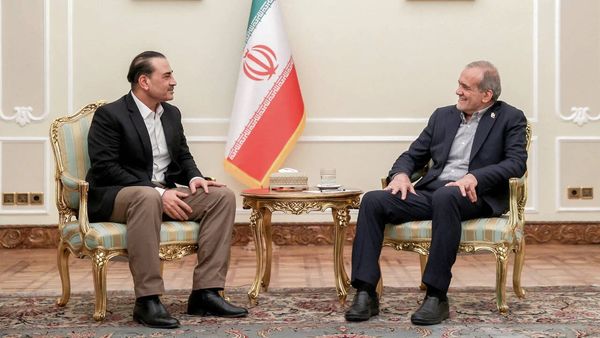
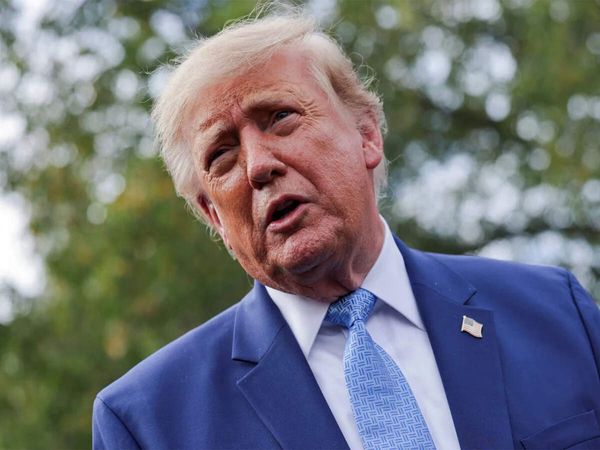
Iranian officials have hardened their language about the route. On state television, a senior operational commander said Tehran would “not allow even a single litre of oil” destined for the US, Israel or their partners to pass through, warning that any such vessel or tanker “will be a legitimate target”. US President Donald Trump has responded with his own threat, writing on Truth Social: “If Iran does anything that stops the flow of oil within the Strait of Hormuz, they will be hit by the United States of America TWENTY TIMES HARDER than they have been hit thus far.”

What this could mean for Aussie petrol prices
Australia imports about 90 per cent of its liquid fuels, so higher global crude prices feed directly into what we pay weekly. Economists have warned that a sustained spike in oil linked to the Iran war could add around 40 cents a litre to petrol, which works out to an extra 24 dollars to fill a 60‑litre tank.
Local motoring groups say the conflict is already feeding into wholesale costs, with the NRMA reporting Australian petrol wholesale prices have risen by about 10 cents a litre since fighting intensified and urging the consumer watchdog to crack down on any price gouging by retailers.
However, NRMA spokesman Peter Khoury told journalists that Australians shouldn’t panic just yet as the impact on the bowser will not be immediate.
“If the conflict escalates, or if Iran succeeds in doing a lot of sustained damage to oil production in Arab states on the other side of the Gulf, then it’s possible that fuel prices could go to $2.20 or even higher, but it’s a bit of a leap at this stage,” he explained.
Australia has been included in the IEA action and is now finalising its response to the request. A spokesperson for Energy Minister Chris Bowen said any move “will be in the national interest”, stressing that the IEA call is voluntary and “gives countries the opportunity to respond depending on their national circumstance”.
“The government’s focus is ensuring our domestic fuel gets to where it needs to go, at an affordable price,” the spokesperson said, per ABC.
“If we do join this action Australia will not be required to send fuel overseas but rather use its existing domestic reserves to take pressure out of the global market.”
The last time Australia took part in a coordinated IEA release was during Russia’s invasion of Ukraine.
How long could this last?
Trump has given mixed answers about the likely length of the war, saying at one event that “right from the beginning, we projected four to five weeks, but we have the capability to go far longer than that”, while later insisting the campaign would be “finished pretty quickly”.
For Australian households, that uncertainty means the record IEA release may help in the short term, but the future of petrol prices and other costs will still largely depend on what happens in that narrow stretch of water off Iran’s coast.
Lead image: AP News
The post Australian Petrol Prices Set To Skyrocket After Strikes In Strait Of Hormuz appeared first on PEDESTRIAN.TV .