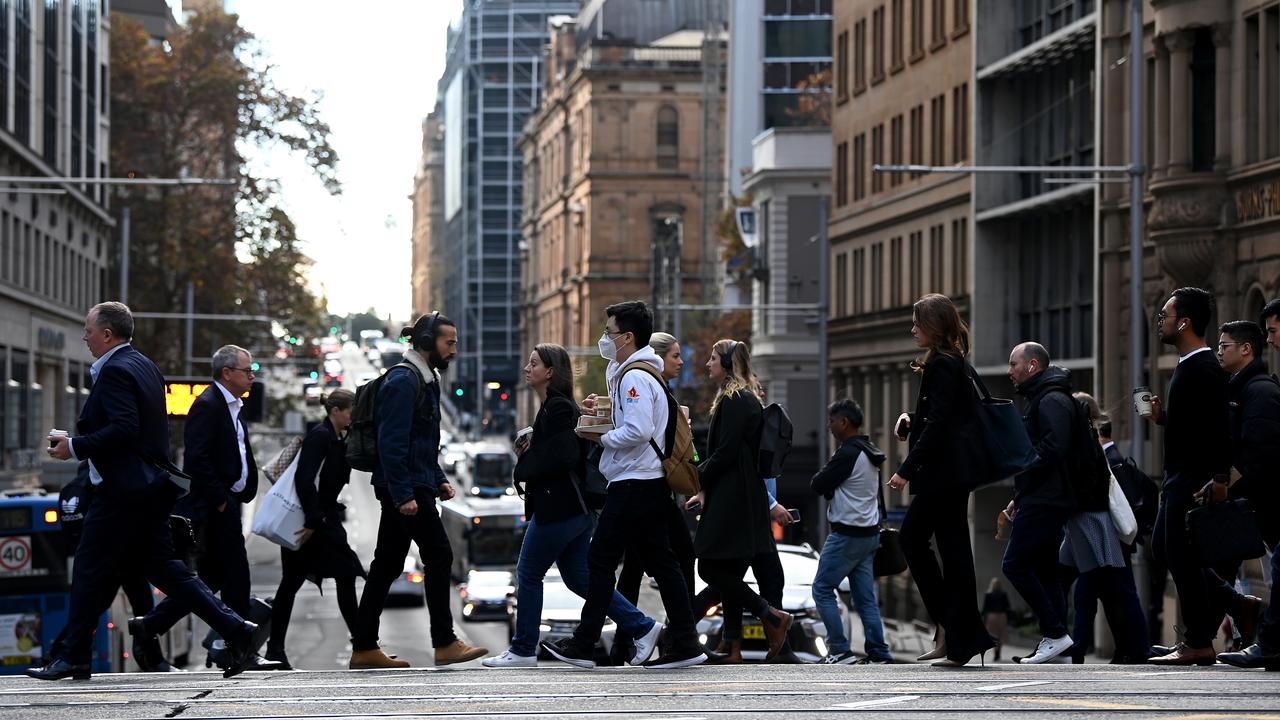
Australia is tipped to have added thousands of new jobs despite the global shocks caused by the ongoing conflict in the Middle East.
The Australian Bureau of Statistics will on Thursday publish labour force data for April, showing the nation's unemployment rate.
In March, that figure remained steady at 4.3 per cent.
NAB head of Australian economics Gareth Spence said the new data is expected to show growth to the tune of about 15,000 new jobs.
"This is a good outcome for the labour market which is pretty resilient in the challenge that we have had for April," he told AAP.
"The data does lag for events in the economy a little but the labour force has generally held up well despite the shock and uncertainty earlier on this year."
Business and consumer confidence has taken a dive since the US-led strikes on Iran were launched in February.
Mr Spence said the Reserve Bank of Australia will be watching the figures very closely as they consider the impacts of rising inflation and soaring oil prices on the economy.
"The shocks haven't been as big as what we feared, even though fuel prices have gone up which affects packaging food prices, transport and public goods," he said.
RBA Assistant Governor and chief economist Sarah Hunter will on Tuesday in Sydney deliver the central bank's first speech since the presentation of the federal budget by Treasurer Jim Chalmers.
Mr Spence said while this year's budget could be described as broadly neutral, the key parts to be eyed off by the RBA would be Labor's changes to negative gearing and the capital gains tax.
How this changes the dynamics in the housing sector and the societal impact would be particularly noted, he added.
Shadow Treasurer Tim Wilson will be grilled on Wednesday when he addresses the National Press Club in Canberra for the coalition's post-budget reply speech.
Announcing their economic plan for Australia on Thursday night, Opposition Leader Angus Taylor promised to end bracket creep by indexing tax rates in line with inflation.
The move would hand back workers an extra $1000 a year and would cost the budget $22.5 billion in lost tax revenue.
Mr Spence said the coalition will need to explain how it will manage this proposal with big spending pressures such as health to continue, as the population continues to age.
Spiking crude prices which have ignited global inflation fears have meanwhile prompted a rethink among Wall Street investors, with US stocks retreating from artificial-intelligence-fuelled record highs.
All three major indices veered sharply lower on Friday.
The Dow Jones fell 1.07 per cent, to 49,526.17, the S&P 500 lost 1.24 per cent, to 7,408.50 and the Nasdaq lost 1.54 per cent, to 26,225.15.,
Australian share futures dropped 38 points, or 0.43 per cent, to 9,936.
The S&P/ASX200 fell 9.9 points on Friday, down 0.11 per cent to 8,630.8, as the broader All Ordinaries dipped 14.1 points, or 0.16 per cent, to 8,870.6.