Get all your news in one place.
100’s of premium titles.
One app.
Start reading
Fortune
Fortune
Nick Lichtenberg

Australia wants to end the era of kids on social media with international ban hailed as ‘first domino’ in global movement

Wells, Grant (Credit: Hilary Wardhaugh—Getty Images)

Australia’s world-first ban on social media accounts for under-16s is being cast by supporters as the “first domino” to fall in a global rollback of children’s presence on major platforms. Starting Dec. 10, covered platforms must take “reasonable steps” to prevent Australians under age 16 from creating or keeping accounts, with no parental-consent exceptions.

Under the Online Safety Amendment (Social Media Minimum Age) framework, platforms such as Facebook, Instagram, TikTok, Snapchat, X, YouTube, Reddit, Threads, Kick, and Twitch are required to block accounts held by under-16s or face fines of up to 50 million Australian dollars ($33 million) per breach. The rules apply to both domestic and international platforms serving Australian users and aim to create a uniform national minimum age of 16.

Government guidance says platforms must use age-assurance tools but cannot rely solely on demanding government ID uploads, pushing companies toward a mix of signals such as AI-based age estimation and behavioral analysis. The government’s privacy regulator has emphasized providers only need to take “reasonable steps,” leaving room for different technical approaches.

The ‘first domino’ narrative

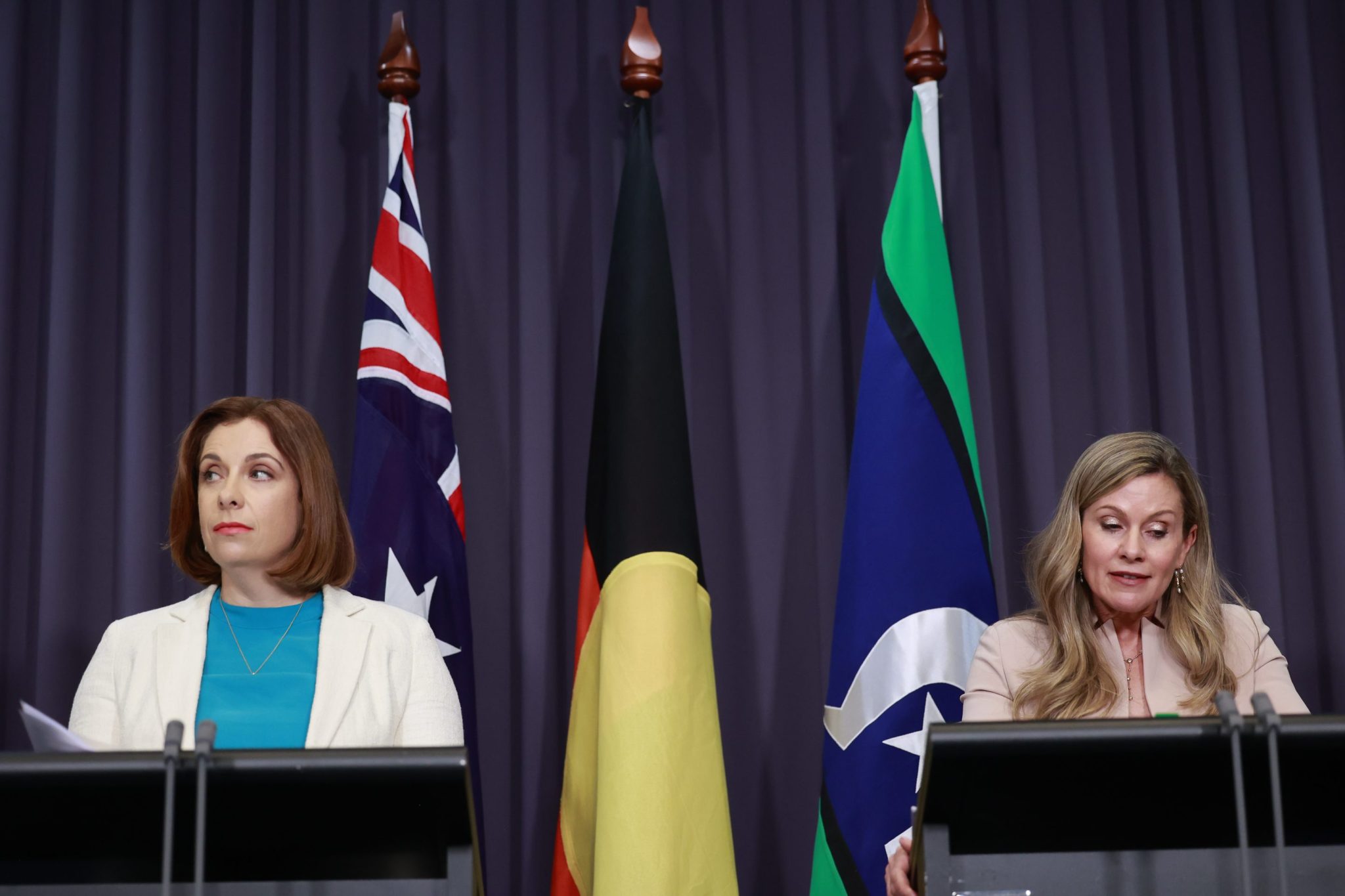
Child-safety advocates and some researchers argue Australia’s move could trigger similar restrictions in other democracies wrestling with youth mental health crises. Communications Minister Anika Wells has said several European governments and New Zealand are already exploring minimum-age rules, suggesting a broader policy wave may follow.

​Australia’s internet regulator, E-Safety Commissioner Julie Inman Grant, said at the Sydney Dialogue security summit on Thursday she was initially concerned about a “blunt-force” approach but incremental changes just weren’t getting the job done.

“We’ve reached a tipping point,” she said in remarks reported by India’s Economic Times. “I’ve always referred to this as the first domino.”

Commentators in academic and policy circles describe Australia’s law as a landmark that tests whether age-based bans can realistically curb exposure to harmful content, cyberbullying, and addictive design. Supporters say if implementation proves politically and technically sustainable, other governments will feel pressure to follow, effectively ending an era in which preteens and young teens are ubiquitously online. Big Tech firms have pushed back, as have some in the U.S. Congress, such as Republican Rep. Jim Jordan, who has called Inman Grant a “noted zealot” and argued this sweeping new law “imposes obligations on American companies and threatens speech of American citizens.”

Australia stirs up a giant worldwide debate

The government cites evidence heavy social media use is linked with increased risks of anxiety, depression, and body-image issues among adolescents. Officials also point to high rates of cyberbullying and exposure to self-harm and eating-disorder content as justification for acting before more long-term damage is done.

Campaigns pushing to raise the social media age—such as petitions calling for a minimum of 16—argue big platforms have put growth and engagement ahead of young people’s well-being. Supportive parents’ groups frame the ban as giving children back offline childhoods and making it easier for families to set boundaries that individual households have struggled to enforce alone.

Young people who are social-media natives seem to agree, with nostalgic fashion and lifestyle trends longing for a “’90s kid summer,” or a time before everyone was always on their phones. ​Sometimes it even brings blockbuster new streaming success for hit songs from that era, such as the Goo Goo Dolls’ “Iris” or Pavement’s “Harness Your Hopes.”

The legislation comes after years of warnings of the harms of social media on young people from experts such as NYU professor Jonathan Haidt, author of the influential book The Anxious Generation. At a symposium organized by Dartmouth College and the United Nations Development Program in November, Haidt talked about the “pit of despair” he hears from his students talking about life on social media. Noting high school seniors increasingly report “life often feels meaningless,” he said he was forced to agree: “If you’re spending five hours a day on social media, you’re not doing anything. Your life actually is meaningless.”

How will it actually work?

Digital rights and privacy advocates warn enforcing a hard age line inevitably expands identity checks and surveillance of everyone, not just minors. Civil liberties groups have raised concerns that large collections of ID documents, selfies, or biometric data for age estimation could create new risks of misuse, breaches, or discrimination.

Critics also question whether determined teenagers will simply circumvent the rules using VPNs, foreign services, or falsified ages, leaving more vulnerable peers and rule-following families bearing the brunt of restrictions. Some experts describe the ban as a “Band-Aid” solution, arguing broader reforms to platform design, moderation, and education would better protect young people without sweeping exclusions.

Meta, Google, TikTok, Snapchat, and others have committed to comply, with measures such as mass sign-outs of suspected under-16s and new age-estimation systems being rolled out across Australia. YouTube, for example, is tying age estimates to Google account data and other signals, while Meta is using third-party verification tools like Yoti for users who contest removals. In response to criticism—particularly from YouTube—that this law will be difficult to implement with current technology, Wells has refused to back down, instead labeling Google as “weird.”

​“It’s outright weird that YouTube is always at pains to remind us all how unsafe their platform is in a logged out state,” Wells said in remarks reported by Sky. And in similar remarks reported by Al Jazeera, Wells said: “If YouTube is reminding us all that it is not safe and there’s content not appropriate for age-restricted users on their website, that’s a problem that YouTube needs to fix.”

Sign up to read this article
Read news from 100’s of titles, curated specifically for you.
Already a member? Sign in here
Related Stories
Top stories on inkl right now
One subscription that gives you access to news from hundreds of sites
Already a member? Sign in here
Our Picks
Fourteen days free
Download the app
One app. One membership.
100+ trusted global sources.