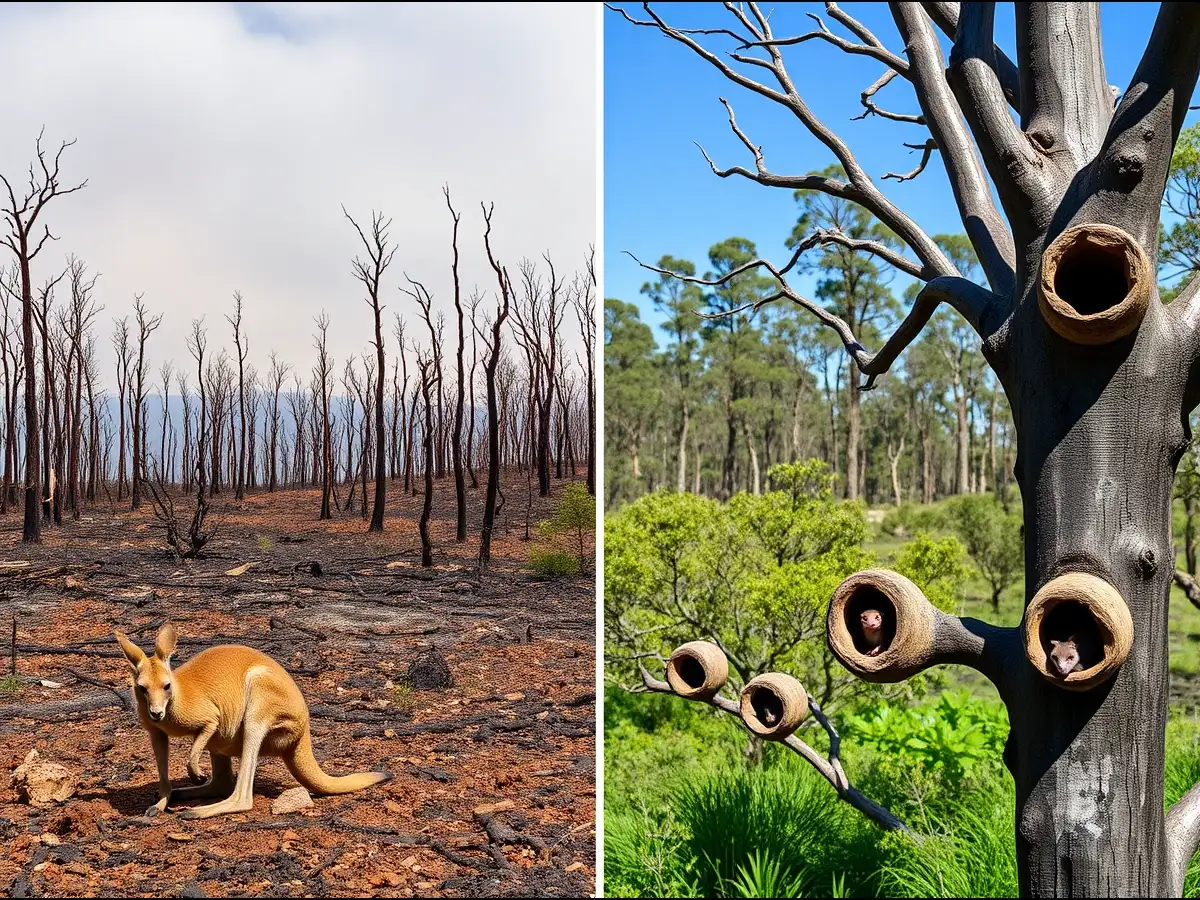
When huge areas of Australian habitat were destroyed by catastrophic bushfires, the loss was not simply measured in burnt trees. For animals that depended on natural hollows, the destruction meant losing the places where they sheltered and bred. Natural tree hollows can take decades to develop. Some of the information supplied for this story puts that wait at up to 70 years, while the Charles Sturt University research notes that natural hollows can take 80 to 100 years to form, as per a report by Charles Sturt University. That left conservationists facing an obvious problem: how do you replace wildlife homes that nature takes generations to create?
Researchers and conservationists in Australia have been testing two strikingly different answers. One involves 3D printing insulated artificial hollows from recycled plastic. The other uses a specially designed drilling technique to create hollows directly inside living trees.