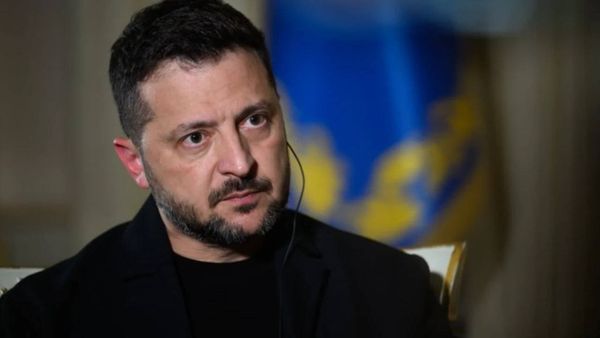
Snowboard star and three-time Olympic medallist Scotty James is still riding a wave of emotion. Australia’s most decorated winter athlete has been coming to terms with narrowly missing out on the elusive gold that would have completed his set of medals in the halfpipe.
“After a week of reflection, I’ve felt all of it,” he said in a raw social media post. “The pride. The gratitude. The disbelief. And yeah … the anger too. I’ve replayed it in my head more times than I’d like to admit. One run. A couple of small moments that separate gold from silver at the Olympic Games. It’s wild how something so big can come down to something so small.”
James will not be alone among Olympic athletes in fighting against lingering regret and the doubts that can surface from one minor mistake or miscalculation being the difference between perceived success and failure. For all the glory that is bestowed upon the winners, and the mixed emotions of the minor medallists, the vast majority of athletes have left Milano Cortina without stepping on to a dais.
Success comes in many forms, and what comes next will vary from athlete to athlete now that the Winter Games have finished. The range of emotions and motivations being felt across Australia’s 56-strong team will include relief, emptiness, frustration, disappointment and despair, as well as the pride, gratitude, disbelief and anger that James expressed.
Joanne Carter, a former Australian figure skater and two-time Olympian, has a newfound appreciation for how athletes respond to their performance. The 45-year-old finished 11th in the short program and 12th in the free skate at Nagano 1998 and, after overcoming a major knee injury, was again part of the team eight years later.
Carter returned to the Olympics at Milano Cortina for the first time since competing, this time in a support role with the figure skating and speed skating teams. Watching from the sidelines, Carter is far enough removed from the fire on ice to recall how she felt “100% pride” after each of her Olympic campaigns.
“The AOC [Australian Olympic Committee] say ‘once an Olympian, always an Olympian’, and that comes through very strongly when you finish,” she says. “The Australian public, the media, all the organisations, they really do make Olympians feel like they’ve achieved something special, and that the biggest part is being there competing.
“You’re left with a kind of pride that you’ve been able to put on the team kit and represent your country at a level that’s like every other competition but tenfold. The Olympics is obviously the pinnacle of every athlete’s sporting career. But it can’t be the be-all and end-all.”
The curtain coming down on the Games is far from the end of most winter sports seasons. World Cup titles are still to be decided, and world championships are back on the horizon for some disciplines. The figure skating and speed skating teams are among those with little time to reflect on what they achieved in Italy.
“They were back on the ice training three days after finishing their competition,” Carter says. “It just goes to show the professional level of these athletes, they really do switch straight back into season mode.
“I think a lot of the reflection will come after their season finishes. From my own experience, things hit home when you have time to sit down and really understand the gravity of what’s just happened.”
Holly Crawford enjoyed watching the Olympics from her home in Sydney for the first time since she appeared at four consecutive Winter Games from Torino 2006. The Australian snowboarder had a successful, albeit injury-hampered career capped by a world championship halfpipe crown in 2011, and silver on the same stage in 2009 and 2013.
“You have highs and lows in life, obviously, but in sport, I found them to be so intensified,” Crawford says. “They’re so much higher, they’re so much lower, and they often come at you so quickly.
“To watch these athletes and see some of them absolutely elated by winning, or absolutely devastated by their performance or where they maybe didn’t achieve what they wanted to, it’s hard as a spectator even after having been there too.”
Crawford’s memories of competing at four Olympics are tinged with frustration over what might have been. Injuries are part and parcel of sport and especially those where acrobatic landings and high speed falls leave little margin for error. Crawford, now an ambassador for Endometriosis Australia after being diagnosed with the condition after she retired from snowboard competition, suffered more than her fair share across her career.
Australia had 32 Olympic debutants in Milano Cortina, including five teenagers, who now have first-hand experience of the global showpiece, and can start plotting their return. For the veterans of the team, thoughts that this might have been their last Winter Games – or that retirement is near – have fresh space to work their way in.
“I don’t think you can just count on having another Olympics,” Carter says. “It’s a long four-year cycle and you never know what will happen in that time.”
Less than a week since James’s Olympic dreams were shattered with a gamble that didn’t quite come off in the snowboard halfpipe final, the 31-year-old has committed to another “quad” with a visit to the French Alps in 2030 in mind.
“To anyone who’s ever fallen just short, I see you,” he said in his post on Instagram. “It’s OK to feel the sting. It means you care. It means you dared to want something extraordinary. I’m proud. I’m hungry. I’m grateful. And … I ain’t fuckin’ leaving! See you at the next one.”