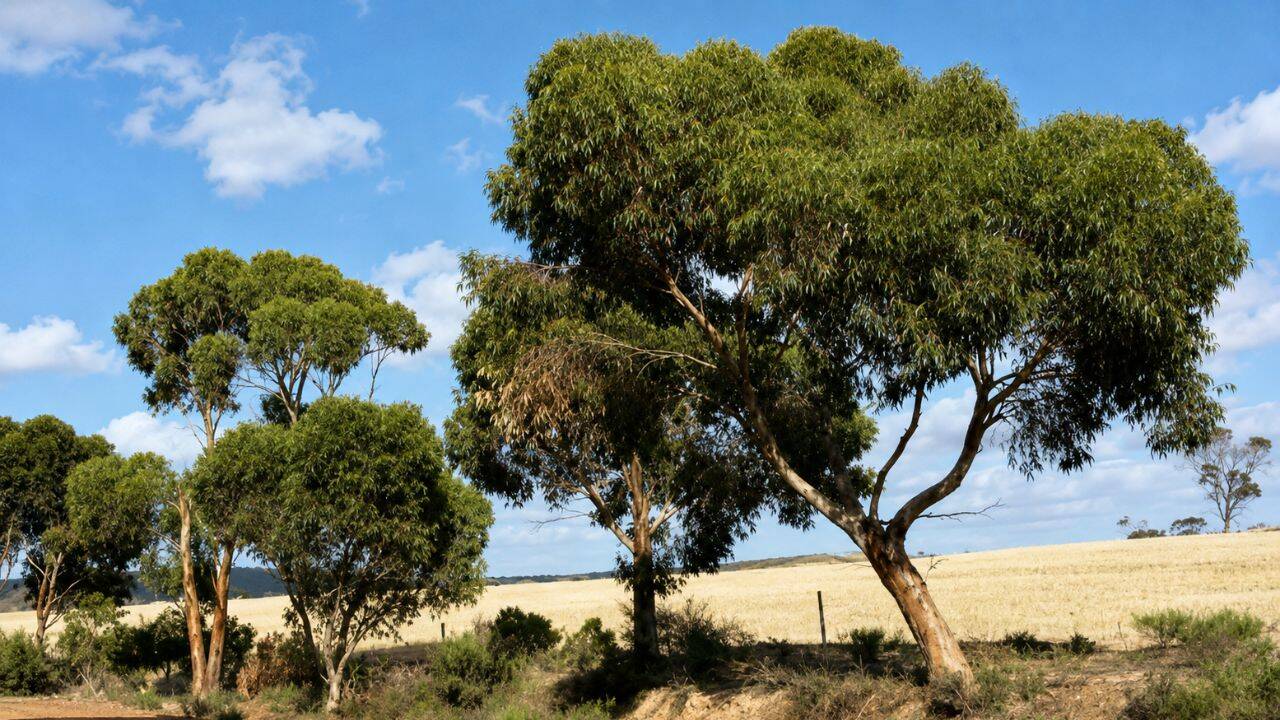
Australia planted eucalyptus trees to fight rising soil salinity, hoping that thirsty, deep-rooted vegetation could help control the groundwater processes behind the problem. A long-running experiment in south-western Australia later showed that the effects of such plantations were more complicated than simply planting trees and waiting for the land to recover. Researchers established a mixed eucalyptus plantation above a saline seep in 1976 and monitored how the trees affected groundwater levels and salt movement for 15 years. The study found clear signs that the plantation used more water than nearby crops and pasture, while groundwater conditions also changed over time. Yet the trees did not stop the saline seep as researchers had hoped. Published in ‘ Agricultural Water Management ,’ this comprehensive study reveals that effective land management requires understanding complex underground hydrological systems, cautioning against oversimplified solutions to persistent environmental challenges like soil salinity.
Get breaking news anytime, anywhere. Download the TOI app now!