Get all your news in one place.
100's of premium titles.
One app.
Start reading
The Times of India
The Times of India
World
TOI World Desk

Australia could run its grid without fossil gas at similar cost, study finds

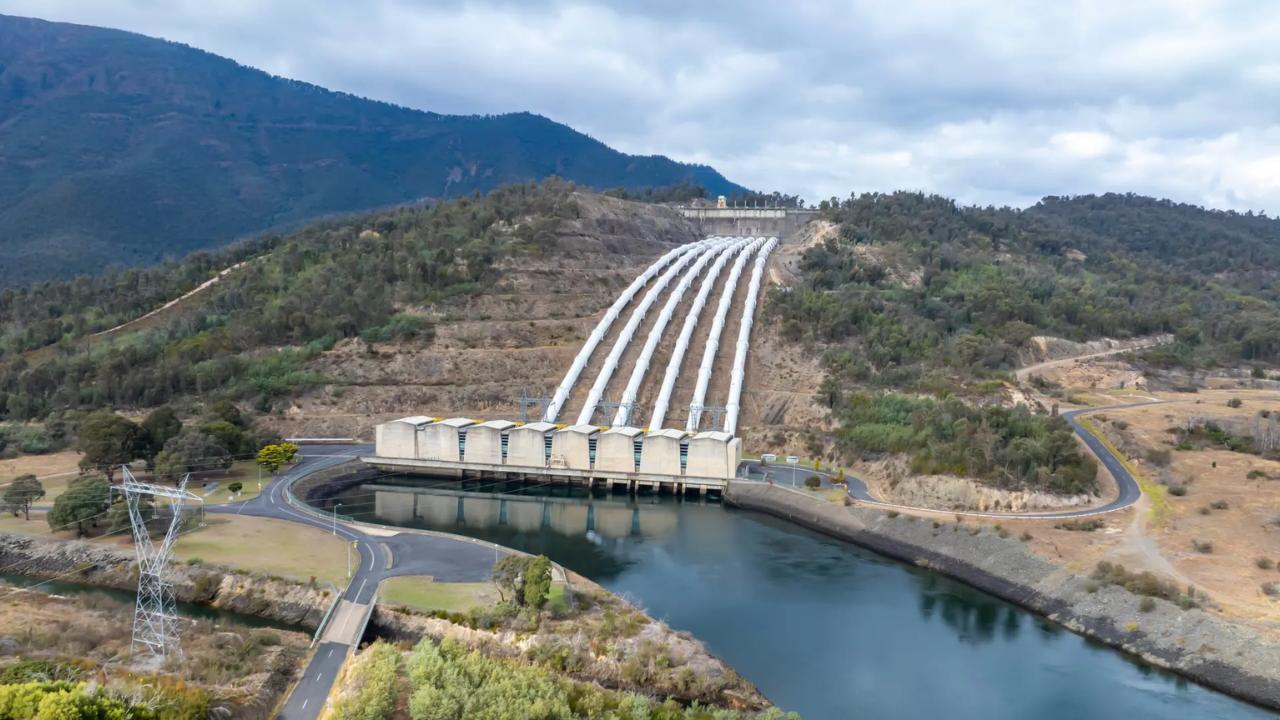
Researchers at the Australian National University, led by Timothy Weber, have found that Australia's electricity system could be run without any fossil gas at essentially the same cost as a gas-dependent grid, in a study ‘ Replacing gas with low-cost, abundant long-duration pumped hydro in electricity systems ’ published in Cell Reports Physical Science. The team argues that many long-term energy plans, including Australia's own, can be biased towards gas because of the way their models simplify decades of weather and demand data, combined with outdated assumptions about how much pumped hydro storage costs and how much can be built. Here's how the researchers uncovered the bias, and what fixing it means for the country's energy future.

Get breaking news anytime, anywhere. Download the TOI app now!

Why energy models keep concluding Australia needs gas

To manage the huge computing demands of modelling decades of hourly data, most long-term energy plans compress that data using "temporal aggregation" techniques, shortcuts that reduce complexity but can distort the picture of how storage actually behaves. The researchers tested four such techniques on a modified version of the Australian Energy Market Operator's 2024 Integrated System Plan model, finding that three of them badly underestimated the value of long-duration storage, some capturing only daily cycling and missing seasonal patterns entirely. Only one method, based on "segmentation," closely matched a full, unsimplified simulation, showing that flawed shortcuts, not physical reality, were steering models toward gas.

Fixing the flawed pumped hydro assumptions

The researchers found that institutional energy plans often overlook off-river pumped hydro by imposing restrictive build limits, short storage durations and relatively high capital costs. A global pumped hydro atlas identified about 818,000 off-river sites worldwide, with a combined storage potential of 86 million GWh outside protected areas and large urban centres. For Australia's National Electricity Market, the atlas identified about 287,000 GWh of technical storage potential across the NEM states, including 200 premium-cost sites in southeastern mainland Australia comparable with or better than sites considered in Tasmania.

By contrast, none of the 17 energy plans examined allowed new pumped hydro with storage durations longer than 48 hours. The researchers found that, after applying lower-cost assumptions, relaxing build limits and adding a 160-hour pumped hydro option, the model selected much longer-duration storage, with the 100% renewable scenario building about 1,200 GWh of new pumped hydro with an average duration of 75 hours.

What a 100% renewable grid actually costs

Once the researchers corrected these pumped hydro assumptions and used the more accurate segmentation modelling method, a fully renewable grid for Australia's National Electricity Market came out costing about the same as a gas-dependent one, built around roughly 1,200 gigawatt-hours of new pumped hydro storage. Achieving this also required a fairly modest amount of extra solar and wind capacity, on average just 670 megawatts of solar and 370 megawatts of wind more per year than a system that kept relying on gas, a small fraction of what Australia already installs annually. The researchers estimate Australia's current pumped hydro development pipeline sits at only around 192 gigawatt-hours, far short of what would be needed.

Why batteries alone can't replace long-duration storage

The study is careful to note that batteries and pumped hydro aren't competitors so much as partners suited to different jobs. Batteries remain excellent for short bursts of high-power storage, but scaling them up to replace 1,200 gigawatt-hours of long-duration storage would cost an estimated six to twelve times more than pumped hydro, adding roughly US$17 to 20 billion a year in extra costs. Together, the researchers found, pumped hydro and batteries can already provide the same frequency control, voltage control and backup services that gas generators offer. The researchers also note that batteries already supply 66% of frequency control ancillary services in Australia's National Electricity Market, compared with 11% from hydro and less than 1% from gas.

Sign up to read this article
Read news from 100's of titles, curated specifically for you.
Already a member? Sign in here
Related Stories
Top stories on inkl right now
One subscription that gives you access to news from hundreds of sites
Already a member? Sign in here
Our Picks
Fourteen days free
Download the app
One app. One membership.
100+ trusted global sources.