Get all your news in one place.
100's of premium titles.
One app.
Start reading
AAP
AAP
Technology
Stephanie Gardiner

Aussie farmers and the new ballad of the virtual drover

Farmers traditionally moving cattle on horseback is being replaced by managing herds via an app. (Stephanie Gardiner/AAP PHOTOS)

James Rodgers moves his mob of cattle around lush pastures at the crack of dawn, under the midday sun and again in the middle of the night.

As his Angus herd is shepherded around paddocks at all hours, though, he might meanwhile be fast asleep, having breakfast at his kitchen table or doing other work.
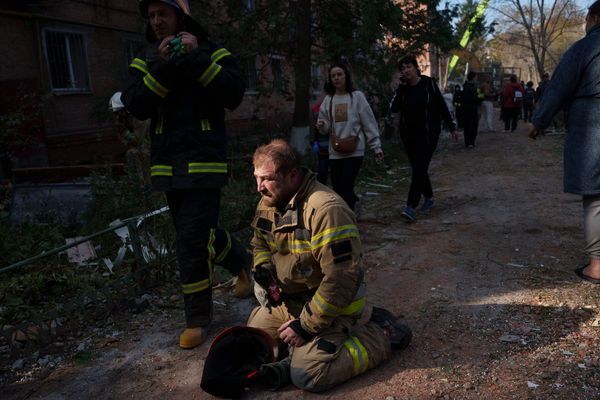
He is one of thousands of farmers in Australia, New Zealand and the US adopting virtual fencing technology to remotely manage his stock.

"Each night I work out what cattle I'm going to move," Mr Rodgers told a large group of curious producers at a demonstration on his farm in Cudal, central western NSW.

"I set it to roll at 6am ... have my coffee at 7 and I can see that they've all moved."

Virtual fencing has launched across five states in Australia in recent months, with the SA government on Thursday giving agriculture start-up Halter the green light to operate.

The states have legalised virtual fencing after lengthy consultation with technology companies, farming groups and animal welfare experts.

So after centuries of moving cattle on horseback, bike or even from the air, farmers can opt to manage their herds from an app.

A mob of cattle wearing Halter virtual fencing collars
Virtual livestock fencing has launched across Australia in just a matter of months. (Stephanie Gardiner/AAP PHOTOS)

The technology involves fitting cattle with smart collars, which use vibrations and sounds to move them around a farm.

A farmer can use the app to map out fence-free boundaries, directing herds to grazing areas or ushering dairy cows into the milking shed.

If an animal ignores the repeated gentle cues it receives a low energy pulse - which is a small fraction of the shock emitted by an electric fence - to send it back within a boundary.

By rotating herds more regularly, farmers can avoid over-grazing and promote their soil health.

They can also send cattle to areas they may not typically feed, bulk up their weight and closely monitor their health and wellbeing.

A mob of cattle wearing Halter virtual fencing collars
The benefits of virtual fencing include less over-grazing and healthier soil and herds. (Stephanie Gardiner/AAP PHOTOS)

The technology, which uses on-farm connectivity towers, aims to minimise labour and boost productivity as costs skyrocket.

Mr Rodgers and Anna Shaw fitted Halter collars on their cattle in February, after bulls kept busting into their house yard and damaging trees.

The new practice has extended their grazing zones, preserving the landscape, while also making their herd calmer.

"It changes the behaviour of the cattle significantly," Mr Rodgers said.

"It makes them a lot quieter.

"We could walk up there now and they'd just stand there and look at us."

Farmer Anna Shaw holds a Halter virtual fencing collar
Cattle are fitted with smart collars, which use vibrations and sounds to move them around. (Stephanie Gardiner/AAP PHOTOS)

Utilising more areas of pasture could significantly boost farmers' bottom lines, NSW government Local Land Services senior officer Brett Littler said.

Virtual fencing also had the potential to protect animals from dangerous areas, including where poisonous weeds are known to grow, and reduce damage bills in floods and drought.

"Having that virtual fence up, where we can control where they will and won't go, is ... really advantageous," he said.

"Not having those fences, not spending the dollars."

Sign up to read this article
Read news from 100's of titles, curated specifically for you.
Already a member? Sign in here
Related Stories
Top stories on inkl right now
One subscription that gives you access to news from hundreds of sites
Already a member? Sign in here
Our Picks
Fourteen days free
Download the app
One app. One membership.
100+ trusted global sources.