Get all your news in one place.
100’s of premium titles.
One app.
Start reading
Guitar World
Guitar World
Entertainment
Nick Wells

“Atlantic Records told me, ‘Eric should be the singer. You’re just the bass player.’ So I cried in the corner while they came up with Strange Brew”: Eric Clapton was Cream’s biggest star, but Jack Bruce sang most of the band’s classic tracks

Jack Bruce, Ginger Baker and Eric Clapton from Cream pose together on stage during their farewell performance at the Royal Albert Hall in London on 26th November 1968.

The late Jack Bruce was a force of nature. His bass playing in Cream’s legendary live jams liberated the instrument for generations of players who followed.

Improvising freely within (and beyond) the chord progressions, Bruce created lines that linked the blues-inflected guitar of Eric Clapton with the jazz-inspired drumming of Ginger Baker.
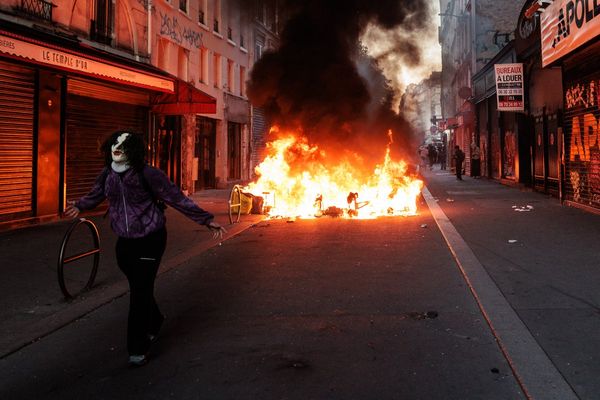
“My concept during live Cream jams was to start off supporting Eric, all the while playing with Ginger,” Bruce told Bass Player back in 2001. “Then I would build and almost goad Eric to reach the heights of his playing – and when that happened, I would take off, as well.

“If you think of the first live version of Crossroads – which was maybe the best example of what the band was like live then – we start up high and stay up high.

“On others, like Spoonful, we were trying to get this primeval big vibration that just lasts. I would use 5ths, chords and countermelodies to fatten things up, because when Eric would play high, above my bassline, it left a lot of space in the middle. But it was with more of a lead-bass attitude.

“My goal was always to create a bassline where, if you took away or changed one note, the whole song would collapse. I tried to carve the bass part out of the music, like a statue, so that I knew it would last.”

Once they had the freedom of eight-track recording, Cream began to embrace the studio as a space for experimentation – layering parts, adding keyboards, and expanding their sound. While their live performances pursued a rawer, more volatile energy.

“When we got to eight tracks on Disraeli Gears, we saw the possibilities of the studio, with overdubs and my ability to play keyboards – while live, we saw the opportunity to achieve something completely different.

“The great aspect of recording is you have time to work out the basslines. You perfect the part on run-throughs. Badge is a good example; we had the whole day to get it down – it was the most number of takes we ever did.”

Despite Clapton being Cream’s most recognizable star, Bruce was often the voice behind the group’s most enduring songs, even as record company executives openly questioned his place beyond the rhythm section.

“I don't want to give the impression that people were falling all over themselves to record White Room or Sunshine of Your Love. Nobody believed in them. People at Atlantic Records told me, ‘Eric should be the lead singer and the writer, and you are just the bass player.’

“So I cried in the corner while they came up with Strange Brew, which was actually Hey Laudy Mama with a new song grafted on. In the end, the only reason my songs were done was because Eric couldn't come up with anything.”

Bruce also launched the concept of “covering the top and the bottom,” something he loved doing. Of course, it meant having to deal with singing and playing independent parts.

“I very much enjoy being the top and bottom at the same time. It gives you a tremendous opportunity to be a catalyst; being the bass player and singer gives me two chances to make that happen, but it takes a bit of work.

“The first time I had a problem with it was when Cream did Politician. The very first time we did it, we were recording at the BBC. I just had the riff and Pete Brown had written some lyrics. At the time, the BBC had 3-track recording, so the song was improvised and recorded separately – I overdubbed the vocals, in other words. And when I came to play it with the band, I realized I couldn’t.

“It was simply a matter of working it until I got it, and that was a breakthrough because after that I was able to do a lot more where the vocal and the bass part were in opposition. It's just like being a drummer and having independence. You don't want to think about what you're playing; you just want to feel it.”

Ever the risk-taker, Bruce left it all onstage and in the studio, with every performance and recording. That spirit, along with his considerable musical contributions as a vocalist and composer, is what Bruce left for the rest of us.

Sign up to read this article
Read news from 100’s of titles, curated specifically for you.
Already a member? Sign in here
Related Stories
Top stories on inkl right now
One subscription that gives you access to news from hundreds of sites
Already a member? Sign in here
Our Picks
Fourteen days free
Download the app
One app. One membership.
100+ trusted global sources.