Get all your news in one place.
100's of premium titles.
One app.
Start reading
International Business Times UK
Politics
Chelsie Napiza

ATF Ballistics Result in Tyler Robinson Case Was 'Inconclusive' — Not 'No Match,' Report Clarifies

A court motion filed by Tyler Robinson's defence team has revealed that the ATF could not conclusively match the bullet recovered from Charlie Kirk's autopsy to the rifle linked to the accused, a finding quickly mischaracterised across social media as proof of innocence.

Robinson, 22, of Washington, Utah, faces a capital murder charge over the 10 September 2025 shooting of Charlie Kirk at Utah Valley University in Orem, Utah, and could receive the death penalty if convicted. His defence team filed a motion on 27 March 2026 requesting that the preliminary hearing, currently scheduled for 18, 19 and 22 May, be vacated or delayed by at least six months, citing an incomplete and overwhelming volume of discovery.
Embedded within the filing is a reference to an ATF ballistics summary that has drawn outsised attention: the agency's initial report states it was 'unable to identify' the autopsy bullet to Robinson's alleged rifle, a result that prosecutors have not indicated they intend to produce at the preliminary hearing stage.

What the ATF Report Said — and What It Did Not

The distinction between 'inconclusive' and 'no match' is not semantic. As reported by the Washington Times, the ATF's full report remains private, but defence attorneys have cited excerpts in public filings describing the results as inconclusive. The agency was unable to conclusively connect a bullet fragment recovered during autopsy to the rifle found near the scene, a distinction that forensic scientists and gun experts treat very differently from an affirmative non-match.

The rifle identified in the case is a Mauser Model 98, chambered in .30-06 calibre, which investigators say had been passed down to Robinson from his grandfather. Prosecutorial documents confirm the weapon is a bolt-action .30-06 rifle, per the criminal information filed on 16 September 2025 by Utah County Attorney Jeffrey Gray.

Charlie Kirk's photo before the assassination happened. (Credit: @baroncoleman/X formerly Twitter)

As GB News reported, gun experts have noted that soft-point ammunition of the type typically used in a .30-06 rifle is specifically designed to expand and fragment on impact, making it inherently difficult to match recovered fragments to a specific barrel. The inconclusive result may reflect the bullet's condition rather than any absence of connection.

The FBI is conducting additional comparative bullet analysis and bullet lead analysis, and those results remain pending. Defence attorneys note in their filing that they have not yet received the ATF forensic case files or protocols needed for independent expert review. 'Both the Utah County Attorney's Office and Mr Robinson continue to await a vast amount of information,' the motion states, citing the FBI, ATF and State Bureau of Investigation as agencies that have not completed discovery in time for the May hearing.

The Weight of Evidence That Prosecutors Say Remains Intact

The inconclusive ballistics report sits within a much larger evidential picture that prosecutors have assembled. The criminal information charges Robinson with aggravated murder, felony discharge of a firearm, and two counts of obstruction of justice. One obstruction count specifically relates to Robinson allegedly concealing or removing the rifle used to shoot Kirk. The charge sheet also carries a victim-targeting enhancement under Utah law, alleging Robinson selected Kirk 'because of Tyler James Robinson's belief or perception regarding Charlie Kirk's political expression.'

Robinson's father, Matt Robinson, turned his son in to authorities after recognising the family rifle in photographs released during the manhunt. Investigators say Matt texted his son asking for a photograph of the gun, and Tyler Robinson was unable to produce one.

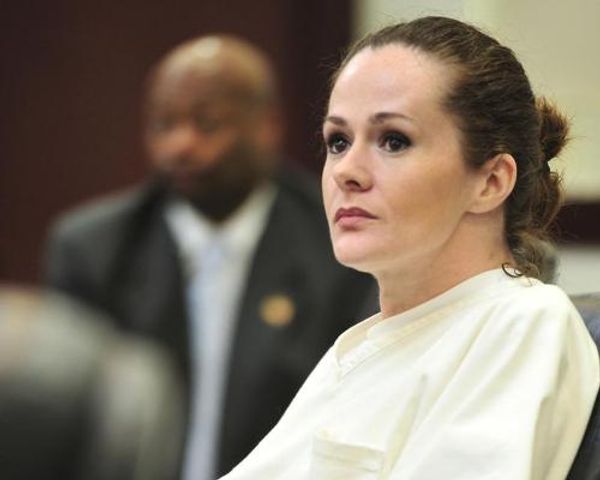
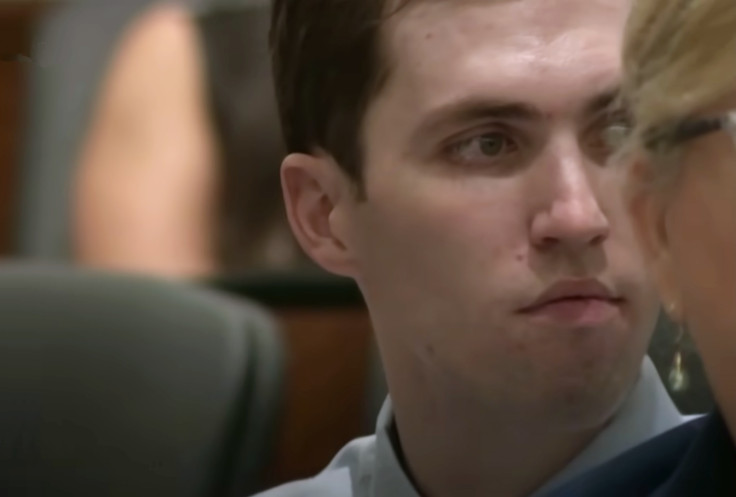
With 20,000 files of evidence to review and claims of a messy DNA trail, the defence is now pushing for a six-month delay to challenge the prosecution’s case and the family weapon at its centre. (Credit: YouTube Screenshot / ABC4 Utah)

Private text messages allegedly exchanged between Robinson and his roommate and partner Lance Twiggs, cited in court documents, contain references to a 'rifle wrapped in a towel,' a 'drop point,' and Robinson writing: 'If I am able to grab my rifle unseen, I will have left no evidence.'

A shell casing found during a search warrant execution at Robinson's home was found to carry etchings consistent with shells discovered in the rifle recovered near the University campus, according to the charging documents. Several targets with bullet holes were also found in the residence. Prosecutors allege Robinson drove approximately three hours from his home in Washington, Utah to carry out the attack.

A Discovery Crisis Behind the Request for Delay

The ballistics finding is one thread in a much broader argument Robinson's defence is making: that the case is simply not ready for a May preliminary hearing. The motion filed on 27 March describes an evidence load that the defence says is 'incomplete, voluminous, and complex.' Prosecutors have already handed over approximately 20,000 electronic files, including more than 700 hours of video and 31 hours of audio. On 12 March, a further 600,000 files were disclosed, which the defence says will take a minimum of 60 days just to begin reviewing.

Beyond the sheer volume, the defence raises concerns about the reliability of forensic analysis it has not yet had the opportunity to scrutinise. DNA reports from both the FBI and ATF have identified multiple DNA profiles on certain items of evidence, a finding the filing says requires review by forensic biologists, geneticists, system engineers and statisticians. The motion quotes directly from the filing: 'Determining the number of contributors to a DNA mixture, and determining whether the FBI and the ATF reliably applied validated and correct scientific procedures, is a complicated process.'

The preliminary hearing, if it proceeds in May, is the stage at which prosecutors must show a judge sufficient probable cause to send the case to a full jury trial. Robinson's next procedural appearance is scheduled for 17 April 2026, at which point the court will hear arguments on whether cameras and microphones should be permitted in the courtroom. The court has not yet ruled on the defence's request to vacate or reschedule the preliminary hearings, which remain listed for May at the time of publication.

Until the ATF's full report and the FBI's supplementary bullet lead analysis are disclosed and subjected to independent expert review, the ballistics question in the Tyler Robinson case will remain exactly what the court filing calls it: inconclusive.

Sign up to read this article
Read news from 100's of titles, curated specifically for you.
Already a member? Sign in here
Related Stories
Top stories on inkl right now
Our Picks
Fourteen days free
Download the app
One app. One membership.
100+ trusted global sources.